
Glutathione: The Supplement Your Skin, Liver, and Hormones are Begging For
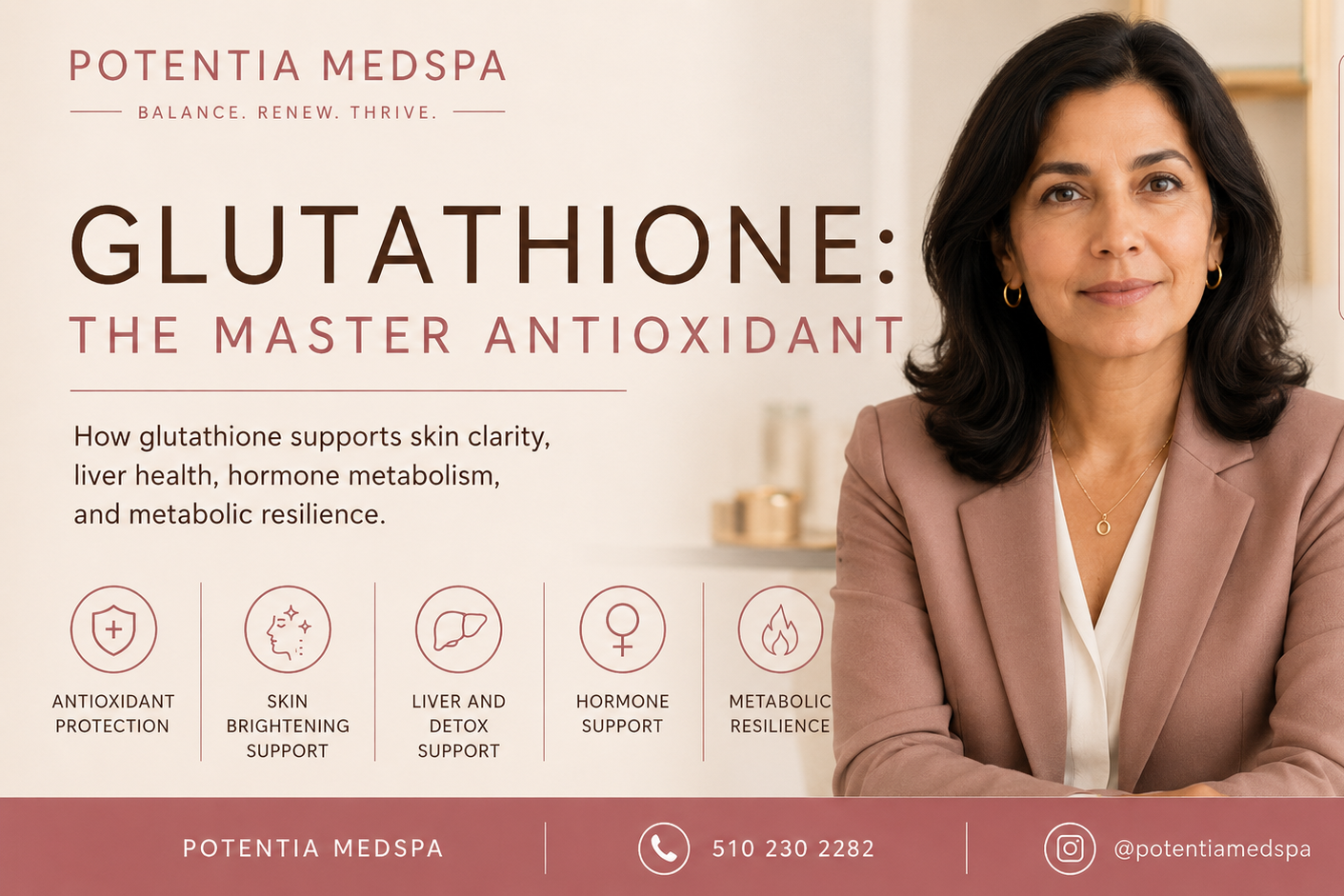
The Benefits of Glutathone
Glutathione has been called the “master antioxidant” for years.
But what does that actually mean?
Glutathione is one of the body’s most important internal defense systems. It helps protect cells from oxidative stress, supports detoxification, helps recycle other antioxidants, supports immune balance, and plays a key role in how the body handles inflammation, toxins, liver burden, and cellular repair. Research describes glutathione as a major intracellular antioxidant that helps neutralize reactive oxygen species and protect tissues from oxidative injury.
In plain English, glutathione is part of your body’s cleanup crew.
And if your body is inflamed, metabolically stressed, hormonally changing, or showing skin pigmentation changes, your cleanup crew may be working overtime.
What Does “Master Antioxidant” Really Mean?
Your body constantly produces free radicals. These are unstable molecules created through normal metabolism, stress, inflammation, alcohol, poor sleep, UV exposure, toxins, infections, blood sugar swings, and even exercise. When free radical production overwhelms your antioxidant defense system, this is called oxidative stress.
Oxidative stress is like internal rust. It can damage cell membranes, proteins, DNA, blood vessels, mitochondria, collagen, elastin, liver cells, and skin cells. Glutathione helps neutralize this oxidative stress and supports the body’s ability to repair and recover.
That is why glutathione matters for the whole body.
Why Antioxidant Protection Matters If You Have Inflammation
If you have chronic inflammation, you have oxidative stress, and your body often becomes more inflamed. This can create a cycle where the immune system, liver, blood vessels, skin, and mitochondria are constantly under pressure.
This matters if you have:
· Elevated cholesterol
· A1C higher than 5.7
· Elevated insulin
· Fatty liver
· Hormone replacement therapy use
· Skin pigmentation issues
· Melasma or sunspots
· Inflamed or reddened skin
· Difficulty recovering from stress
· Aging skin that looks dull, dry, or uneven
The goal is to help the body reduce oxidative burden so your cells can function, repair, and communicate more effectively.
Glutathione and Metabolic Health
When someone has elevated insulin, A1C above 5.7, fatty liver, or abnormal cholesterol patterns, we are often looking at more than a blood sugar problem.
We are often looking at oxidative stress.
Poor blood sugar management increases oxidative stress. Elevated insulin can drive inflammation and fat storage. Fatty liver is strongly connected to oxidative stress, mitochondrial strain, insulin resistance, and inflammatory signaling.
The liver uses glutathione heavily because the liver is one of the body’s major detoxification organs. It processes hormones, alcohol, medications, toxins, fatty acids, and inflammatory byproducts. When liver burden is high, glutathione demand may rise.
Why Glutathione Matters If You Are on Estrogen Therapy
Estrogen can be wonderful when it is the right dose, route, and fit for the person. It can support sleep, skin hydration, mood, vaginal tissue health, bone, metabolism, and overall quality of life.
But estrogen also has to be metabolized.
Your liver and gut help process and clear hormones. If your detoxification system is sluggish, inflamed, nutrient depleted, or overburdened, estrogen can feel harder to tolerate. Some women experience breast tenderness, bloating, headaches, water retention, or mood changes when estrogen metabolism is not well supported.
Glutathione is not a replacement for proper hormone dosing or medical monitoring.
But it can be part of a broader hormone support strategy because it supports liver detoxification and antioxidant protection. This is especially relevant for women on hormone replacement therapy who also have fatty liver patterns, elevated insulin, alcohol use, high inflammation, or sluggish clearance symptoms.
The goal is to help your body use and clear hormones well
Glutathione and Skin: Brown Spots Are Not Just “Aging”
Many people think brown spots on the cheeks are simply age spots.
Brown spots can be called lentigines, sunspots, or solar lentigo. Melasma is a deeper and more hormonally influenced pigment pattern that is often triggered by UV exposure, heat, inflammation, hormones, and skin type.
If you have a skin type that tans easily, your melanocytes are naturally more reactive. That means your pigment cells are better at making melanin. This can be protective in some ways, but it also means inflammation, UV exposure, heat, hormones, and irritation may trigger more visible pigmentation. So, brown spots are often an inflammatory pigment response.
The pigment is not random. It is your skin’s defense system responding to stress.
UV exposure remains one of the major drivers of lentigines and melasma, but oxidative stress and inflammation can amplify the problem. This is why glutathione is often discussed in skin brightening, melasma, and pigment care, not because it bleaches the skin.
But because it supports antioxidant defense and may influence pigment pathways while helping calm oxidative stress.
Melasma, and Deeper Inflammation
Melasma is not just a surface pigment issue. It is often deeper, more stubborn, and more inflammatory than simple sunspots. It can be influenced by hormones, UV exposure, visible light, heat, inflammation, vascular changes, and oxidative stress.
That is why melasma often comes back if the root triggers are not addressed. If inflammation, oxidative stress, hormone imbalance, heat exposure, and poor metabolic health are still driving the pigment pattern, the skin may keep recreating the discoloration- glutathione supports reducing melasma.
The Different Ways to Take Glutathione
There is not just one way to take glutathione. The best option depends on your goals, budget, digestion, oxidative stress level, skin concerns, liver burden, and how quickly you want support.
Option 1: Build Glutathione Yourself With Cofactors
Your body makes glutathione from three amino acids:
Cysteine- Glycine- Glutamate
But it also needs nutrient cofactors to keep antioxidant systems working well. These may include vitamin C, selenium, B vitamins, magnesium, alpha lipoic acid, and sulfur containing foods such as broccoli, cauliflower, cabbage, garlic, onions, and eggs.
N acetyl cysteine, also called NAC, is one of the most commonly used precursors because cysteine availability can be rate limiting for glutathione production.
Best for: maintenance, prevention, liver support, long term antioxidant resilience, and people who do not need an immediate jump start.
Option 2: Regular Oral Glutathione
Regular oral glutathione is convenient and often less expensive, but absorption can be inconsistent. Studies show some oral forms may help increase glutathione status, but formulation matters.
Best for: mild support, maintenance, people who prefer capsules, and those who are not dealing with significant oxidative stress or pigment concerns.
Option 3: Liposomal Oral Glutathione
Liposomal glutathione is designed to improve delivery by wrapping glutathione in a lipid based carrier. A clinical study found that daily liposomal glutathione supplementation increased glutathione levels in several body compartments and improved immune markers in healthy adults. This is often my preferred oral form when someone wants a stronger at home option.
Typical frequency: daily for 8 to 12 weeks when trying to change oxidative stress patterns, then maintenance several times per week depending on goals.
Best for: skin pigmentation support, fatty liver support, elevated oxidative stress, people who cannot come in for shots, or those who want at home maintenance between IM treatments.
Option 4: IM Glutathione
IM means intramuscular injection.
This is a more direct route than oral supplementation because it bypasses digestion. For people with sluggish digestion, higher oxidative stress, pigmentation concerns, fatty liver patterns, or a desire to jump start detoxification support, IM glutathione can be a strong option.
At Potentia MedSpa, IM glutathione is part of our Hot Shots offering.
For clients who want to use IM glutathione for detoxification support, antioxidant protection, skin clarity, or metabolic inflammation support, we typically recommend: Twice per month for a minimum of 3 months
This gives the body a consistent signal and helps support the detoxification process over time. One shot is nice, but consistency is where the support becomes more meaningful.
Best for: clients who want a jump start, people with pigmentation concerns, elevated oxidative stress, fatty liver patterns, elevated insulin, higher A1C, or those on estrogen therapy who need more antioxidant and detoxification support.
Option 5: IV Glutathione
IV glutathione is the most direct route because it goes into the bloodstream. It may be used in certain wellness or medical settings when more intensive support is desired.
Typical frequency: varies widely depending on the protocol and clinical goals. Some people use IV glutathione weekly for a short phase, while others use it periodically for maintenance.
Best for: more intensive antioxidant support, specific clinical protocols, or people already receiving IV nutrient therapy.
Who Should Consider Glutathione Support?
Glutathione may be worth considering if you have signs that your body is struggling with inflammation, oxidative stress, detoxification, or pigment changes.
This may include:
· Brown spots on the cheeks/ Melasma
· Dull or inflamed skin
· A1C higher than 5.7 or Elevated fasting insulin
· Fatty liver, Elevated cholesterol or triglycerides
· Hormone replacement therapy use
· Breast tenderness or bloating on estrogen
· Slow recovery/ slow healing
· High stress/ Chronic inflammation
· History of skin cancers
At Potentia MedSpa, we offer glutathione support through our in office Hot Shots IM menu at 50mg to 400mg. For clients wanting to jump start detoxification and antioxidant protection, IM glutathione is typically recommended twice per month for a minimum of 3 months.
We also have access to specialized testing for assessing glutathione status and oxidative stress markers such as 8 OHdG. These tests are typically not covered by insurance, but they can give valuable insight into whether your body is under oxidative stress and whether your antioxidant strategy is working.
____
Schedule a consultation with our team of experts at Potentia MedSpa in Lafayette, California, or call us at 510 230 2282. Ask about our Hot Shots menu, including IM glutathione, for beauty, detoxification, skin clarity, antioxidant protection, hormone support, and metabolic support from the inside out.