
Hair Loss Support
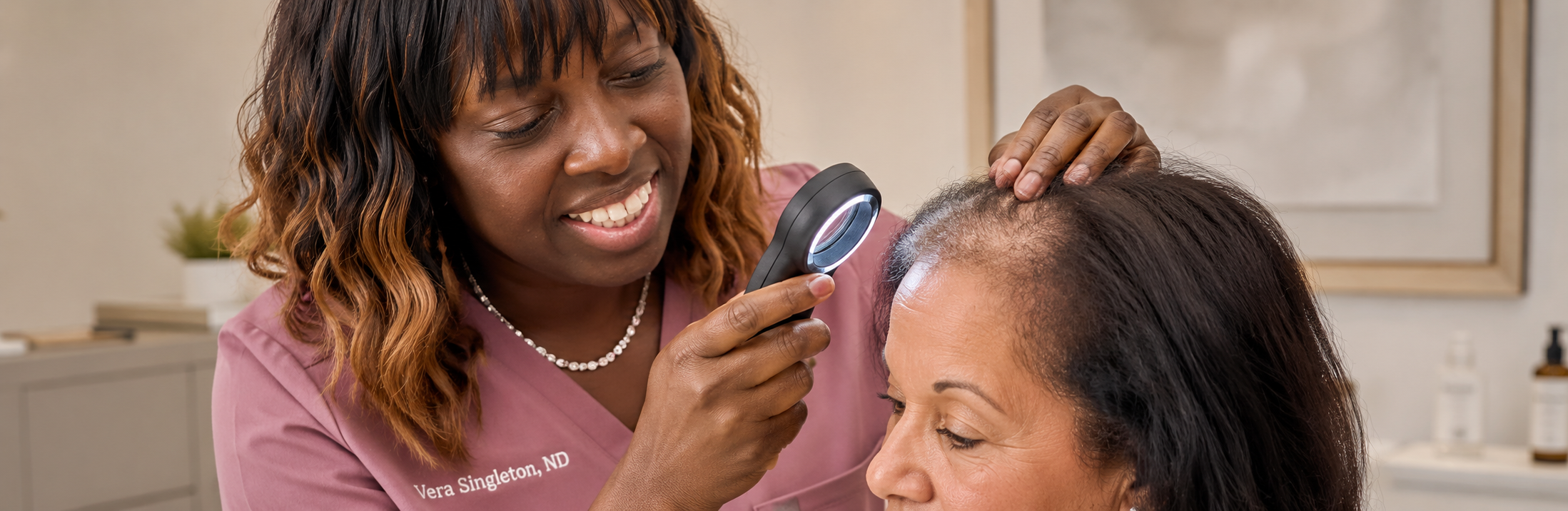
Your ponytail is a fraction of what it was. You’ve changed how you part it, or started using a piece, or given up on wearing it down because down looks thin now.
The shower is the worst part. Every time, there’s more in your hands than there should be, and you’ve started noticing the drain.
You’ve bought the shampoos. The conditioners. The peptide serums. The foam, and maybe the pill. And somewhere along the way someone told you this is just aging and you should cut it short and make peace with it.
Here’s the short answer. Hair that keeps shedding is hair stuck in the shedding phase and not cycling back into growth. Something is holding it there, and it’s usually measurable: thyroid, iron, hormones, nutrient status, gut absorption, or the condition of your scalp itself, and frequently more than one at once. I test for all of it, correct what’s driving it, and then use in-office treatment to bring the follicle back into a growth cycle.
What’s actually happening to your hair
Every hair on your head runs a cycle. It grows for a period of years, rests, sheds, and then the follicle starts a new hair. Losing hair daily is completely normal, because at any moment a portion of your follicles are in the shedding part of that cycle.
The problem isn’t shedding. The problem is when hair enters the shedding phase and doesn’t come back out of it.
That’s what’s happening when your ponytail gets thinner year over year. The follicles are still there. They’ve stopped cycling back into growth, and every cycle that passes without regrowth is density you don’t get back that season.
Which leads to the only question that matters: what is holding your follicles in that phase?
Because the follicle itself is remarkably sensitive. It’s one of the most metabolically demanding structures in your body, and it’s among the first things to be shut down when your system decides resources are short. It responds to hormonal change, to nutrient shortfall, to stress, and to inflammation faster than almost any other tissue. Your follicles register perimenopause before the rest of you does.
Hair, in other words, is an early warning system. Which is why treating it only from the outside so rarely works.
What I test, and why
This is where I go further than a standard hair loss consultation, and it’s the reason women come to me after everything else failed.
| What drives it | What it looks like | What I test |
|---|---|---|
| Thyroid | Diffuse thinning, dry hair, cold, tired, weight that won’t move | Full thyroid panel, not just TSH |
| Iron and ferritin | Shedding out of proportion to everything else, fatigue, heavy periods in the background | Ferritin and full iron studies. Ferritin can be low well before anemia shows up |
| Hormonal shift | Thinning at the crown and along the part, arriving in your forties, often with other perimenopausal changes | Hormone panel including estrogen, testosterone, and DHEA |
| Nutrient deficiency | Slow growth, brittle texture, breakage, poor recovery | Nutrient panel: protein status, zinc, vitamin D, B12, biotin, amino acids |
| Gut absorption | Good diet, poor labs. Bloating, irregularity, or a history of gut issues | Digestion and gut health panel, food sensitivity testing where indicated |
| Stress and cortisol | Heavy shedding starting two to three months after a stressful event, illness, or surgery | Cortisol patterning, history and timeline |
| Autoimmune activity | Patchy loss, sudden onset, or loss elsewhere on the body | Inflammatory and autoimmune markers, with referral where appropriate |
| Scalp condition | Flaking, itching, oiliness, tightness, or visible inflammation | Direct scalp assessment |
Almost none of these get checked when hair loss is treated as a cosmetic problem. And a normal TSH with a ferritin of 10 tells a completely different story than a normal TSH alone.
Two of these drivers have their own page: read more about thyroid testing and read more about hormone testing. If your shedding started alongside other changes in your forties, read more about perimenopause.
If you have labs from another provider within the past three to six months, bring them. I’ll read them.
The soil comes first
Here’s how I think about hair, and it’s the part that makes my approach different.
You cannot grow anything in poor soil. You can put the best treatment in the world on a scalp, and if the follicle doesn’t have the raw materials, the hormonal signaling, or the blood supply it needs, you’ll get a fraction of the result and it won’t hold.
So we build the ground first:
Diet and protein. Hair is protein. If your intake is short, and it very often is in women over 40, your body will not prioritize hair with what little there is.
Nutrients, based on your labs. Iron, zinc, vitamin D, B vitamins, amino acids. Corrected to your actual numbers rather than to a generic hair supplement.
Gut health. You can eat perfectly and absorb poorly. If absorption is the problem, supplementing harder won’t fix it.
Hormones. Estrogen decline, testosterone shifts, DHT sensitivity, and thyroid function all affect the cycle directly. This is frequently the missing piece for women in their forties and fifties, and it’s the one most often skipped.
Scalp condition. Inflammation, flaking, buildup, and poor circulation all affect the environment the follicle is growing in. A follicle in an inflamed scalp is a plant in bad ground.
Get the soil right and the in-office treatments work considerably harder. Skip it, and you’re paying for treatments your body can’t act on.
The treatments I use
These are done as a series, typically three to five sessions spaced about a month apart, with maintenance afterward. Which ones you get depends on your assessment and your preferences, including whether you’re comfortable with needles.
Scalp microneedling
Controlled micro-channels in the scalp stimulate the follicle directly and dramatically improve how well topical treatments penetrate. Paired with hair peptides, PDRN, exosomes, or PRF, delivered into those channels. About an hour, with a day of scalp tenderness and some redness afterward.
Plasma scalp therapy
Plasma energy applied to the scalp to increase blood flow, improve scalp condition, stimulate dormant follicles, and improve how well nutrients reach the follicle. No needles and no blood draw, which makes it the option I recommend most often for people who don’t want either.
Here’s a useful way to think about it. Minoxidil works partly by improving blood supply to the follicle, and it only works for as long as you keep applying it. Plasma stimulates circulation and scalp condition directly, and the effect isn’t dependent on you remembering a bottle every morning.
About 50 minutes, with a day or two of scalp tenderness and no bleeding.
PRF scalp treatment
We draw a small amount of your blood and concentrate the platelets and fibrin, which are dense in growth factors, then place that into the areas of thinning. It’s entirely your own biology, with nothing synthetic involved, and it’s the most regenerative option I offer.
About 50 minutes, with a day or two of tenderness and mild swelling.
Prescription topicals, boosters, and home care
The in-office work opens the door. What you use daily determines how much of the result holds.
On the prescription options. Finasteride, dutasteride, and minoxidil are the drugs most associated with hair loss treatment, and most people know them as pills. I prescribe them topically rather than orally. Applied to the scalp, they reach the follicle directly while largely avoiding the systemic exposure that makes so many people refuse the oral versions outright. If you’ve ruled these out because of what you read about the side effects, the topical route is worth a conversation.
PDRN, a polynucleotide that supports cellular repair and follicle health
Exosome-based and autologous stem cell-based topicals
Peptide serums selected for follicle stimulation rather than picked off a shelf
Hair boosters and scalp masks
Shampoos and conditioners formulated for hair loss, not for shine
I send people home with a plan. Hair grows slowly and it responds to consistency, so what happens between visits genuinely matters.
Not all hair loss is the same
The label matters, because the treatment changes.
Hormonal and pattern thinning
The most common presentation I see: gradual thinning at the crown and along the part, widening over a few years, arriving in the forties alongside sleep changes, weight changes, and everything else perimenopause brings. This responds well, and it responds best when hormones are addressed alongside the scalp work rather than instead of it.
Traction alopecia
Years of tight styles, braids, weaves, extensions, and tension along the hairline and temples cause real damage, and this is badly under-discussed in aesthetic medicine. It’s also one of the few types where timing genuinely matters: caught early it responds well, and left long enough it can scar, at which point those follicles don’t come back.
If you’ve been styling with tension for years and your hairline is receding at the temples, come in sooner rather than later. I’d rather see you early and tell you it’s manageable.
Autoimmune hair loss
Patchy loss, sudden onset, or loss elsewhere on the body points toward an autoimmune process rather than a nutritional or hormonal one. That needs identifying, because the treatment is different. I test for it, I address the systemic and inflammatory side, and where a specialist should be involved I’ll tell you and help you get there.
During and after cancer treatment
If you’re in treatment or recently finished, the priority is your oncology team, and anything I do happens with their knowledge and clearance.
What I can do in that window is the ground work: nutrient status, protein, gut absorption, and scalp condition, so that when the follicle is ready to cycle again, it has what it needs. Nutritional and supplement counseling is always part of this. In-office scalp treatment is a later conversation and only with your oncologist’s agreement.
When hair loss needs a diagnosis first
I’ll be straight with you about this, because it matters more than anything else on this page.
Some hair loss is scarring, meaning the follicle itself is destroyed and no treatment regrows it. Sudden patchy loss, visible scalp inflammation, painful or burning areas, or a smooth shiny scalp where hair used to be all need proper diagnosis before anyone starts treating, and sometimes that means a scalp biopsy with a dermatologist.
I’d rather send you for the right answer than sell you a series of treatments that were never going to work. The good news is that the large majority of what I see is not scarring, and it does respond.
Hair loss treatments near me: why women in the East Bay come here
Almost everyone I treat has tried something first. The serums, the supplements aisle, the foam, sometimes the pill. And most were told at some point that this is just aging.
What’s different here:
I look for the cause. Thyroid, iron, hormones, nutrients, absorption, and scalp condition, all tested, because treating a scalp without knowing why it’s shedding is guessing.
Soil before seed. The internal work makes the in-office treatments work. That sequence is the whole difference.
Options with and without needles. Plasma scalp therapy requires no injections and no blood draw, which matters to more people than the industry admits.
Prescription topicals without the pills. I prescribe finasteride, dutasteride, and minoxidil topically rather than orally, which reaches the follicle while avoiding most of what makes people refuse the oral versions.
I’ll tell you when it isn’t treatable, and when it needs a dermatologist and a biopsy instead of a package.
Traction alopecia is taken seriously here, and treated early rather than dismissed.
One doctor for the whole picture, since the hormones behind your hair loss are usually behind your sleep, your weight, and your skin too.
An award winning doctor with fifteen years of practice in the East Bay. I’ve been voted Best Doctor of the East Bay, and I have page after page of five star reviews that show how hard I work for my patients.
I’m in Lafayette, CA, easy to reach from Walnut Creek, Orinda, Moraga, Danville, Alamo, Pleasant Hill, and the broader East Bay.
Frequently asked questions
-
Sudden heavy shedding usually traces back two to three months, to an illness, a surgery, a major stressor, a crash diet, or a medication change. That delay is why the cause is so often missed. Other common drivers are low ferritin, thyroid change, and hormonal shifts in perimenopause. It’s testable, which is where I’d start rather than with another product.
-
It may well be, particularly if you’re in your forties or fifties, the thinning is at the crown and along your part, and it arrived alongside sleep, mood, or weight changes. Estrogen decline, testosterone shifts, DHT sensitivity, and thyroid function all affect the hair cycle. A hormone panel answers it rather than guessing.
-
For most of what I see, yes. If the follicle is alive but stuck in the shedding phase, it can be brought back into growth. What doesn’t regrow is scarring hair loss, where the follicle itself has been destroyed, and long-standing traction damage. That’s exactly why I assess before treating rather than selling you a series and hoping.
-
Hair is slow, and anyone promising you fast results isn’t being straight with you. Shedding usually settles first, often within a couple of months, which is the earliest sign it’s working. Visible density takes longer, generally three to six months, because that’s simply how fast hair grows. Consistency matters more here than in almost anything else I do.
-
Neither. Plasma scalp therapy involves no needles and no blood draw, and it’s what I recommend most often for people who’d rather avoid both. And where finasteride, dutasteride, or minoxidil are appropriate, I prescribe them topically rather than orally. We’ll build the plan around what you’re actually willing to do, because a plan you don’t follow doesn’t work.
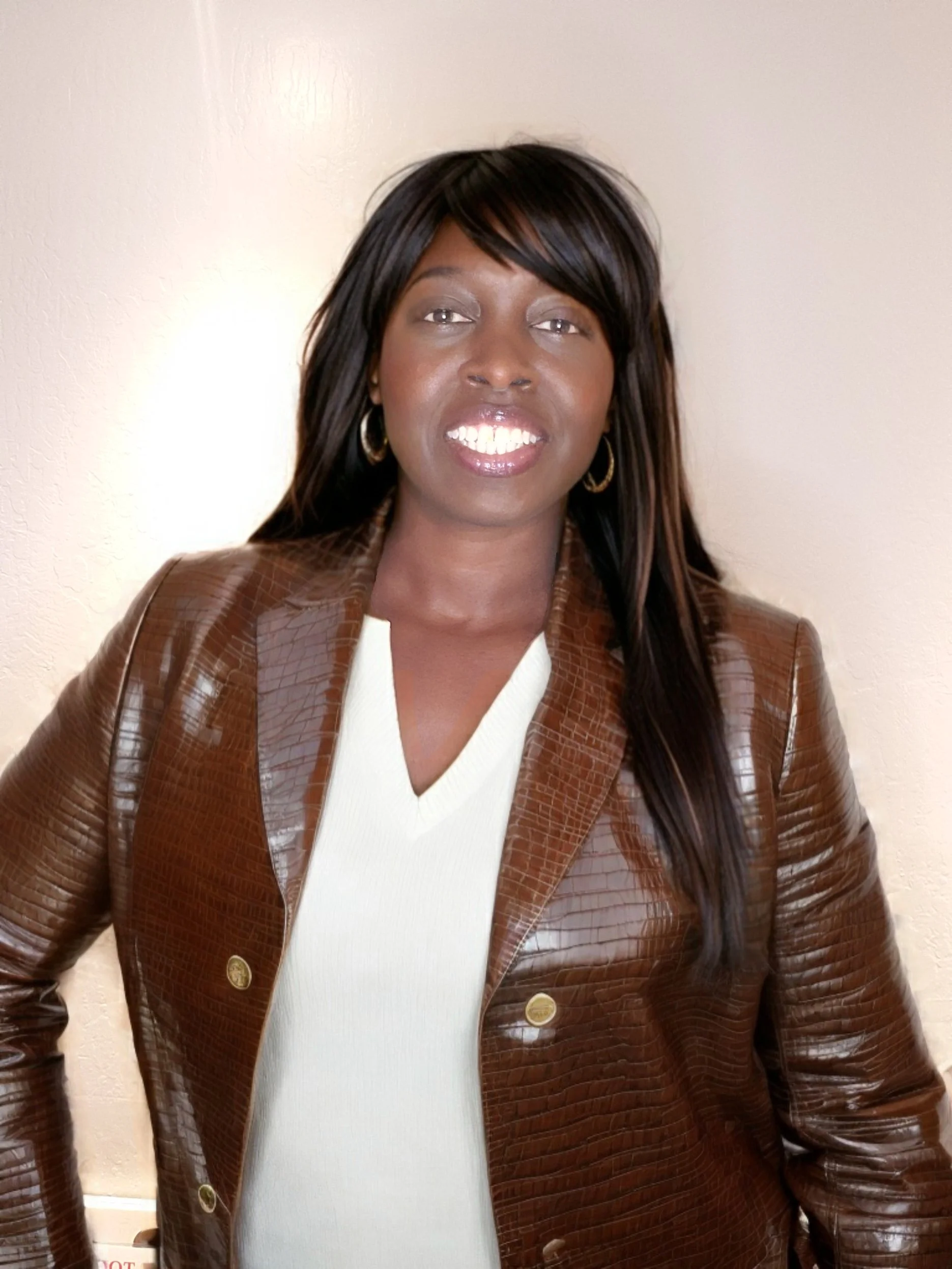
Dr. Vera Singleton, ND, MBA Founder, Potentia MedSpa, Lafayette, CA Voted Best Doctor of the East Bay Functional medicine and medical aesthetics under one roof, guided by one philosophy: one body, one doctor, simple answers.
Let’s find out what’s holding your hair in the shedding phase.
Book a consultation. We’ll assess your scalp, run the testing that explains what’s actually happening, and build a plan that works from the inside and the outside at the same time. You’re allowed to start wherever you want. I’ll meet you there.
Book Your FREE 20 Min Phone Consultation
Potentia MedSpa | 1043 Stuart St #210, Lafayette, CA 94549 | 510-230-2282