
Body Skin Tightening: A Non-Surgical Alternative to a Tummy Tuck
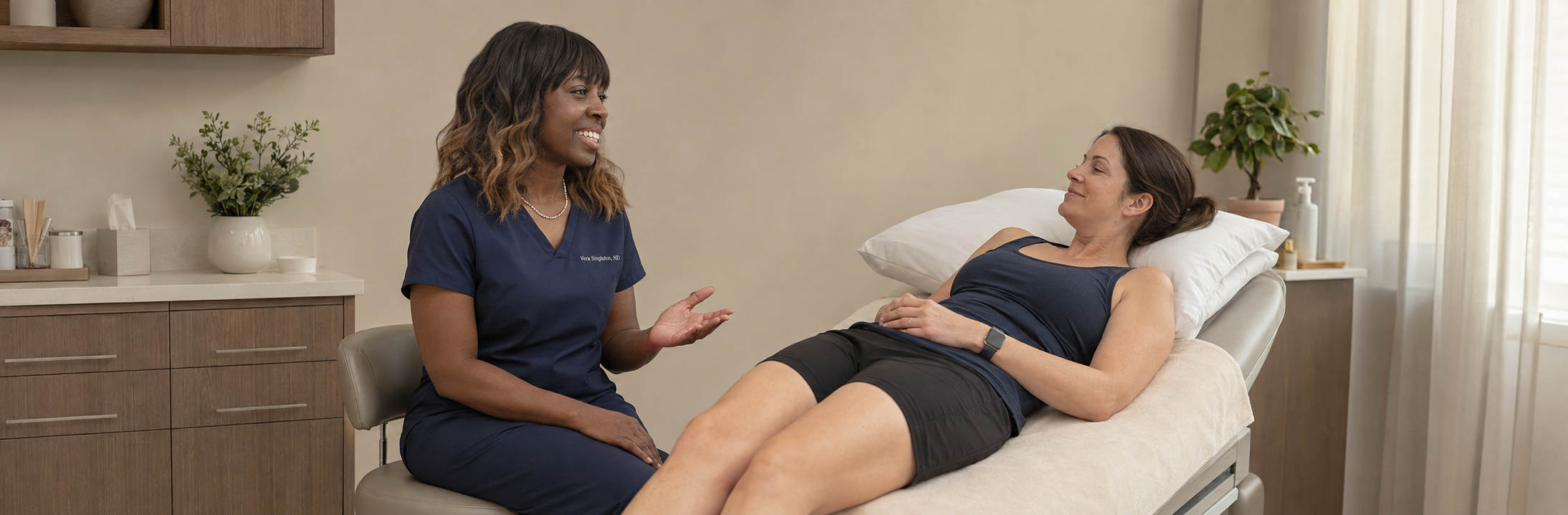
You’ve done the work. Maybe the weight came off, maybe your babies are teenagers now, and your body still doesn’t reflect any of it.
The backs of your arms move when you don’t. The skin above your knees has gone crepey and papery. Your inner thighs are loose in a way that’s uncomfortable as well as unwanted. Your abdomen is creased and doesn’t tighten no matter what you do, and under all of it there’s often perfectly good muscle you can’t see.
You’ve probably looked at a tummy tuck and closed the tab, because it’s surgery, it’s expensive, and it means weeks out of your life.
Here’s what I want you to know. Plasma energy tightens skin by a different mechanism than every other device offered for this, and that difference matters. It doesn’t just heat tissue and hope it contracts. It removes excess skin at the surface through sublimation and then triggers a rebuilding response underneath. So the skin gets physically shorter and structurally better, without an incision. It works on the abdomen, the arms, the inner thighs, above the knees, and under the arms. It takes multiple sessions, and for the right person it’s a genuine alternative to an operation.
What actually changes
| What you’re living with now | What clients commonly describe afterward |
|---|---|
| Loose, creased skin across your abdomen that nothing tightens | Tighter and smoother, with the creasing reduced |
| A shelf or overhang above a C-section scar | Softened and flattened, with the scar itself improved |
| Stretch marks that changed the texture of your skin | Smoother, with the texture and appearance improved |
| Crepey skin on the inner arms you cover year round | Firmer, with real substance to it |
| Loose skin at the inner thigh that rubs and bothers you | Contracted and tightened |
| Softness above the knees that appeared and stayed | Smoother contour |
| Doing everything right and your body not showing it | Your body reflecting the work you actually did |
| Having priced a tummy tuck and put it aside | A real alternative, without an operation |
Individual results vary, this takes multiple sessions, and I’ll tell you honestly at your consultation whether you’re a candidate or whether a surgeon would serve you better.
Why nothing has worked
Because most of what’s offered for loose skin doesn’t address what’s actually there, and that’s true wherever on your body it is.
Creams and topicals can’t reach it. Loose skin is a structural problem in the dermis and below. A topical works on the surface. There’s no version of this where a cream tightens skin that has been stretched past its recoil.
Exercise builds what’s underneath, not what’s over it. You can build excellent muscle and still have loose skin sitting on top of it. Triceps you’ve worked for a year, under arms that still move. Quadriceps that are genuinely strong, above knees that look crepey. That’s frustrating in a specific way, because you’re doing the work and the work isn’t visible.
Weight loss doesn’t shrink skin the way it shrinks fat. Skin has a recoil limit, and pregnancy, significant weight change, and time all routinely exceed it. Once elastin is damaged and the skin has been held stretched for months or years, it doesn’t spring back. That applies to an abdomen, an upper arm, and the skin above a knee equally.
And most tightening devices are heat-based. Radiofrequency and similar technologies warm the dermis and rely on that heat to provoke contraction and collagen production. They work, gradually, and they don’t remove anything. The excess skin is still there, slightly tighter.
Which is why the honest answer for a long time has been surgery, and why so many women have simply accepted this.
What plasma does differently
The mechanism is the whole argument here, so it’s worth understanding.
Plasma works through sublimation. It ionizes atmospheric gas to create a controlled arc, and the superficial skin cells it contacts convert directly rather than being cooked with heat driving into surrounding tissue.
That means it removes excess skin rather than only tightening what’s there. The surface layer in the treated area is eliminated, so there is physically less skin. Then the micro-injury triggers a healing response over the following one to two weeks that drives collagen remodeling underneath, so what remains is rebuilt as well as shortened.
Two things happening rather than one: less skin, and better skin.
For an area where the problem is genuinely excess rather than laxity alone, that distinction is the difference between a modest improvement and a real one. It’s also why this is one of the very few non-surgical options for stubborn post-pregnancy skin and post-weight-loss looseness.
Area by area
Different parts of the body loosen for different reasons and behave differently in treatment. Here’s what I see in each.
Upper arms
The area people ask me about most after the abdomen, and the one that most changes what someone is willing to wear. Skin along the back of the upper arm loosens with age and after weight loss, and it’s an area where exercise is particularly deceptive: you can build genuinely strong triceps and still have an arm that moves when you don’t, because the problem is above the muscle rather than in it.
Responds well, and it’s a manageable area to treat.
Inner thighs
Loose skin here is uncomfortable as well as unwanted. It rubs, it affects what you can wear in summer, and it’s one of the areas people are least likely to mention out loud. Skin here is thinner and more delicate than on the abdomen, which is exactly the kind of tissue plasma handles well.
Above the knees
A small area that bothers people out of all proportion to its size. Crepey, papery skin above the knee is one of the earliest places body skin visibly changes, it’s very difficult to address any other way, and almost nobody talks about it.
Under the arms and arm folds
The area where the arm meets the torso, which gathers and folds and is largely unreachable by anything else.
The abdomen
The largest area and the one with the most variables. Loose and creased skin, gathering around the navel, and skin that’s been stretched past its recoil by pregnancy, weight change, or both.
If you’ve been pregnant, your abdominal skin stretched over months and stayed stretched. Elastin is damaged in the process, which is what stretch marks physically are. When it’s over, the skin contracts as far as it can and then stops, and where it stops has very little to do with how much you weigh or how hard you work.
A C-section scar creates its own problem: tethering below and skin gathering above it, which produces the overhang so many women describe. That’s structural and doesn’t respond to anything you can do at home.
What I treat here: the loose and creased skin, the texture of stretch marks, the scar and the tissue around it, and the gathering around the navel and above a scar line.
One honest limit. If you have significant diastasis recti, meaning your abdominal muscles have separated, no skin treatment corrects that. It’s a muscle problem needing dedicated rehabilitation or surgical repair, and I’ll tell you if that’s what I’m seeing rather than selling you sessions that won’t get you what you want.
Stretch marks and scars, anywhere
Surgical scars, C-section and laparoscopic scars, and stretch marks all respond to the same technology, and they’re treated as part of whatever area we’re working on rather than as a separate service.
After weight loss
The second large group, and one that’s grown considerably with GLP-1 medications.
You lost the weight. Everyone told you it would be the hard part. Then the loose skin arrived and nobody prepared you for it, and no amount of additional weight loss touches it.
This is where sublimation matters most, because the problem is genuinely excess skin rather than laxity alone. Removing surface tissue and rebuilding what remains addresses both halves.
It’s also worth thinking about timing. If you’re still actively losing, we usually wait until your weight has been stable for a few months, so we’re treating the skin you’ll actually have rather than chasing a moving target.
And if you’re on a GLP-1, protecting muscle while you lose is the single most useful thing you can do for how your body looks afterward, because tight skin over lost muscle still looks flat. That’s a conversation worth having before you finish, not after.
The pairing that works best
Skin tightening and body contouring do different jobs, and the combination is what produces a result that looks intentional.
PHYSIQ reduces fat in the treated area and drives deep involuntary muscle contractions that re-educate and strengthen the muscle underneath. So the shape improves and the area becomes metabolically active again.
Plasma tightening removes and rebuilds the skin over it.
Doing one without the other leaves something obvious. Tighten skin over a soft, deconditioned area and you’ve tightened a shape you didn’t love. Build the shape under skin that’s loose and creased and the skin still tells the story.
Together: the contour underneath and the skin over it.
What to expect
Before. A consultation and an honest assessment of whether you’re a candidate, including whether the primary issue is skin, fat, muscle separation, or a combination.
The appointment. About two hours per area. Topical numbing is used.
Comfort. Around a six out of ten, which is more involved than my facial treatments. I’d rather tell you that plainly than have you surprised.
The healing. Seven to fourteen days depending on the area and how much we treat. The area goes through a visible renewal during that window. Plan for it, and choose your timing with clothing and activity in mind. I call it healing time rather than downtime because your skin is actively rebuilding, and that rebuilding is what produces the result.
Sessions. One to two for most areas. The abdomen typically needs two to three, because it’s a larger area with more excess and it varies by individual. Body skin is thicker and slower to respond than facial skin, so this is a longer process than a face treatment and I’d rather set that expectation now than after you’ve started.
Over the following months. The collagen remodeling continues well past the surface healing, so your result at three months is better than at three weeks.
Safe for all skin types, Fitzpatrick I through VI, because plasma doesn’t target pigment. Each case monitored individually, with pretreatment where there’s a history of pigmentation.
Is this right for you?
A strong fit if you have loose, creased, or crepey skin anywhere on your body: upper arms, inner thighs, above the knees, under the arms, or the abdomen. Also if you have stretch marks with textural change, or gathering above a C-section scar, and you want real improvement without an operation.
Wait if you’re still actively losing weight, or you’re less than a year postpartum and still changing.
Consider a surgeon if you have a large volume of excess skin, particularly a substantial abdominal apron, or significant diastasis recti. Plasma removes surface tissue and rebuilds skin. It does not remove a large volume of skin or repair separated muscle, and I’ll tell you plainly if that’s what I see rather than taking your money.
Consider PHYSIQ first or alongside if the issue is as much shape as skin.
Non-surgical tummy tuck alternative: why women in the East Bay come here
A different mechanism. Sublimation removes excess skin rather than only heating it and hoping it contracts.
The areas nobody else treats well, including above the knees and the arm folds, alongside the ones everybody asks about.
Real options for post-pregnancy skin, including the gathering above a C-section scar and the texture of stretch marks.
Scars and stretch marks treated with the same technology, so several parts of the problem are addressed at once.
No incision, no anesthesia, no operating room.
Safe on every skin tone, Fitzpatrick I through VI.
I’ll tell you if you need a surgeon, including if what I’m seeing is muscle separation rather than skin.
Honest about the healing time and the number of sessions, because body skin is slower than facial skin and you deserve to plan for it.
An award winning doctor with fifteen years of practice in the East Bay. I’ve been voted Best Doctor of the East Bay, and I have page after page of five star reviews that show how hard I work for my patients.
I’m in Lafayette, CA, easy to reach from Walnut Creek, Orinda, Moraga, Danville, Alamo, Pleasant Hill, Berkeley, Oakland, and the broader East Bay.
Frequently asked questions
-
For moderate loose skin, yes. Plasma energy removes excess skin at the surface through sublimation and then rebuilds what remains, so there’s physically less skin rather than the same skin slightly tighter. It works on creasing, texture, stretch marks, and the gathering above a C-section scar. Where surgery still wins is a large volume of excess skin or separated abdominal muscle, and I’ll tell you honestly which you have.
-
Yes, and arms are one of the areas I treat most. The frustration here is specific: you can build genuinely strong triceps and still have skin that moves, because the problem sits above the muscle rather than in it. Plasma removes excess skin at the surface and rebuilds what remains, which addresses the actual problem. Pregnancy and post-weight-loss abdominal skin work the same way, as do inner thighs and above the knees.
-
Radiofrequency heats the dermis and relies on that heat to provoke contraction and collagen production. It works gradually and it doesn’t remove anything, so the excess skin is still there, slightly tighter. Plasma removes the surface layer through sublimation and then rebuilds underneath, so you get less skin and better skin rather than only the second.
-
More than a face treatment. Body skin is thicker and slower to respond, so this is a longer process and I’d rather say that upfront. Most areas need one to two sessions, and the abdomen typically needs two to three because there’s more of it and more excess to reduce. The exact number depends on you. Collagen remodeling continues for months after each session, so we assess before adding more.
-
Seven to fourteen days depending on the area and how much we treat, with numbing during the appointment and comfort at around six out of ten. The area visibly renews during that window, so plan your timing around clothing and activity. It’s healing time rather than downtime, because that renewal is what produces the result.
Dr. Vera Singleton, ND, MBA Founder, Potentia MedSpa, Lafayette, CA Voted Best Doctor of the East Bay Functional medicine and medical aesthetics under one roof, guided by one philosophy: one body, one doctor, simple answers.
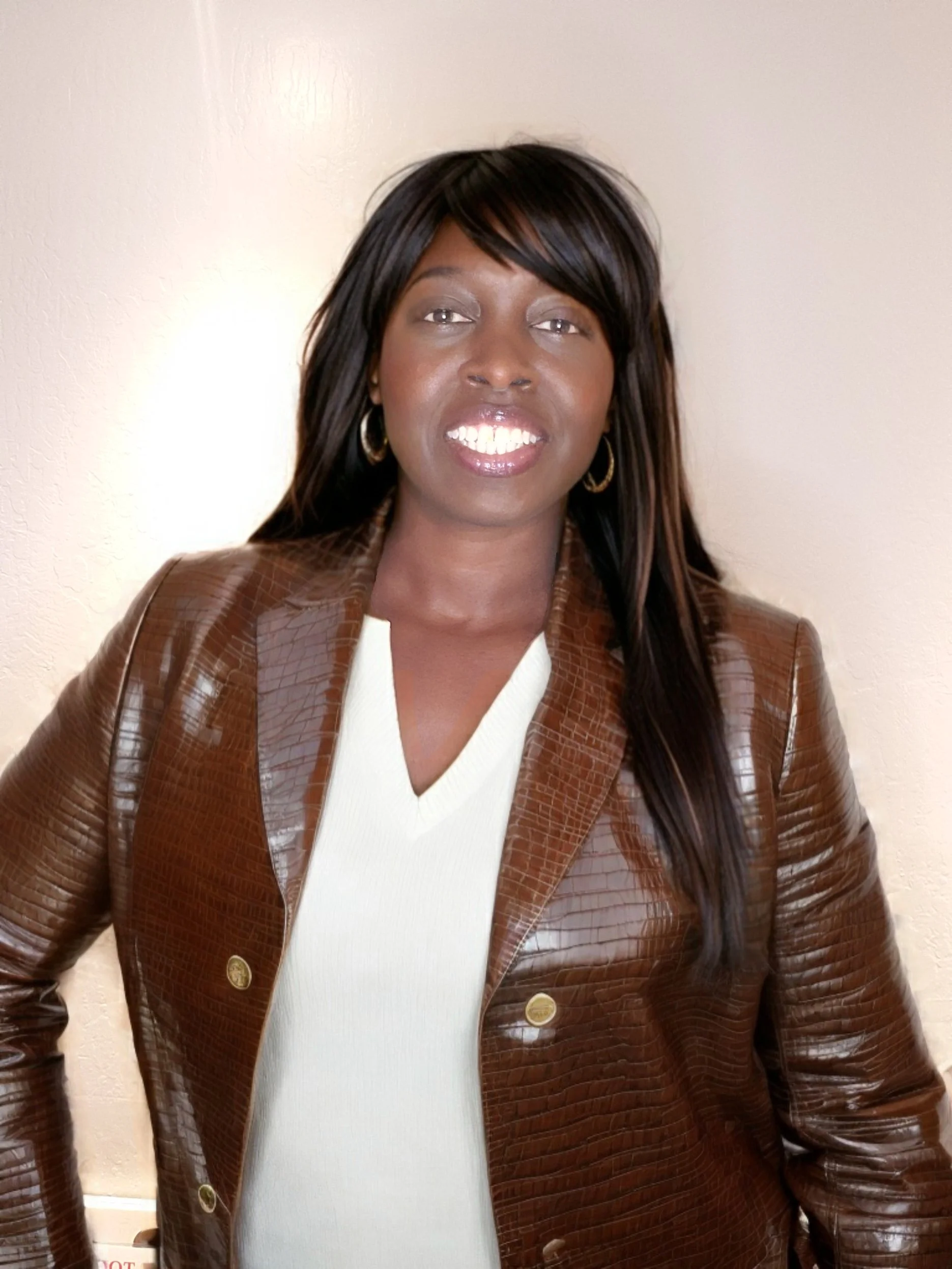
Let’s look at what’s actually going on and tell you the truth about it.
Book a consultation and I’ll assess whether the issue is skin, fat, muscle, or a combination, and whether this treatment gets you what you want. If a surgeon would serve you better, I’ll say so. You’re allowed to start wherever you want. I’ll meet you there.