
Medical Weight Loss Clinic: Root Cause Weight Loss for Women Over 40
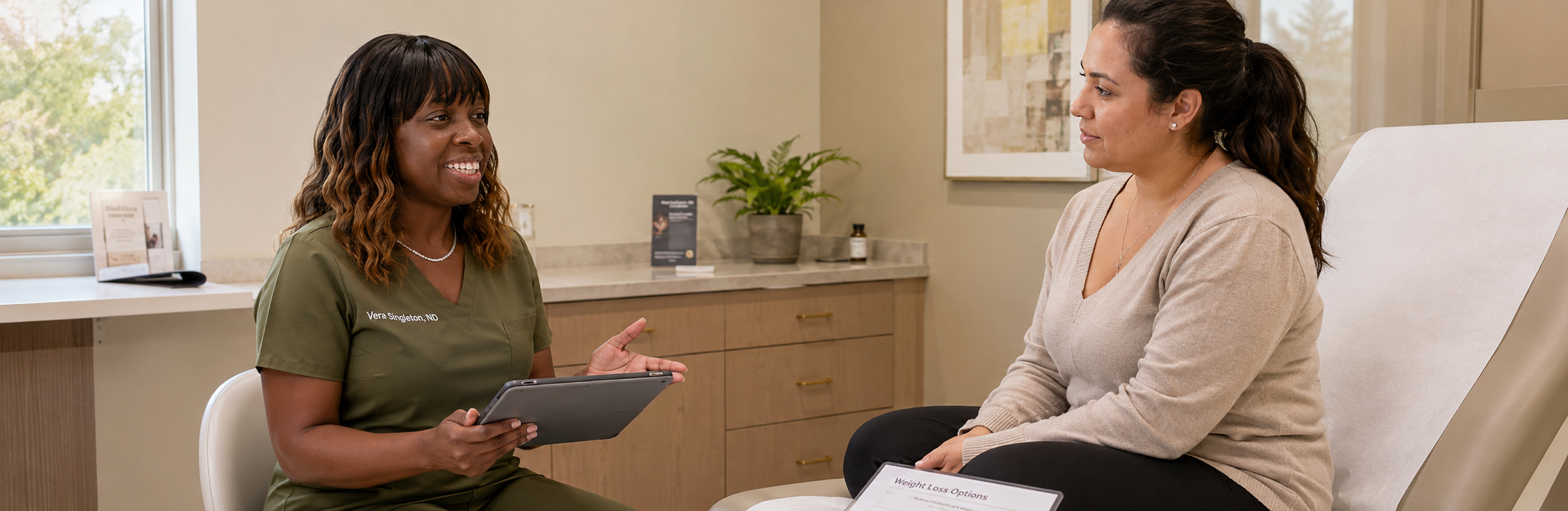
You’re eating less than you did at 35 and the scale won’t move. You’re doing the workouts. You cut the wine, then the bread, then the snacks after dinner. Something changed around 43 and nobody has explained what.
Here’s the short answer. Weight gain after 40 is usually a hormone and body composition problem, not a willpower problem. Cortisol, insulin, thyroid, estrogen, and testosterone all govern how your body stores fat and holds muscle, and when they shift, the things that used to work stop working. I test those first, correct what’s off, and build a plan around lowering your body fat percentage and protecting your muscle. I prescribe GLP-1 medications when they’re the right tool. But the medication is never the plan.
Why losing weight is different after 40
Here’s what I hear every week in my Lafayette office, and from women coming in from Walnut Creek, Danville, Alamo, and across Lamorinda:
You’re eating the same or less and gaining anyway
The weight moved to your middle, and it wasn’t there before
You’ve lost weight before and it came back faster each time
You’re exhausted by afternoon and wired at 11pm
You’re strong at the gym but your body doesn’t look like it
Your sleep got worse and your waistband got tighter in the same year
You’ve been told your labs are normal and to eat less and move more
That last one is the one that makes women furious, and they’re right to be. “Eat less, move more” is advice for a 30 year old body. Yours is running different software now.
Two things change at the same time after 40, and they compound each other.
Your hormones shift. Estrogen and testosterone decline through perimenopause and menopause. Insulin sensitivity drops. Cortisol patterns flatten out. Thyroid function often slips just enough to matter and not enough to get flagged as a disease. Your body starts preferring to store fat around your middle, and it gets very good at it.
You start losing muscle. Muscle mass declines steadily from your thirties onward and the drop accelerates around menopause, when estrogen and testosterone are both falling. Muscle is metabolically expensive tissue. Less of it means a lower resting metabolic rate, which means the same food that used to maintain you now adds to you. This is sarcopenia, and it’s real, and almost nobody testing your thyroid is talking to you about it.
So you can cut calories harder. It’ll work for a while. Then it’ll stop, because aggressive restriction costs you more muscle, which lowers your metabolic rate further, which is why the weight comes back and brings friends.
That’s not a discipline failure. That’s physiology doing exactly what you told it to do.
So what does my plan actually include?
Not a script and a scale. Here’s what I’m actually working with:
Comprehensive hormone and metabolic testing, before we decide anything
Diet modification built from your labwork, not from a template that gets handed to every patient
Body composition tracking, so we can see fat and muscle separately instead of watching one number on a scale. I encourage a DEXA scan, which is the most accurate picture of what your body is actually made of
Targeted botanicals and nutrient support where your testing shows a gap
Amino acids and creatine, used strategically, to protect and build muscle while you’re losing
Peptide therapies when they’re clinically appropriate for you
Personalized resistance training with a coach, included in the program
GLP-1 medication when it’s the right tool, prescribed and supervised properly
Every one of those gets chosen based on what your testing shows, not on what’s trending. That’s the difference between a plan and a prescription.
Why a GLP-1 alone isn’t a weight loss plan, and how I do it differently
My job isn’t to get you a prescription. My job is to figure out why the weight came on, correct what’s driving it, and make sure that when you lose it, you’re losing the right tissue. Keeping it off is the unglamorous part. It’s also the whole point.
I prescribe GLP-1 medications and I work with reputable pharmacies, so this isn’t an argument against them. It’s an argument against using them alone.
Two findings explain why. One year after stopping semaglutide, participants in the STEP 1 trial extension had regained about two-thirds of the weight they’d lost (Wilding et al., 2022). And while on it, they lost muscle along with the fat, with lean body mass dropping around 10 percent (STEP 1 body composition analysis). Lose weight fast, lose muscle with it, come off with a slower metabolism than you started with, and regain. That’s not a drug problem. That’s a plan problem.
So here’s how I run it differently:
Every decision is guided by labwork. We test before we prescribe, and we keep testing as we go. Sometimes the results change the plan entirely. If your thyroid is the problem, a GLP-1 is treating the wrong thing.
I manage the side effects, and that’s my specialty. Nausea, constipation, reflux, bloating, and the dose escalations that go sideways. Most women don’t quit because the medication stopped working. They quit because they felt awful. Gut and digestive health is what I’ve spent fifteen years treating, so managing this is not an afterthought for me. It’s how you actually reach your goal weight instead of stalling at month three.
Your muscle is protected the whole way. Protein targets, amino acids, creatine, and resistance training with your coach. This is the piece almost nobody else is doing, and it’s the difference between losing fat and losing your metabolism.
We plan the taper from day one. Coming off is the part everyone avoids discussing. If your hormones are corrected and your muscle is intact, you have somewhere to land.
Microdosing, for women who don’t tolerate standard dosing
Not everyone needs a full therapeutic dose, and not everyone can tolerate one.
Microdosing means using smaller doses than the standard escalation schedule. In my practice, some women get meaningful metabolic benefit well below the full dose, with far fewer side effects and, importantly, without appetite suppression so aggressive that they can’t eat enough protein to hold onto their muscle.
It’s often the right conversation if:
You tried a GLP-1 before and quit because you felt terrible
You have a sensitive gut, or a history of reflux, gastroparesis, or IBS
You’re worried about losing muscle, or you’re already lean and want fat loss specifically
You want the metabolic benefit without feeling like you can barely eat
It isn’t a shortcut and it isn’t right for everyone. It’s a way to keep women in treatment who would otherwise quit at week six. Whether it fits you depends on your labs, your history, and how you respond, which is a conversation, not a checkbox on an intake form.
The hormones that govern your weight, and what I test
Before we go further, I want to say this plainly: you do not need a GLP-1 to lose weight with me. Plenty of the women I work with never take one, and they do beautifully.
Here’s why. A medication doesn’t address why your body started storing weight differently at 44. These hormones do. They’re the reason weight comes back after you’ve worked so hard to lose it, and if nobody has looked at them, losing weight is difficult with a GLP-1 and considerably harder without one. Correct them, and your body starts responding to food and training the way it used to.
So we don’t guess at this. We test.
| What’s driving it | What it feels like | What I look at |
|---|---|---|
| Insulin resistance | Carb cravings, afternoon crashes, weight settling around your middle, hunger two hours after eating | Fasting insulin, glucose, HbA1c, cardiometabolic and insulin resistance panel |
| Cortisol | Wired at night and exhausted in the morning, belly weight that arrived with a stressful stretch, poor recovery | Cortisol patterning, adrenal assessment, stress and sleep history |
| Thyroid | Cold, tired, constipated, thinning hair, dry skin, weight that won’t move on any diet | Full thyroid panel, not just TSH |
| Estrogen and progesterone | Weight redistribution starting in perimenopause, sleep disruption, mood shifts, changes in body shape | Hormone optimization panel, symptom timeline |
| Testosterone | Loss of strength, flat energy, low motivation, muscle that won’t build no matter how you train | Testosterone and androgen assessment |
| Muscle loss | Same weight, different body. Softer, weaker, and smaller clothes fit worse | Body composition assessment, body fat percentage, strength baseline. I encourage DEXA scanning for a true reading |
| Inflammation and gut function | Bloating, puffiness, food reactivity, weight that swings several pounds in a day | Digestion and gut health panel, nutrient status, food sensitivity testing when indicated |
Most of these are standard, affordable, and almost never run together. Running them together is the point. A thyroid result means something different when I can see your insulin and your cortisol next to it.
Two of these drivers have their own page: read more about thyroid testing and read more about adrenal and cortisol testing.
If you have labs from another provider within the past three to six months, bring them. I’ll read them. You don’t have to start over.
What we’re actually changing
Not the number on the scale. That number is the least useful piece of information about your body.
Your body fat percentage. This is the measurement that matters. Two women at the same weight can have completely different bodies, different metabolic risk, and different clothing sizes. We track composition, not just mass, and I’ll encourage you to get a DEXA scan so we’re working from your true body composition rather than from the scale.
Your muscle. We protect it while you’re losing and we build it where we can. Protein, amino acids, creatine, and resistance training are not optional extras in my program. They’re the reason the loss holds.
The hormones underneath. If your thyroid is sluggish or your insulin is high or your cortisol is inverted, we correct that first or alongside, because trying to lose weight against those headwinds is how women end up exhausted and convinced they’re broken.
Personalized training, included. I work with local fitness coaches who deliver personalized workout sessions, and that’s included in my programs at no additional charge. Not a PDF of exercises. An actual coach building actual sessions for your body, virtually or in person. I included it because the research is unambiguous: without resistance training, a meaningful share of what you lose is muscle, and I’m not willing to do that to a woman over 40.
You also get nutrition coaching, check-ins with me between visits, and access to my quarterly Masterclasses, where one of the recurring themes is exactly this: GLP medications, peptides, weight loss barriers, and the wearables worth using like CGMs and Oura.
Extra support when you need it
Sometimes you do everything right and there’s still one area that won’t respond. Sometimes you lose the weight and your skin doesn’t catch up. Both are normal, both are common, and neither is required to work with me.
PHYSIQ body contouring, for the areas that won’t respond
PHYSIQ is different from most body devices because it does two things at once. It uses targeted laser energy to reach the fat layer, and EMS pulses to drive deep involuntary muscle contractions that re-educate and strengthen the muscle underneath. So it isn’t only reducing fat. It’s rebuilding core abdominal muscle and toning large muscle groups, which is exactly what you want when the goal is composition rather than weight.
Where it helps: lower belly, back of the arms, inner thighs, and the stubborn spots that don’t respond to overall weight loss.
Who it’s for: women in the middle of weight loss, women who’ve finished losing and want shaping, and women on GLP medications who want muscle support while their weight comes down.
What to expect: sessions run about 40 minutes, with no downtime and no pain. Clients lose inches of subcutaneous fat, up to 6 inches over 6 weeks, and individual results vary. Results become clearly visible around the fourth treatment, which is why it’s done as a series.
Skin tightening, for after the weight comes off
This is the part nobody prepares you for. You do the hard work, the weight comes off, and now there’s loose skin at your abdomen, your inner arms, your inner thighs, your chest, and your neck. No amount of additional weight loss fixes it, and it’s demoralizing after everything you just did.
I tighten skin using plasma energy, without surgery, without injectables, without threads, and without Sculptra or Radiesse. Nothing is being added to your body. Your own tissue does the work.
If you’re losing significant weight, especially on a GLP-1, this is worth understanding before you need it.
What working with me actually looks like
We start with a conversation and a full workup. Your history, your timeline, what changed and when, and comprehensive testing. This is where most weight loss clinics skip straight to a prescription. I don’t.
I read your results out loud, with you. Not a portal notification. I walk you through what’s high, what’s low, what’s driving what, and what we’re doing about it in what order. You leave with a written plan.
We correct the drivers. Thyroid, insulin, cortisol, and hormone support where it’s appropriate. Nutrient repletion where you’re depleted. Gut work if inflammation is part of the picture.
We build the composition plan. Nutrition from your labs, protein, resistance training with your coach, and metabolic support. We track body fat percentage, not just weight.
We adjust as we go. You get check-ins with me between sessions, because bodies change during this and the plan should change with them.
If you’re already on a GLP-1, bring it. I’ll work alongside what you’re taking, watch your labs, protect your muscle, manage the side effects, and build the plan that turns a temporary result into a lasting one.
Weight loss doctors near me: why women in the East Bay come here
Most of the women I see have already tried the other route. A prescription from a telehealth site with nobody watching their labs. A program that measured nothing but weight. A doctor who ran a TSH, said it was normal, and told them to eat less.
What’s different here:
I look for the cause first. Anyone can hand you a medication. Almost nobody will tell you why the weight arrived in the first place, and that’s the only information that helps you keep it off.
You don’t need a GLP-1 to work with me. Many of my patients never take one.
When we do use one, I supervise it properly. Real labs, real dose management, expert side effect support from someone whose specialty is gut health, and microdosing when standard dosing isn’t right for you.
We measure body composition, not just weight. Body fat percentage and muscle mass are what we’re changing. The scale is a lagging indicator and a bad one.
Personalized training and nutrition coaching are included at no additional charge with my programs. Real coaches, in person or virtual, because protecting muscle isn’t optional over 40.
One doctor, the whole picture. Your hormones, your gut, your metabolism, your body composition, and your skin, all read by the same person. I do medical aesthetics under the same roof, so when we get to a stubborn area or loose skin, you’re not starting over with a stranger.
An award winning doctor with fifteen years of practice in the East Bay. I’ve been voted Best Doctor of the East Bay, and I have page after page of five star reviews that show how hard I work for my patients.
I’m in Lafayette, CA, easy to reach from Oakland, Berkeley, Walnut Creek, Orinda, Moraga, Danville, Alamo, Pleasant Hill, and the broader East Bay.
Frequently asked questions
-
Yes. I prescribe GLP-1 medications and work with reputable pharmacies, and I supervise treatment properly: labs before we start, dose management as we go, expert side effect support, and muscle protection throughout. If you’re already on a prescription from somewhere else, I’ll work alongside it. What I won’t do is hand you a pen without understanding why the weight came on.
-
Yes, and many of my patients do exactly that. If your thyroid is sluggish, your cortisol is inverted, or your insulin is high, correcting those changes what your body does with food. Add diet built from your labwork, strategic amino acids and creatine, and resistance training, and you have a real plan without medication.
-
Microdosing means using smaller doses than the standard escalation schedule. In my practice, some women respond well below the full dose with far fewer side effects, and with appetite suppression gentle enough that they can still eat the protein they need to hold onto muscle. It’s especially useful for women who tried a GLP-1 before and quit because they felt terrible. Whether it’s right for you depends on your labs and your history.
-
That’s the honest risk, and the research reflects it. In the STEP 1 trial extension, participants regained roughly two-thirds of their lost weight within a year of stopping semaglutide. What changes the odds is what you did while you were on it: whether the underlying hormone drivers were corrected, and whether you protected your muscle instead of losing it. That’s the entire reason my program is built the way it is.
-
Because two things happen at once. Your hormones shift through perimenopause and menopause, which changes how and where you store fat. And you begin losing muscle, which lowers your resting metabolic rate. The same eating pattern now produces a different result. It isn’t willpower. It’s a different body, and it needs a different approach.
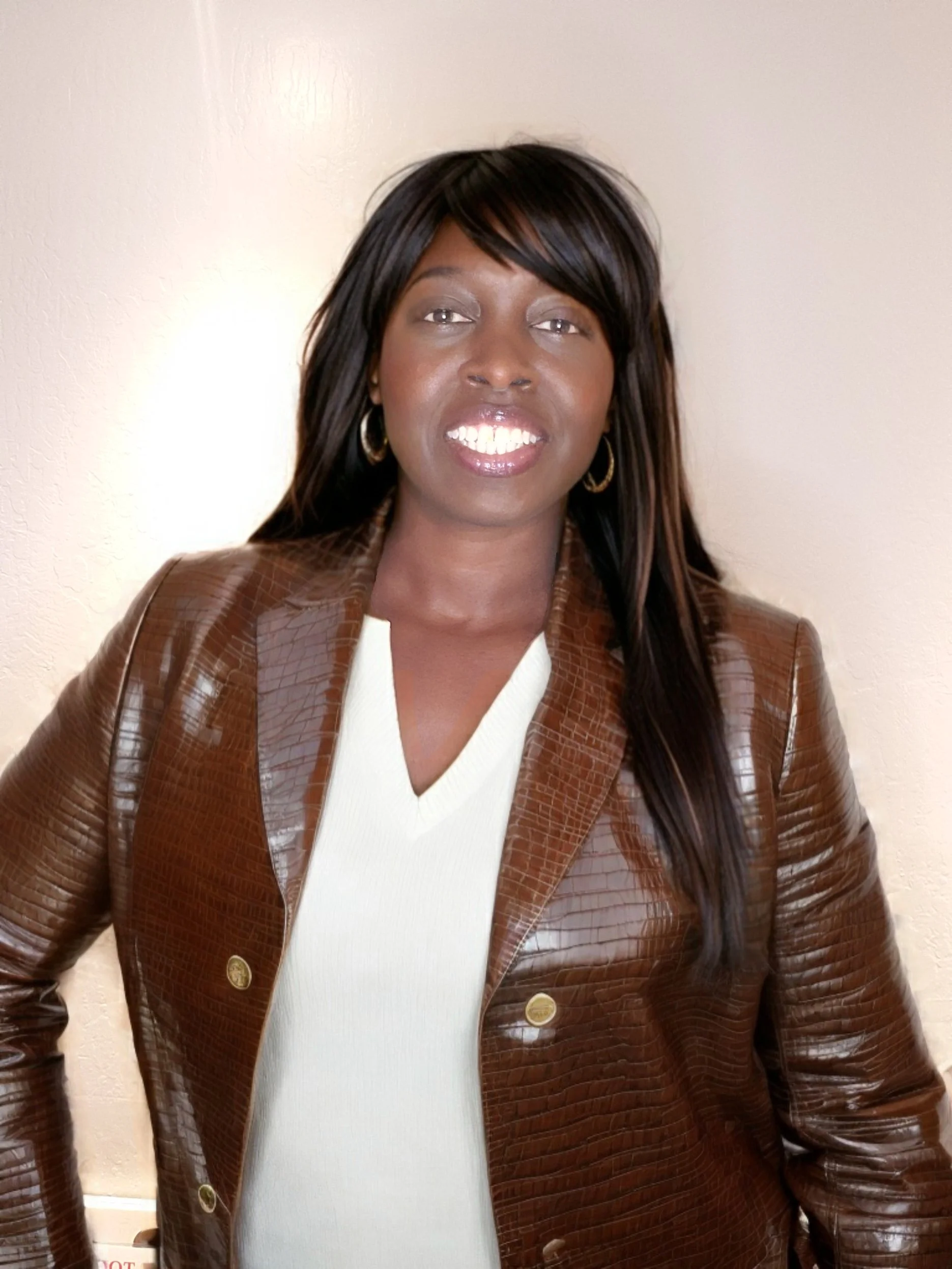
Dr. Vera Singleton, ND, MBA Founder, Potentia MedSpa, Lafayette, CA Voted Best Doctor of the East Bay Functional medicine and medical aesthetics under one roof, guided by one philosophy: one body, one doctor, simple answers.
Let’s find out why the weight came on in the first place.
If you’re tired of doing everything right and getting nowhere, book a consultation. We’ll go through your history, run the testing that actually explains what’s happening, and build a plan around your body composition instead of your scale. You’re allowed to start wherever you want. I’ll meet you there.
Book Your FREE 20 Min Phone Consultation
Potentia MedSpa | 1043 Stuart St #210, Lafayette, CA 94549 | 510-230-2282