
Thyroid Doctor: Testing, Hashimoto’s, and Treatment

You’re cold when nobody else is. Exhausted in a way that sleep doesn’t touch. Your hair is coming out in the shower and your skin has gone dry and rough. You’re constipated, foggy, and the weight won’t move no matter what you do.
Someone ran a thyroid test. It came back normal. You were told to manage your stress.
Here’s what I want you to know. A TSH inside the reference range does not mean your thyroid is working properly. TSH is a signal from your pituitary, not a measure of what your tissues are actually receiving, and testing it alone is why so many people are told they’re fine while every symptom says otherwise. I run the full panel: TSH, free T4, free T3, reverse T3, and antibodies, plus the nutrients your thyroid depends on. Then I treat what I find. I prescribe thyroid hormone when that’s what you need, and I can support the thyroid without medication when that’s what you’d prefer.
What actually changes
| What you’re living with now | What people commonly describe afterward |
|---|---|
| Cold when everyone else is comfortable | Warm hands and feet, which is usually an early sign it’s working |
| Exhausted no matter how much you sleep | Energy that lasts the day |
| Weight that won’t move on any diet | Your body responding to effort again |
| Hair coming out in the shower | Shedding settling, then density over months |
| Dry, rough skin and brittle nails | Skin and nails that behave normally again |
| Constipated, and used to not be | Regular digestion |
| Foggy, forgetful, losing words | Your brain back |
| Low mood you’ve been offered an antidepressant for | Mood lifting as the underlying cause is corrected |
| Told your thyroid is normal while you feel terrible | An actual explanation from a full panel |
Individual results vary, and thyroid work is measured in months rather than weeks.
Why “your thyroid is normal” so often isn’t the answer
This is the reason most people find me, so let me explain it properly.
Standard screening is TSH alone. TSH is thyroid stimulating hormone, and it isn’t a thyroid hormone at all. It’s the message your pituitary sends to your thyroid telling it to work harder. Measuring it tells you about the instruction, not about whether the instruction was carried out.
Your thyroid produces mostly T4, which is inactive. Your body then has to convert T4 into T3, which is the active form your cells actually use. That conversion happens in your liver, your gut, and your peripheral tissues, and it can go wrong even when your thyroid itself is producing perfectly well.
Which means you can have a normal TSH, a normal T4, and still be hypothyroid at the tissue level, because the conversion isn’t happening.
And there’s reverse T3. Under stress, illness, dieting, or inflammation, your body converts T4 into reverse T3 instead of T3. Reverse T3 is inactive and it blocks the receptors that active T3 needs. So your panel looks acceptable and you feel exactly as though your thyroid isn’t working, because functionally it isn’t.
Reference ranges are the other half of the problem. They’re built from a population that includes a lot of people with undiagnosed thyroid disease, and they’re wide. Sitting at the edge of a wide range built from an unwell population is not the same as being optimal.
What I actually test
TSH. The pituitary signal. Useful, and not sufficient.
Free T4. What your thyroid is producing.
Free T3. The active hormone your cells use. This is the one that most often explains a symptomatic person with a normal TSH, and it’s frequently not run.
Reverse T3. Whether you’re converting into the inactive form. This is the marker that explains the most and is ordered the least.
Thyroid antibodies, TPO and thyroglobulin. Autoimmune thyroid disease is the most common cause of hypothyroidism, and antibodies frequently rise years before TSH moves. Testing them can identify what’s happening long before a standard panel would.
And the nutrients thyroid function depends on: iron and ferritin, selenium, zinc, iodine, vitamin D, and B12. Your thyroid cannot produce hormone or convert it without these, and a deficiency here is a common and entirely correctable reason for a poorly functioning thyroid.
Plus what’s around it. Cortisol, because it directly impairs T4 to T3 conversion and drives reverse T3. Sex hormones, because estrogen affects thyroid binding. And gut function, because a meaningful share of conversion happens there.
Read together, not one line at a time. A free T3 at the bottom of the range means something quite different when I can see your reverse T3 and your ferritin next to it.
Where you might fit
Three situations, and they need different handling.
Subclinical hypothyroidism
Your TSH is elevated but still within or just above range, your T4 is normal, and you have symptoms. Conventionally this is often watched rather than treated, on the reasoning that you haven’t crossed a threshold yet.
Watching it is a legitimate position and it isn’t the only one. You’re symptomatic now, the trajectory usually continues, and there’s a great deal that can be done before a formal diagnosis arrives: correcting the nutrient cofactors, addressing cortisol and conversion, treating gut inflammation, and reassessing.
Some people in this category do well with a low dose of thyroid hormone, and I’ll prescribe it where that’s appropriate. Others resolve on nutrients and conversion support alone. The testing tells us which, and I’d rather find out than default to either.
Hashimoto’s thyroiditis
The most common cause of hypothyroidism, and it’s an autoimmune condition. Your immune system is attacking your thyroid tissue, which is why antibodies appear years before your TSH shifts.
Standard management replaces the hormone once enough tissue is lost. That’s necessary and it’s also only half of it, because it doesn’t address why your immune system is attacking in the first place.
What I add is the autoimmune side: gut barrier integrity, because intestinal permeability is strongly associated with autoimmune activity, food reactivity where your history points there, nutrient status, particularly selenium and vitamin D, inflammatory load, and stress physiology.
The goal is to slow the process and preserve function, alongside replacing what you need. If you’re already on medication and your antibodies have never been rechecked, that’s a conversation worth having.
Already medicated and still not right
This is a large group and it’s an underserved one.
You’re on levothyroxine. Your TSH is beautifully controlled. And you’re still cold, tired, foggy, and gaining weight.
Usually one of three things. You’re not converting the T4 you’re given into T3, and nobody has measured free T3 or reverse T3. Your nutrient cofactors are deficient enough that conversion can’t happen. Or your dose was set to a TSH target rather than to how you actually feel.
All three are addressable, and none of them get found by a panel that only measures TSH.
With medication or without
I do both, and neither is the fallback option.
If you need thyroid hormone, I prescribe it
Some thyroids don’t produce enough and no amount of nutritional support changes that. In that situation, replacing the hormone is the correct treatment and delaying it in favor of a natural approach does you harm rather than good.
I prescribe thyroid hormone, and I dose it to how you feel alongside your labs rather than to a TSH number in isolation.
I recheck properly, including free T3 and reverse T3, because a dose that normalizes TSH and leaves you symptomatic hasn’t done its job.
If you’d rather not, there’s real work to do
Plenty of people want to avoid medication, either because they’re early enough that it isn’t yet necessary or because they’d prefer to try. That’s a legitimate position and there’s genuine depth here.
Correcting the nutrient cofactors, which is the most common and most fixable reason a thyroid underperforms. Iron, selenium, zinc, iodine, vitamin D, B12.
Supporting conversion, which means addressing cortisol, inflammation, dieting stress, and gut function, since all four drive T4 toward reverse T3 instead of T3.
Reducing autoimmune activity, where antibodies are present, through gut work, food reactivity, and inflammatory support.
Botanical support, matched to your pattern.
And retesting, so we’re measuring whether it worked rather than assuming.
I’ll be honest about the limits. This approach works well for subclinical presentations, conversion problems, nutrient-driven dysfunction, and early autoimmune activity. It does not replace hormone in a thyroid that has lost the tissue to produce it, and I’ll tell you plainly when you’ve reached that point rather than letting you struggle on principle.
Why this connects to everything else
Thyroid rarely goes wrong in isolation, and treating it in isolation is why it stalls.
Cortisol impairs T4 to T3 conversion and drives reverse T3. A thyroid problem sitting on top of an untreated cortisol pattern will not fully resolve.
Estrogen affects thyroid binding, which is one reason thyroid symptoms so often surface in perimenopause, and why hormone therapy can change your thyroid requirement.
Gut function matters because a meaningful share of conversion happens there and because intestinal permeability is associated with autoimmune activity.
Iron and ferritin are required for conversion, and low ferritin is extremely common in women and produces an overlapping symptom picture on its own.
So when I say I read your thyroid against everything else, this is what I mean. The answer is frequently sitting in a different panel.
Thyroid doctor near me: why people in the East Bay come here
The full panel, not just TSH. Free T3, reverse T3, and antibodies, which are where the explanation usually is.
Reverse T3 tested, which explains the most and is ordered the least.
The nutrients your thyroid runs on, checked and corrected, because a thyroid can’t work without them.
I prescribe thyroid hormone, dosed to how you feel rather than to a TSH target alone.
And I can treat without it where that’s appropriate and that’s what you want, with real depth rather than a supplement handout.
Hashimoto’s treated as autoimmune, not just as a hormone deficiency.
Read against your cortisol, hormones, and gut, because thyroid problems rarely travel alone.
An award winning doctor with fifteen years of practice in the East Bay. I’ve been voted Best Doctor of the East Bay, and I have page after page of five star reviews that show how hard I work for my patients.
I’m in Lafayette, CA, easy to reach from Walnut Creek, Orinda, Moraga, Danville, Alamo, Pleasant Hill, Berkeley, Oakland, and the broader East Bay.
Frequently asked questions
-
TSH is the signal your pituitary sends, not a measure of what your tissues are receiving. You can have a normal TSH and still be hypothyroid at the tissue level if you’re not converting T4 into active T3, or if reverse T3 is elevated and blocking the receptors. Neither shows up on a TSH-only panel. That’s the most common explanation I find, and it’s why I run the full picture.
-
Under stress, illness, dieting, or inflammation, your body converts T4 into reverse T3 instead of active T3. Reverse T3 is inactive and it competes for the same receptors, so it blocks the hormone that would have worked. Your panel can look acceptable while you feel exactly as though your thyroid isn’t functioning. It’s the marker that explains the most and is ordered the least.
-
The autoimmune process can be influenced, which is different from cured and better than ignored. Standard management replaces the hormone once enough tissue is lost, and that’s necessary. What it doesn’t address is why your immune system is attacking. I work on the gut barrier, food reactivity where relevant, nutrient status particularly selenium and vitamin D, inflammatory load, and stress physiology, alongside replacing what you need. The goal is slowing the process and preserving function.
-
Not always, and it depends on where you are. If your thyroid has lost the tissue to produce enough hormone, replacing it is the correct treatment and I’ll tell you so. If the problem is conversion, nutrient deficiency, cortisol, or early autoimmune activity, there’s genuine work to do without medication and I’m well equipped for it. I prescribe when it’s needed and I’ll tell you honestly which situation you’re in.
-
Usually one of three things. You’re not converting the T4 you’re taking into active T3, and nobody has measured free T3 or reverse T3. Your nutrient cofactors are too low for conversion to happen. Or your dose was set to a TSH target rather than to how you actually feel. All three are addressable, and none are found by a panel that measures TSH alone.
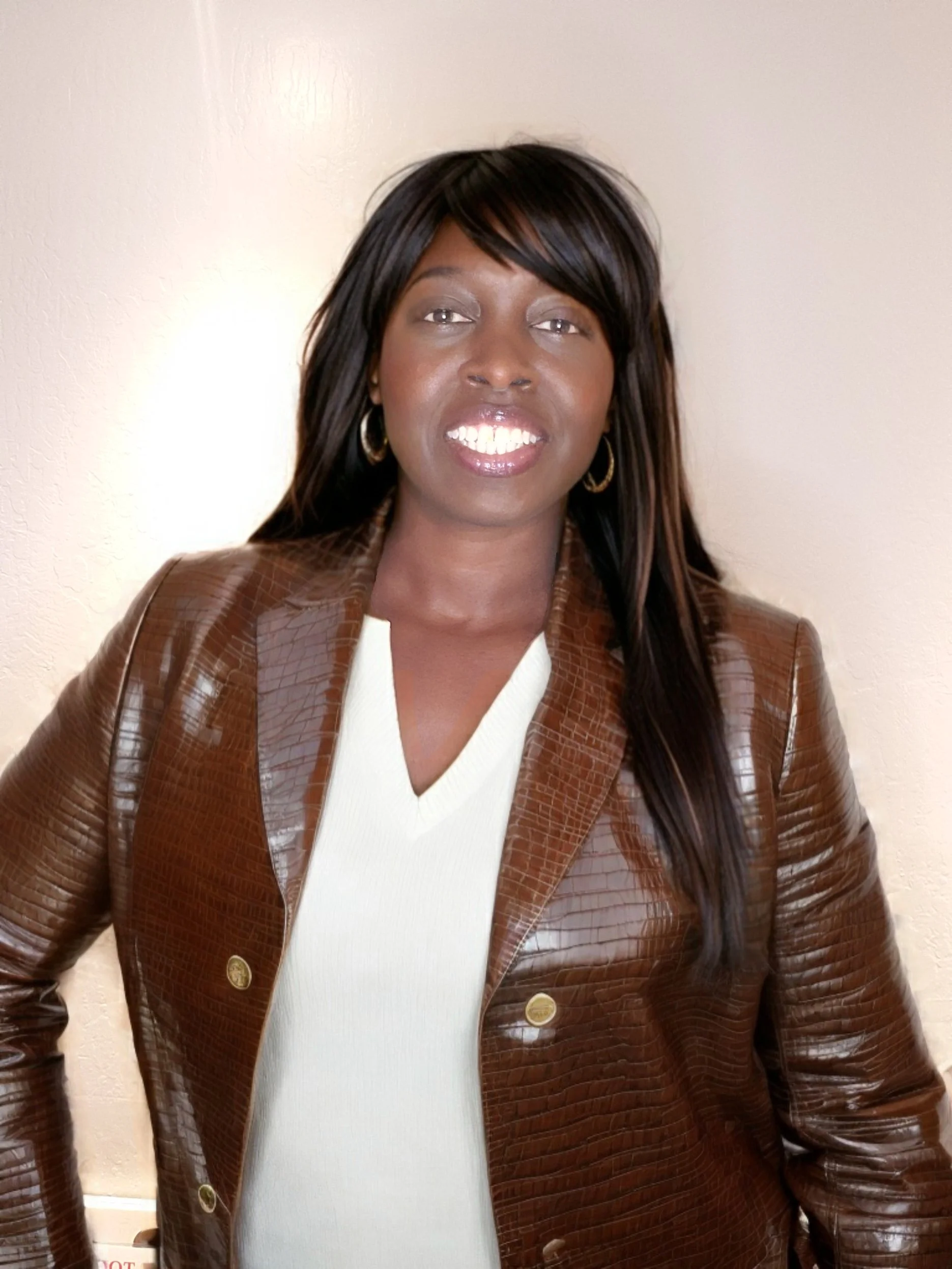
Dr. Vera Singleton, ND, MBA Founder, Potentia MedSpa, Lafayette, CA Voted Best Doctor of the East Bay Functional medicine and medical aesthetics under one roof, guided by one philosophy: one body, one doctor, simple answers.
Let’s run the panel that actually explains it.
Book a consultation. We’ll go through your history, run the full thyroid picture including free T3, reverse T3, antibodies, and the nutrients your thyroid depends on, and read it against your cortisol and hormones. Then I’ll show you what’s happening and we’ll decide together whether medication is part of the answer. You’re allowed to start wherever you want. I’ll meet you there.