
Body Contouring: PHYSIQ Fat Reduction and Muscle Rebuilding
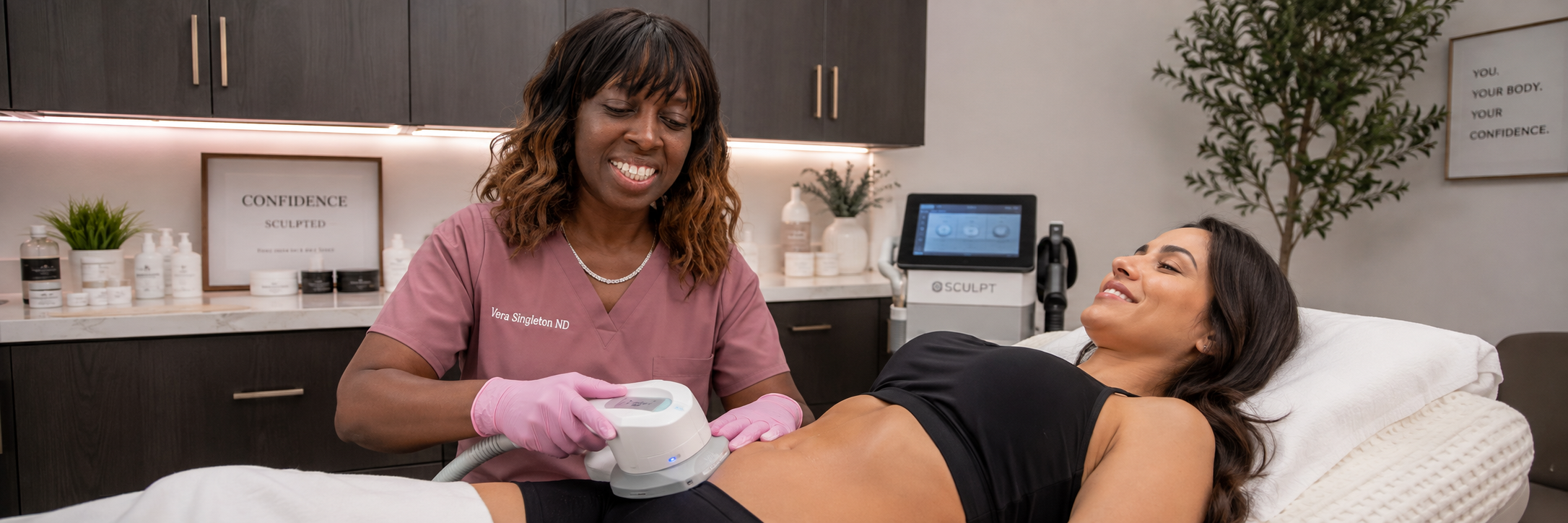
Your weight is fine. Your body doesn’t look like your weight.
There’s an area that hasn’t responded to anything: the lower belly that stayed after your kids, the softness across your middle that arrived in your forties, the arms you’ve stopped raising in photographs. Or you’ve lost weight, maybe a lot of it, and what’s left underneath is softer and flatter than you expected.
Here’s what I want you to know. PHYSIQ is one of the only devices that treats fat and muscle in the same session. It heats and destroys fat cells in the treated area, and it drives deep involuntary muscle contractions that re-educate and strengthen the muscle underneath. That combination is why the results hold. Reducing fat changes how you look right now. Rebuilding muscle changes how your body handles energy going forward, which is the part that lasts. It takes about 40 minutes, there’s no downtime, no needles, and it doesn’t hurt.
What actually changes
| What you’re living with now | What clients commonly describe afterward |
|---|---|
| An area that hasn’t moved no matter what you do | Inches off the areas you specifically asked about, most often the lower abdomen |
| Doing everything right and your midsection not reflecting it | A flatter, firmer middle that matches the effort you’ve been putting in |
| Loose and soft after weight loss | Tone underneath, so the weight you lost actually looks like weight you lost |
| Losing muscle on a GLP-1 and knowing it | Muscle held onto, and definition returning as the weight comes down |
| A core that gave out after pregnancy or surgery | Real core engagement again, and the stability that comes with it |
| Sitting all day, no time to train, watching your body soften | A metabolically active area again, and a foundation to build from |
| Clothes that fit differently in one specific place | Waistbands sitting where they used to |
| Wanting change without surgery, anesthesia, or recovery | The result, and back to work the same afternoon |
Most clients lose inches of subcutaneous fat, up to 6 inches over 6 weeks. Individual results vary.
Why reducing fat alone doesn’t hold
This is the clinical argument, and it’s the reason I chose this device over the alternatives.
Every fat reduction technology does roughly the same thing: it destroys fat cells in a treated area, your body clears them, and the area gets smaller. That works, and it’s genuinely useful.
But it’s a subtraction. Nothing about your body’s ability to manage energy has changed. The muscle underneath is exactly as deconditioned as it was, and if that muscle has been quiet for years, and after 40 it usually has, it isn’t contributing much.
Muscle is the most metabolically active tissue you have. It’s what determines how much energy your body uses at rest, how it handles the food you eat, and how well it holds a result. And it’s what you’re losing steadily from your thirties onward, faster after menopause, and faster still on a GLP-1.
So when you treat fat and muscle together, two things happen. The area gets smaller, and it also becomes an active participant in your metabolism rather than a passive place where fat accumulated. Muscle that’s been sitting dormant starts getting the signal to contract again, and re-educated muscle behaves differently than deconditioned muscle does.
That’s the difference between a treatment that changes what you look like this month and one that changes what your body does with what you feed it.
I’d be straight with you about the limits, because I’d rather you trust me than oversell it. This is not a substitute for eating enough protein or for lifting weights, and I’ll tell you that in your consultation. What it is, is a way to activate muscle that isn’t currently being activated, and for a lot of people, that’s the difference between starting and not starting.
What PHYSIQ actually does
PHYSIQ uses what’s called STEP technology, which alternates two energies in a programmed sequence within one session.
Deep thermal energy from an 850nm diode array heats the subcutaneous fat layer to the point where fat cells break down. Your lymphatic system clears them over the following weeks. Surface cooling keeps your skin comfortable while the heat goes where it needs to.
Electrical muscle stimulation drives rapid, deep, involuntary contractions in the muscle beneath. These aren’t surface tingles. They’re real contractions at a volume and consistency you can’t produce voluntarily, which is what re-educates and strengthens the tissue.
The sequencing matters. Alternating heat and contraction is what lets both happen properly in a single 40-minute session rather than as two separate treatments on two separate days.
Practically:
Four applicators, strapped in place, hands-free. You read or answer email.
Up to three areas in one appointment
About 40 minutes
No needles, no incisions, no anesthesia, no numbing
No downtime. You go back to your day
Comfort level is essentially zero out of ten. Warmth, and the sensation of your muscles contracting
Typically 5 to 8 sessions, usually a week apart. Results become clearly visible around the fourth
FDA cleared
Areas I treat most: lower abdomen, full abdomen, flanks, back of the arms, inner and outer thighs, and buttocks.
How PHYSIQ compares
These are the three comparisons everyone makes before booking, so here they are honestly.
| PHYSIQ | Muscle stimulation devices (Emsculpt and similar) | Cryolipolysis (CoolSculpting and similar) | Liposuction | |
|---|---|---|---|---|
| What it treats | Fat and muscle in the same session | Muscle, with fat addressed on some newer platforms | Fat only | Fat only, in larger volume |
| How it works on fat | Deep heat causing fat cell breakdown | Not the primary mechanism on original platforms | Freezing fat cells | Surgical removal |
| Effect on muscle | Re-educates and strengthens the treated muscle | Yes, this is its main purpose | None | None. Can leave deconditioned muscle under a slimmer contour |
| Comfort | Warmth and contractions. No numbing needed | Strong contractions, tolerable | Intense cold, numbness, occasional pain afterward | Surgical, requires anesthesia |
| Downtime | None | None | Usually none, sometimes swelling or numbness for weeks | Real recovery, compression garments, activity restriction |
| Sessions | Usually 5 to 8, weekly | Series | One or more cycles per area | One procedure |
| Best for | Fat plus tone, post-weight-loss softness, GLP-1 muscle support, core rebuilding | Muscle definition when fat isn’t the issue | A discrete fat pocket when muscle isn’t a concern | Significant fat volume in one go |
Versus Emsculpt or muscle stimulation alone
The similarity is real. Both drive forced muscle contractions, and the effect is comparable to doing far more repetitions than you’d manage voluntarily in the same time. If your only concern is muscle definition and you don’t have fat you want reduced, a muscle-only device is a perfectly reasonable choice.
Most of the women I see aren’t in that category. They want the area smaller and firmer, and doing both in the same session rather than as two separate treatment courses is why PHYSIQ is what I have in my practice.
Versus CoolSculpting and other cooling devices
The mechanical difference is straightforward: cryolipolysis cools fat cells to destroy them, PHYSIQ heats them. Both work on fat.
Three reasons I chose heat plus EMS:
It addresses muscle. Cooling does nothing for the muscle underneath, so you get a smaller area with the same deconditioned tissue beneath it. After 40, that muscle is usually part of the problem.
Comfort. Cooling treatments involve intense cold, numbness, and for some people weeks of altered sensation or discomfort afterward. PHYSIQ feels warm.
Predictability. Cryolipolysis carries a recognized, if uncommon, complication where treated fat enlarges rather than shrinks, which requires surgical correction. It’s disclosed by the manufacturers and it’s rare, and it’s still a risk I’d rather not take on someone’s abdomen.
Versus liposuction
Liposuction is a real procedure that does something I can’t do. If you have a significant volume of fat you want gone in one go, a good surgeon will remove more in one session than I can with any device, and I’ll tell you that.
What it doesn’t do is build anything. Liposuction removes fat and leaves the muscle exactly as it was, which is why some people are surprised that a slimmer contour still looks soft. It also requires anesthesia, real recovery, compression garments, activity restriction, and it carries surgical risk.
For most of the women asking me about this, the honest answer is that they don’t need surgery. They need a moderate amount of fat reduced and the muscle underneath brought back online, which is exactly what this device is built for.
If you’re on a GLP-1, read this part
This is the most important section on the page and the reason I talk about this device constantly.
GLP-1 medications work. I prescribe them. But when weight comes off quickly, a meaningful portion of what you lose is lean muscle, not just fat. In the semaglutide body composition data, lean body mass dropped alongside fat mass, and muscle is the exact tissue that determines whether the weight stays off after you taper. Read more about GLP-1 weight loss, and if loose skin is the concern after significant loss, read more about body skin tightening.
So you can end up lighter, softer, and metabolically worse off than you started. That’s not a drug problem, it’s a plan problem, and it’s entirely preventable.
What actually protects muscle: adequate protein and resistance training. Those are the foundation and nothing replaces them. I say that plainly on my weight loss page and I’ll say it here.
Where PHYSIQ fits: it drives real muscle contraction in areas you’re actively losing from, which is direct support for the tissue you’re trying to keep. It’s especially useful if you’re not currently training, if you’re not managing your protein target yet, or if appetite suppression has made eating enough protein genuinely difficult.
Is it as good as lifting weights three times a week and eating 100 grams of protein? No, and I won’t pretend otherwise. Is it considerably better than losing 40 pounds with no muscle strategy at all, which is what most people on these medications are doing? Yes, substantially.
If you’re on a GLP-1 and nobody has talked to you about muscle, that’s the conversation to have now rather than at the end.
The reasons that have nothing to do with a bathing suit
Body contouring gets marketed as vanity, and that framing has kept a lot of people away from something they’d genuinely benefit from.
Core strength and back health. A deconditioned core means your back is doing work it wasn’t designed for. Rebuilding abdominal muscle improves the support structure around your spine, and for people who can’t get into a gym or can’t tolerate traditional core work, this is a way to start. To be clear, this isn’t a treatment for back pain, and if you have a spinal condition that needs care, that needs proper evaluation. But core strength matters for back health, and this builds core strength.
Core function and the pelvic floor. Your pelvic floor doesn’t work alone. It’s supported by the rectus abdominis, the quadriceps, the hamstrings, and the gluteal complex, and every one of those can be strengthened here. When that surrounding musculature is deconditioned, the whole structure has less to work with. I want to be precise about the boundary: this is not a pelvic floor device and it isn’t a substitute for pelvic floor physical therapy, which has the strongest evidence for pelvic floor dysfunction. If leaking is your main concern, that’s a different conversation and I’ll point you correctly. But strengthening what surrounds the pelvic floor is real, and it’s worth doing.
After pregnancy or abdominal surgery. Muscle that’s been separated, cut through, or simply switched off for years often doesn’t reactivate on its own. Forced contraction can help re-establish the signal.
When training isn’t available to you. Injury, joint pain, a schedule that genuinely doesn’t allow it, or a starting point that makes the gym feel impossible. Muscle that’s being contracted is better than muscle that isn’t, and for some people this is the entry point that makes the rest possible later.
Age-related muscle loss. Muscle declines from your thirties onward and accelerates after menopause. It’s one of the strongest predictors of how well you’ll function in your seventies. Treating it as an aesthetic issue undersells what it actually is.
What to expect
Before. We talk about what’s bothering you, take measurements and photographs, and decide which areas to treat. Measurement matters here, because this is a treatment where the result is objective rather than a matter of opinion.
During. Four applicators strapped in place, about 40 minutes, hands-free. Warmth and rhythmic contractions. Most people work through it.
After. Nothing. No downtime, no restrictions, no garment. Drink water.
The series. Usually 5 to 8 sessions about a week apart. Fat clearance is gradual, so results build over weeks rather than appearing at once. Most people see clear change around the fourth session, with continued improvement over the six weeks that follow.
Holding it. Muscle responds to use. Maintenance sessions, or ideally some resistance training, keep what you’ve built. I’ll be honest that a result you don’t maintain will drift, and I’d rather set that expectation now.
For clients doing this as part of a longer treatment plan, results are tracked with objective measurement, and plans of six sessions or more carry my Potentia Skin Progress Promise. If the measurements don’t show improvement, I provide additional treatments at no charge. I don’t know of anyone else here putting that in writing.
Body contouring near me: why women in the East Bay come here
Fat and muscle in the same session. Most devices do one. The combination is why results hold.
A clinical read, not a device sale. If your problem is metabolic, hormonal, or nutritional, I’ll tell you that before selling you a package, because I can actually treat those too.
The GLP-1 conversation nobody else is having. If you’re losing weight on a medication, protecting muscle is not optional and I’ll build that into your plan.
I’ll tell you when something else is the better answer, including when a surgeon would serve you better.
Objective measurement, with a written guarantee on longer plans.
No needles, no downtime, no discomfort. Forty minutes and back to your day.
An award winning doctor with fifteen years of practice in the East Bay. I’ve been voted Best Doctor of the East Bay, and I have page after page of five star reviews that show how hard I work for my patients.
I’m in Lafayette, CA, easy to reach from Walnut Creek, Orinda, Moraga, Danville, Alamo, Pleasant Hill, and the broader East Bay.
Frequently asked questions
-
Cryolipolysis freezes fat cells. PHYSIQ heats them, and it also stimulates the muscle underneath in the same session, which cooling devices don’t do. That matters because a smaller area with deconditioned muscle beneath it still looks soft. PHYSIQ is also more comfortable, since it’s warm rather than intensely cold, and it avoids the rare complication where cryolipolysis causes treated fat to enlarge.
-
They overlap. Both drive forced muscle contractions and both build tone. The difference is that PHYSIQ treats fat and muscle in the same session, so if you want the area smaller as well as firmer, that happens together rather than as two separate courses of treatment. If muscle definition is your only goal and you have no fat you want reduced, a muscle-only device is a reasonable choice.
-
Depends on how much fat you’re talking about. Liposuction removes more in one procedure and that’s a genuine advantage if the volume is significant. It also involves anesthesia, recovery, compression garments, surgical risk, and it does nothing for muscle. For a moderate amount of fat plus muscle that needs rebuilding, which is most people who ask me, this does the job without any of that.
-
It supports it, and that’s worth doing, because a significant share of what you lose on these medications is lean mass. Protein and resistance training are the foundation and nothing replaces them. PHYSIQ drives real contraction in the areas you’re losing from, which is direct support for the tissue you’re trying to protect, and it’s particularly useful if you’re not training or you’re struggling to hit your protein target.
-
Usually 5 to 8, about a week apart, with clear change around the fourth. Fat that’s cleared is gone. Muscle is different, because muscle responds to use, so maintenance sessions or some resistance training keep what you’ve built. I’ll be upfront that a result you don’t maintain will drift over time.
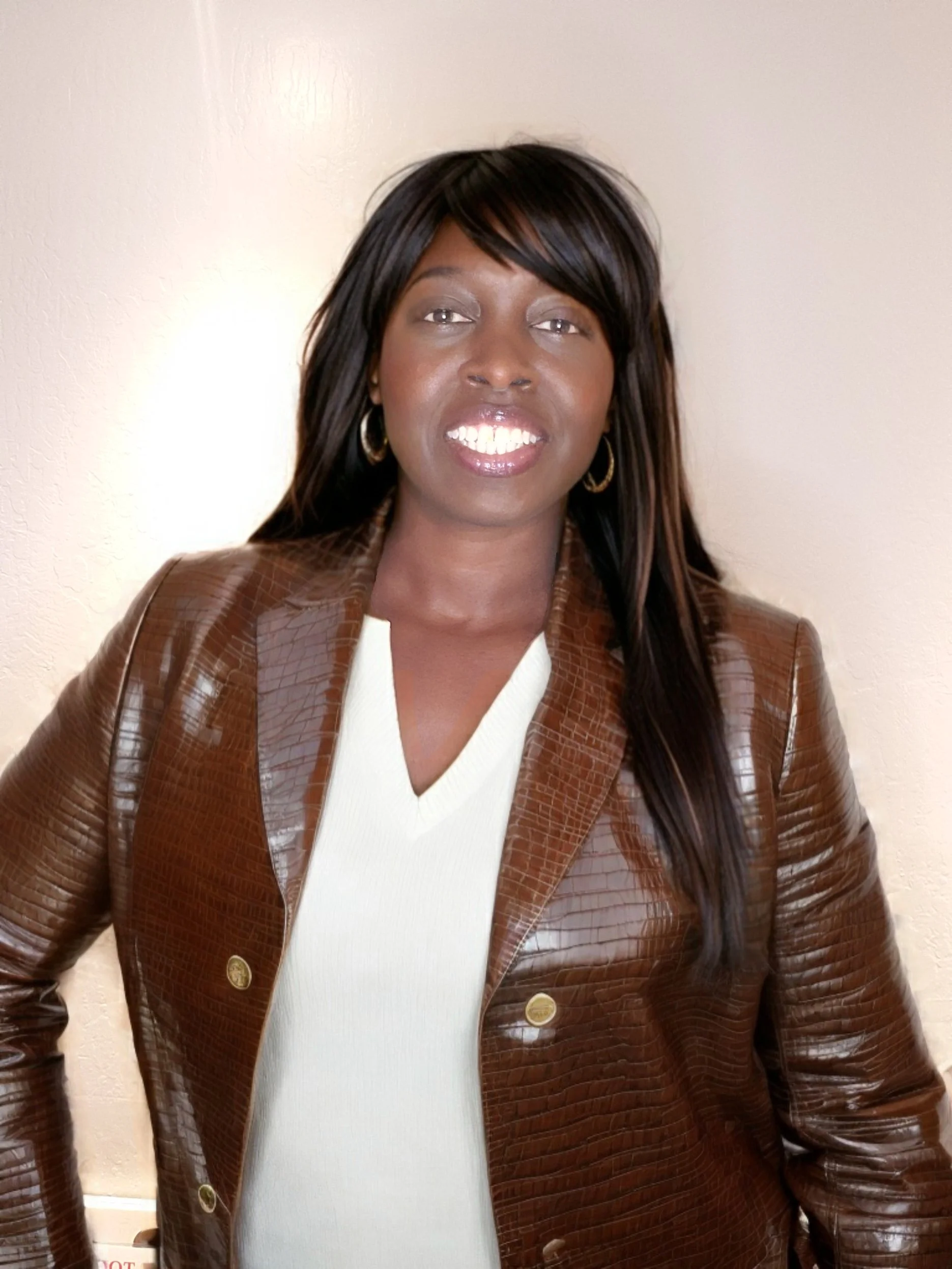
Dr. Vera Singleton, ND, MBA Founder, Potentia MedSpa, Lafayette, CA Voted Best Doctor of the East Bay Functional medicine and medical aesthetics under one roof, guided by one philosophy: one body, one doctor, simple answers.
Let’s measure what’s actually there and build a plan around it.
Book a consultation. We’ll look at the areas you want changed, take objective measurements, and decide whether this is the right tool or whether something else should come first. You’re allowed to start wherever you want. I’ll meet you there.
Book Your FREE 20 Min Phone Consultation
Potentia MedSpa | 1043 Stuart St #210, Lafayette, CA 94549 | 510-230-2282