
Vaginal Dryness and Sexual Wellness Treatment

Your partner reaches for you and you turn them down. Not because you don’t want to want to. Because your body doesn’t feel like it used to, and you already know how the evening is going to go.
You’re stressed and you could use the release, and you can’t get there on your own either.
It’s starting to sit between the two of you. And somewhere in the middle of all this, you started thinking about yourself differently. Like something is wrong with you. Like you’re broken.
Here’s what I want you to know. You’re not broken, and this isn’t in your head. What changed is physical and it’s measurable: estrogen and testosterone declining, vaginal tissue thinning, blood flow dropping, and a nervous system that’s been running on stress for years. Arousal needs all four of those working. When they stop, desire goes quiet, and it has nothing to do with how you feel about your partner. This is treatable, most women feel a real difference within two to three sessions, and it’s an ordinary conversation to have in my office.
What’s actually changing
The story most women tell themselves is that they’ve lost interest, or that this is just what happens now, or that it’s some failure of desire.
That isn’t what’s happening. Several physical things are changing at once.
Estrogen drops, and vaginal tissue responds first. The vaginal wall thins, loses elasticity, produces less natural lubrication, and becomes more fragile and more easily irritated. This has a clinical name, genitourinary syndrome of menopause, and it affects a large majority of women after menopause. Unlike hot flashes, it does not resolve on its own with time. Left alone, it progresses.
Testosterone declines too. Testosterone contributes to desire, arousal, and sensation in women, not only in men, and the decline through the forties and fifties is real.
Blood flow decreases. Arousal is a vascular event. Less blood flow to the tissue means less sensation and a slower response.
Your nervous system is part of this. Orgasm is a nervous system event. Chronic stress, constant multitasking, and cortisol dysregulation suppress the parasympathetic state that arousal actually requires. Nerve sensation can also be reduced by surgery: a C-section, a myomectomy, or another pelvic procedure can leave lasting changes in sensation, and most women are never told to expect that.
So when the things that used to work stop working, that isn’t a character problem. It’s tissue, hormones, blood flow, and nerves, and every one of those is something I can address.
| What you’re experiencing | What’s usually behind it | What I use |
|---|---|---|
| Dryness, irritation, burning | Estrogen decline and tissue thinning | Vaginal hormone therapy, hyaluronic acid, tissue support |
| Pain or discomfort with intimacy | Vaginal atrophy, reduced elasticity, tissue fragility | Vaginal hormone therapy, regenerative treatment |
| Reduced sensation | Reduced blood flow, nerve changes, surgical history | Plasma energy, PRF, hormone support |
| Low desire | Estrogen and testosterone decline, stress physiology, sleep | Systemic and vaginal hormone testing and therapy |
| Difficulty reaching orgasm | Blood flow, nerve sensation, nervous system state | Plasma energy, PRF, stress and hormone work |
| Leaking, urgency, recurrent UTIs | Tissue thinning and pelvic floor changes | Vaginal hormone therapy, tissue support, referral where appropriate |
Vaginal hormone therapy is not the same as systemic hormone therapy
This is the most important clinical thing on this page, and it’s widely misunderstood.
You do not put systemic hormones in your vagina. Different hormones, different strengths, different formulations, different purpose. Systemic therapy treats your whole body. Vaginal therapy treats the tissue directly, at a fraction of the dose, with the goal of restoring the tissue itself rather than circulating through your bloodstream.
That distinction matters for two reasons. It’s why vaginal therapy works so well for symptoms that systemic therapy alone often doesn’t fully resolve. And it’s why the safety conversation is different, since low-dose local therapy delivers minimal hormone into circulation.
What I use, depending on your testing and your history:
Vaginal estrogen, including estriol and estradiol, in creams or suppositories, for tissue thinning, dryness, elasticity, and fragility
Vaginal DHEA, which the tissue converts locally
Vaginal testosterone, where it’s clinically appropriate for sensation and tissue quality
Non-hormonal options, including hyaluronic acid, for women who prefer to avoid hormones or can’t use them
I work with accredited compounding pharmacies for much of this, because vaginal therapy is where precise dosing and hypoallergenic formulation matter most. Commercial products come in fixed strengths and fixed bases. Compounding lets me match the dose to your tissue and eliminate an ingredient you react to. Where an FDA approved product fits you well, I prescribe that instead.
We also test systemically, because vaginal symptoms and whole-body hormone status are the same conversation. Treating one without looking at the other leaves results on the table. Read more about bioidentical hormone therapy, and if drive and sensation are the bigger concern, read more about testosterone replacement. If your symptoms arrived alongside the rest of the menopause picture, read more about menopause care.
If you’ve had breast cancer, or hormones aren’t an option
You have not run out of options, and I want to say that clearly, because a lot of women in this position have been told there’s nothing to be done and simply stopped asking.
If you have a history of breast cancer or another hormone-sensitive cancer, or you’re on an aromatase inhibitor, or you’ve decided hormones aren’t for you, there’s a full non-hormonal path here:
Hyaluronic acid for hydration, comfort, and tissue quality
Plasma energy treatment for sensation and blood flow, which involves no hormones at all
PRF, using your own blood, for tissue quality and regeneration, again with nothing hormonal involved
Non-hormonal moisturizers and lubricants, chosen properly rather than grabbed off a shelf
These aren’t consolation prizes. Several of the treatments I use most are non-hormonal by design, and women who can’t take hormones often do very well with them.
I’d add one thing, gently. Guidance has evolved on low-dose vaginal estrogen for some cancer survivors whose symptoms haven’t responded to non-hormonal options, and for some women that’s a conversation worth having with their oncologist rather than a closed door. I’m happy to be part of that discussion. I’m also completely comfortable if the answer stays no, and we work with everything else.
The treatments I offer
Plasma energy for sensation and tissue quality
V-STIM is my plasma treatment for the external vulvar and clitoral tissue. It’s non-injection and non-surgical, and it works by stimulating tissue and increasing local blood flow.
This is what I reach for when sensation is the primary complaint, especially when there’s a surgical history behind it. If you had a C-section, a myomectomy, or another pelvic procedure and things haven’t felt the same since, that’s a real physical change and this is what addresses it.
Sessions run about an hour, with a day or two of mild tenderness afterward. Most women do one to four sessions depending on their goals.
PRF-V Intimate Rejuvenation
This is my regenerative treatment for intimate tissue, and I use PRF rather than PRP.
We draw a small amount of your blood, concentrate the platelets and fibrin, and place those growth factors into targeted vaginal and clitoral tissue. Your own biology does the work: improved tissue quality, better blood flow, and better sensation. Nothing synthetic is involved.
Numbing is used and most women describe it as very manageable. Recovery is a day or two.
In my practice, most women see meaningful change after two to three sessions, often combining PRF with V-STIM rather than choosing between them.
Resurfacing and lesion removal
Two things belong here that women almost never ask about directly.
Benign growths in intimate areas. Skin tags, moles, warts, and other benign lesions turn up here the same as anywhere else on the body, and they make women deeply self-conscious. The conventional route is surgical, which means a scalpel and stitches in an area where nobody wants either. I remove them with ablative plasma instead. No cutting, no sutures.
Labial laxity and excess tissue. Where the concern is excess labial folds, external laxity, or tissue texture, I use plasma energy to tighten and refine externally. It’s a non-surgical alternative to labiaplasty, and it’s an option for women who want the result without an operation.
Both of these involve real healing time, unlike the treatments above. Expect fourteen to twenty-one days. I call it healing time rather than downtime because your tissue is actively repairing during that window, and that repair is what produces the result. Numbing is used, and comfort during the procedure is around a four to five out of ten.
Pelvic floor, leaking, and recurrent UTIs
This has become a much bigger conversation, partly because more women are on hormone therapy and finally asking about the rest of it, and partly because referrals are genuinely hard to get.
Your pelvic floor is muscle, connective tissue, and mucosal tissue working together. Hormonal change affects all three. That’s why leaking when you laugh or lift, urgency, and recurrent urinary tract infections often arrive in the same few years as the dryness.
Where I can help: the tissue side. Vaginal estrogen improves the health of urogenital tissue, and there’s good evidence supporting it for reducing recurrent urinary tract infections in postmenopausal women. Restoring tissue quality and integrity supports the whole system, and for many women it makes a substantial difference to symptoms they’d been told to live with.
Where I’ll refer you: if muscular strength and coordination are the primary issue, pelvic floor physical therapy is the treatment with the strongest evidence behind it, and it does something my treatments don’t. I’m not a substitute for that, and I’ll say so. What I can do is address the tissue and hormonal side, which is the part most often left untreated, and work alongside a pelvic floor therapist rather than instead of one.
Between the two, most women get considerably further than they expected.
Your partner isn’t left out
Everything above has a counterpart for men, and it’s worth saying plainly, because these conversations tend to happen one person at a time when they should be happening together.
Reduced sensation, changes in erectile quality, and performance concerns respond to the same principles: blood flow, tissue quality, hormones, and the nervous system. I offer P-STIM, the plasma equivalent, and PRF-P Intimate Rejuvenation.
I also evaluate the underlying picture, because erectile changes are frequently the first visible sign of a vascular, metabolic, or hormonal issue that deserves attention on its own terms.
If intimacy has changed in your relationship, it’s rarely only one person’s biology. Both halves are treatable.
How we start
We talk, without you having to be brave about it. You will not have to work up to this in my office. I ask the questions directly so you don’t have to volunteer them, and nothing you say is going to surprise me.
We test. Systemic hormones, and whatever else your history points to. Vaginal symptoms are rarely isolated, and testing tells me whether we’re looking at a local tissue problem, a whole-body hormone problem, or both.
We start with the least invasive thing that will work. For many women that’s vaginal hormone therapy alone, and that’s enough. If it isn’t, we add from there.
We build in the right order. Tissue health first, then sensation, then the regenerative work if you want it. Skipping steps produces worse results.
And we follow up. Dosing gets adjusted, treatments get spaced correctly, and I keep checking in. This isn’t a prescription you fill once and never discuss again.
Why women in the East Bay come here
Most of the women I treat for this have already raised it somewhere and been handed a bottle of lubricant, or told it’s normal, or simply never asked in the first place.
What’s different here:
I ask. You don’t have to find the words to bring it up, because I’ll bring it up first.
Vaginal hormone therapy dosed for the tissue, not a systemic prescription applied in the wrong place.
Compounded when it needs to be, for precise dosing and hypoallergenic formulation, which matters more here than almost anywhere else.
A full non-hormonal path, for women with a breast cancer history and for anyone who’d rather avoid hormones.
Treatments beyond hormones, including plasma energy and PRF, for sensation and tissue quality that hormones alone don’t always restore. I also prescribe vaginal testosterone where it’s clinically appropriate.
Non-surgical options for lesions and laxity, in an area where the conventional answer is a scalpel.
Honest boundaries. If pelvic floor physical therapy is what you need, I’ll tell you and help you get there.
Options for your partner, so this stops being one person’s problem to solve.
An award winning doctor with fifteen years of practice in the East Bay. I’ve been voted Best Doctor of the East Bay, and I have page after page of five star reviews that show how hard I work for my patients.
I’m in Lafayette, CA, easy to reach from Walnut Creek, Orinda, Moraga, Danville, Alamo, Pleasant Hill, and the broader East Bay.
Frequently asked questions
-
Declining estrogen, primarily. As estrogen falls through perimenopause and menopause, the vaginal wall thins, produces less natural lubrication, loses elasticity, and becomes more easily irritated. This is called genitourinary syndrome of menopause, and unlike hot flashes it doesn’t improve on its own over time. It progresses if it isn’t treated, which is the main reason not to wait
-
Because desire is physical before it’s emotional. Estrogen and testosterone both decline after 40, blood flow to the tissue decreases, and chronic stress suppresses the nervous system state that arousal depends on. When those change, desire goes quiet regardless of how you feel about your partner. It isn’t a relationship problem wearing a physical disguise, and it responds to treatment.
-
No, and this is an important distinction. Vaginal therapy uses much lower doses formulated specifically for that tissue, with the goal of restoring the tissue itself rather than circulating through your body. Systemic hormone preparations should never be used vaginally. They’re different hormones at different strengths for a different purpose.
-
You still have real options. Hyaluronic acid, plasma energy treatment, and PRF using your own blood are all non-hormonal and all address dryness, comfort, sensation, and tissue quality. Separately, guidance has evolved on low-dose vaginal estrogen for some cancer survivors whose symptoms haven’t responded to non-hormonal treatment, and that’s a conversation worth having with your oncologist. Either way, you’re not out of options.
-
It’s a regenerative treatment using growth factors concentrated from your own blood, placed into targeted vaginal and clitoral tissue to support tissue quality, blood flow, and sensation. I use PRF rather than PRP. In my practice most women notice meaningful change after two to three sessions, often paired with plasma treatment. Results vary between individuals, and I’ll be straightforward with you about what to expect.
-
Often, yes, on the tissue side. Vaginal estrogen improves urogenital tissue health, and there’s good evidence supporting it for reducing recurrent urinary tract infections in postmenopausal women. If the primary issue is pelvic floor muscle strength and coordination, pelvic floor physical therapy has the strongest evidence and I’ll refer you. The two work well together.
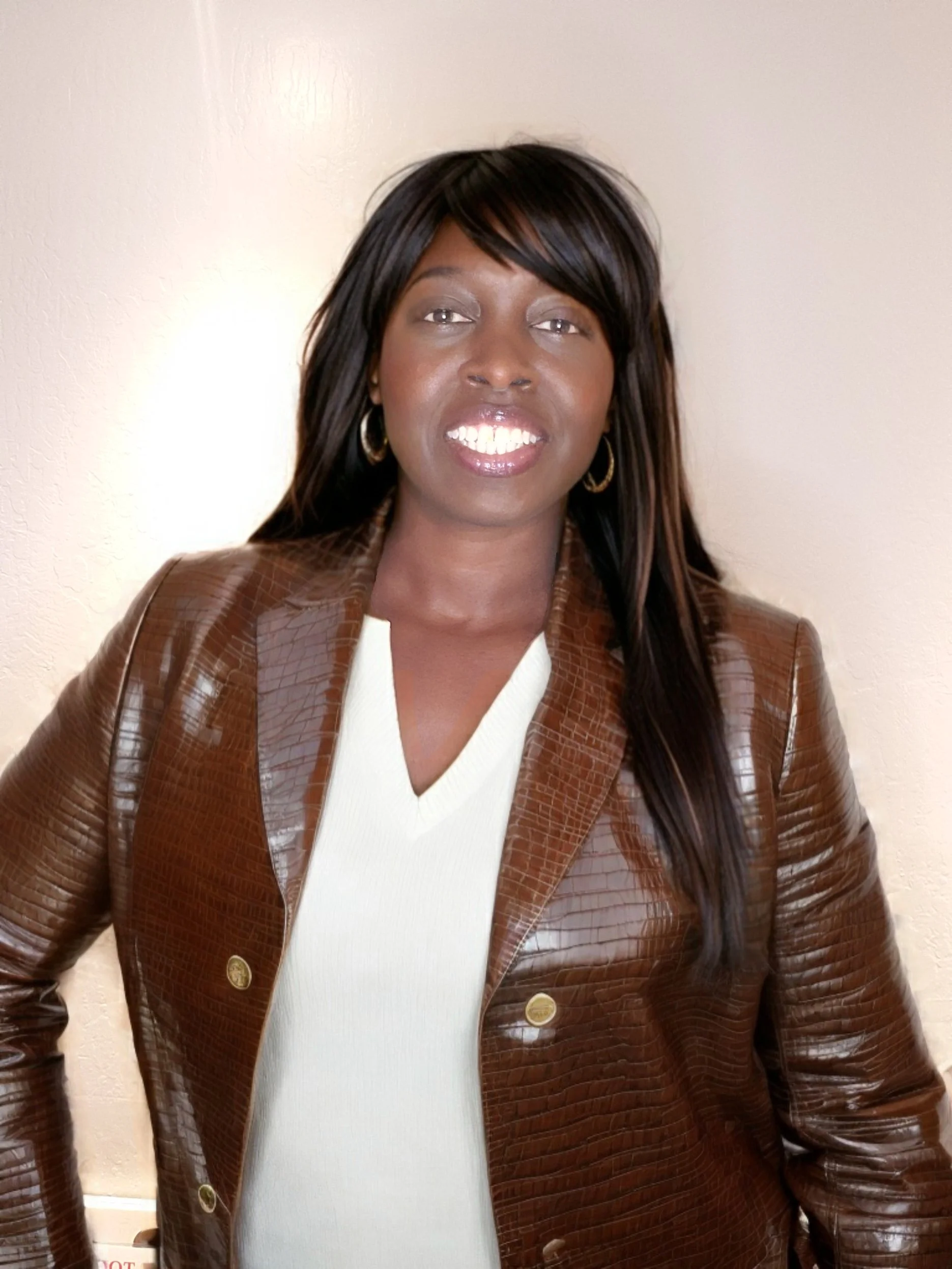
Dr. Vera Singleton, ND, MBA Founder, Potentia MedSpa, Lafayette, CA Voted Best Doctor of the East Bay Functional medicine and medical aesthetics under one roof, guided by one philosophy: one body, one doctor, simple answers.
This is a fixable problem, and you’ve waited long enough.
Book a consultation. We’ll talk it through, test what needs testing, and start with the least invasive thing likely to work. You don’t have to explain yourself and you don’t have to have the vocabulary. You’re allowed to start wherever you want. I’ll meet you there.
Book Your FREE 20 Min Phone Consultation
Potentia MedSpa | 1043 Stuart St #210, Lafayette, CA 94549 | 510-230-2282