
Lower Face Rejuvenation: The Lower Face Tune Up
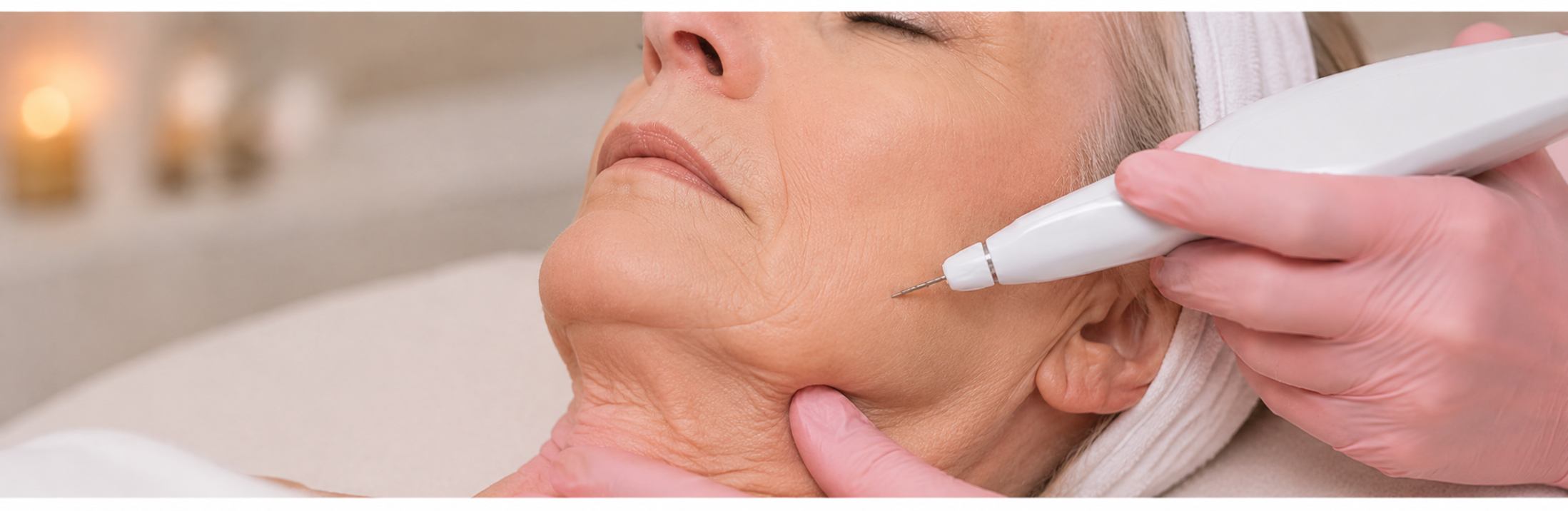
You noticed it here first. Not around your eyes, not on your forehead. Here.
The jowls that weren’t there before. The jawline that’s gone soft and blurred into your neck. The lines from the corners of your mouth heading downward. The skin around your mouth that creases and buckles now because it doesn’t spring back the way it used to.
It’s the part of your face you catch in a car window and think, when did that happen.
Here’s what I want you to know. What’s failing here is elasticity, and elasticity can be rebuilt. The Lower Face Tune Up is a focused ablative plasma treatment for the lower third of your face: the jowls, the jawline, the chin, the marionette lines, the nasolabial folds, and the skin around your mouth. It tightens and rebuilds at the same time, which is what allows the area to be resculpted rather than filled. Nothing is injected. Nothing is frozen. What you get back is a jawline and a lower face that match how you actually feel.
What actually changes
| What you’re living with now | What clients commonly describe afterward |
|---|---|
| Jowls that weren’t there five years ago | Lifted, so the line of your face is clean again |
| A jawline that’s gone soft and blurred into your neck | Definition back along the edge |
| Lines running down from the corners of your mouth | Softened and lifted rather than filled in |
| Skin around your mouth that creases and buckles | Smoother, because the elasticity is genuinely rebuilt |
| Deep folds from your nose to your mouth | Softened structurally, without anything injected |
| A chin and jaw that have lost their shape | Resculpted, with the contour restored |
| Crepey, loose skin under the chin | Tightened |
| A lower face that reads heavier and older than you feel | Matching how you feel |
Individual results vary, and this treatment builds over months rather than appearing the day of your appointment.
What’s actually failing is elasticity
This is worth understanding, because it explains why nothing you’ve put on your face has helped and why filling a fold doesn’t solve it.
Your skin has two structural proteins doing different jobs. Collagen provides thickness and strength. Elastin lets skin snap back. When you smile and your face returns to neutral, elastin is what returns it.
Elastin is also the harder one to replace. Your body produces very little new elastin after adolescence, and what you have degrades from UV exposure and from the collagen and hormonal decline that accelerates in your forties. So the skin stretches, and it stops recoiling.
That’s why the lower face goes first. It’s the part of your face that moves most and that gravity pulls hardest on. Every expression stretches it. Without elastin doing its job, some of that stretch stops coming back, and it accumulates: at the jowls, along the jawline, around the mouth, at the marionettes.
And it’s why filling doesn’t fix it. Filler adds volume beneath a fold, which pushes it up while the product is there. It doesn’t change the tissue that stopped recoiling. The elasticity problem is still the elasticity problem, and the fold returns when the filler goes.
What plasma does is different. Ablative plasma contracts the tissue immediately, and then the healing response over the following weeks drives collagen and elastin production in the treated area. So the skin is physically shorter and structurally different. You’re not propping up a fold. You’re rebuilding what stopped holding.
I can see it before you can
Here’s something that surprises people at their first appointment.
Elasticity shows up as a number on your skin analysis, and it shifts before it’s obvious in the mirror. I regularly scan women who haven’t yet decided anything is wrong, and the reading has already moved.
That’s useful, because it changes what we do immediately. Skincare gets adjusted right away, before we discuss treatment at all. Sometimes the answer at that visit is nothing more than that, and we rescan in a few months.
It also means we can measure this rather than debate it. We take a baseline, we treat, and we rescan, so you can see whether your elasticity actually improved rather than deciding whether you feel like it did.
What the treatment covers
The lower third of your face, treated as one unit, because these areas descend together and treating one while leaving the others creates an obvious edge.
Jowls and lower-face heaviness
The jawline, where definition has been lost against the neck
The chin, including contour and shape
Marionette lines, running down from the corners of your mouth
Nasolabial folds, from the nose to the corners of the mouth
The area around the mouth, where skin creases and buckles as elasticity goes
Loose or crepey skin under the chin
Uneven texture across the lower face
Vertical lines on the upper lip are treated too, though they behave differently enough that they get their own conversation.
This is not the same as the #HashtagLift
Both use plasma. That’s where the similarity ends, and I want to be clear about it because people arrive assuming they’re versions of the same thing.
| Lower Face Tune Up | #HashtagLift | |
|---|---|---|
| Type | Ablative. Stronger and more corrective | Semi-ablative. Lighter |
| Coverage | The lower third, treated intensively | The whole face, more evenly |
| Intent | Focused and deliberate on one area | Overall correction and resurfacing |
| Comfort | More involved. Numbing used | Less involved than the ablative treatments |
| Healing time | Four to ten days | About four days |
| Sessions | Two to three | Usually one, once or twice a year |
| Choose this if | The lower face is the thing that bothers you, and you want it properly corrected | Your whole face needs work and you’d rather do one thing |
These are genuinely different populations, and both are right. Plenty of women come in specifically for the lower face and have no interest in a full face treatment, and that’s a completely reasonable position. Others want everything addressed at once.
If your lower face is what you catch in the mirror, this is the one.
The pairing that works best
The lower face doesn’t only descend. It deflates.
By your forties the fat compartments that gave your midface and jawline their shape have started to lose volume, and the retaining ligaments that hold everything in place have slackened. Tightening the skin addresses the descent. It doesn’t replace what’s gone.
Which is why so many of my lower face patients do both, and why I’d rather explain that upfront than have you wonder later why the result is good but not complete.
EZ Gel restores volume using your own blood, processed into a gel. It goes where the face has hollowed, and it lasts twelve to twenty-four months.
Liquid PRF goes into the fat compartments and along the retaining ligaments, supporting the structure rather than the surface.
Neither is a filler. Both are your own tissue, so nothing synthetic goes into your face, nothing migrates, and nothing needs dissolving later. And because they build gradually, there’s no version of this where you look suddenly different.
Tighten what’s descended, restore what’s deflated. That combination is the closest thing I have to what a lower facelift accomplishes, without a scalpel.
What to expect
Before. A skin analysis, so we have your elasticity baseline and I can show you what I’m seeing.
The appointment. About two hours. Topical numbing is used. This is a more involved treatment than my facials, around a four out of ten, and I’d rather tell you that than have you expecting something lighter.
Immediately after. Tightening is visible the same day, because the contraction happens on contact.
The healing. Four to ten days depending on how much area we treat and how you heal. Your skin goes through a visible renewal during that window and you’ll look like you’ve had something done. Plan for it. I call it healing time rather than downtime because your skin is actively rebuilding, and that rebuilding is what produces the result.
Over the following months. The collagen and elastin response continues well past the surface healing, so your result at three months is better than your result at three weeks.
Sessions. Two to three, spaced out.
What I add. PRF, exosomes, PDRN, skin boosters, or carboxy therapy masks, chosen from your analysis, to support healing and drive the collagen and elastin response harder.
Safe for all skin types, Fitzpatrick I through VI, because plasma doesn’t target pigment. I monitor each case individually and use pretreatment where there’s any history of post-inflammatory hyperpigmentation
Is this right for you?
A strong fit if jowls, a softening jawline, marionette lines, nasolabial folds, or creasing around the mouth are what bother you most, and you want that area properly corrected rather than gradually improved.
Consider something gentler if you can’t be unavailable for the healing time, or your changes are early. Non-ablative plasma does steady work with no recovery at all.
Consider a surgeon if you have significant excess skin or real structural descent in the lower face and neck. Plasma tightens and rebuilds skin. It doesn’t remove a large volume of it, and I’ll tell you plainly if that’s what I see rather than taking your money.
We should talk about volume as well if your lower face has deflated rather than only descended, which is common. Tightening alone will improve it. Tightening plus volume restoration will do more.
And if this arrived alongside everything else in your forties, estrogen decline affects skin thickness, collagen, and elasticity directly. You don’t have to address your hormones to have this treatment. But if you want to know why this happened when it did, I can answer that too.
Why women in the East Bay come here for this
Elasticity is rebuilt, not filled. The tissue that stopped recoiling is what gets treated.
The whole lower third as one unit, so there’s no obvious edge where treatment stopped.
Nothing injected and nothing frozen. Your own tissue, contracted and rebuilt.
I can measure it, with elasticity on your skin analysis before and after, so you’re not deciding whether you feel like it worked.
The volume conversation happens honestly, including when tightening alone won’t get you all the way.
Safe on every skin tone, Fitzpatrick I through VI.
I’ll tell you if a surgeon would serve you better. I’d rather be right than booked.
An award winning doctor with fifteen years of practice in the East Bay. I’ve been voted Best Doctor of the East Bay, and I have page after page of five star reviews that show how hard I work for my patients.
I’m in Lafayette, CA, easy to reach from Walnut Creek, Orinda, Moraga, Danville, Alamo, Pleasant Hill, Berkeley, Oakland, and the broader East Bay.
Frequently asked questions
-
Yes, in most cases. Jowls form when elasticity fails and skin that used to recoil stops doing so, and ablative plasma treats exactly that: it contracts the tissue immediately and then drives collagen and elastin production over the following weeks. Where surgery still wins is significant excess skin or real structural descent, and I’ll tell you honestly which category you’re in.
-
Filler adds volume underneath a fold and pushes it up while the product is there. It doesn’t change the tissue that stopped recoiling, so the underlying elasticity problem is untouched and the fold returns when the filler goes. This treatment rebuilds the skin itself, which is why the improvement holds differently. That said, if your lower face has deflated as well as descended, restoring volume genuinely helps, and I use your own blood for that rather than a manufactured product.
-
Both use plasma and that’s where it ends. This is ablative, focused on the lower third, more corrective, and done as two to three sessions. The #HashtagLift is semi-ablative, treats the whole face, and is usually one session once or twice a year. They’re different treatments for different people, and plenty of women want their lower face addressed and nothing else.
-
Four to ten days depending on how much area is treated and how you heal, with numbing used during the appointment and comfort at around four out of ten. Your skin visibly renews during that window and you’ll look like you’ve had something done, so plan for it. I call it healing time rather than downtime because that renewal is what produces the result.
-
The collagen and elastin you build is real tissue, so it doesn’t dissolve the way a filler does. Most people do a series of two to three sessions and then maintain, and how long you hold it depends on your skin, your sun exposure, and what you’re doing internally. I rescan so we can see it rather than estimate it.
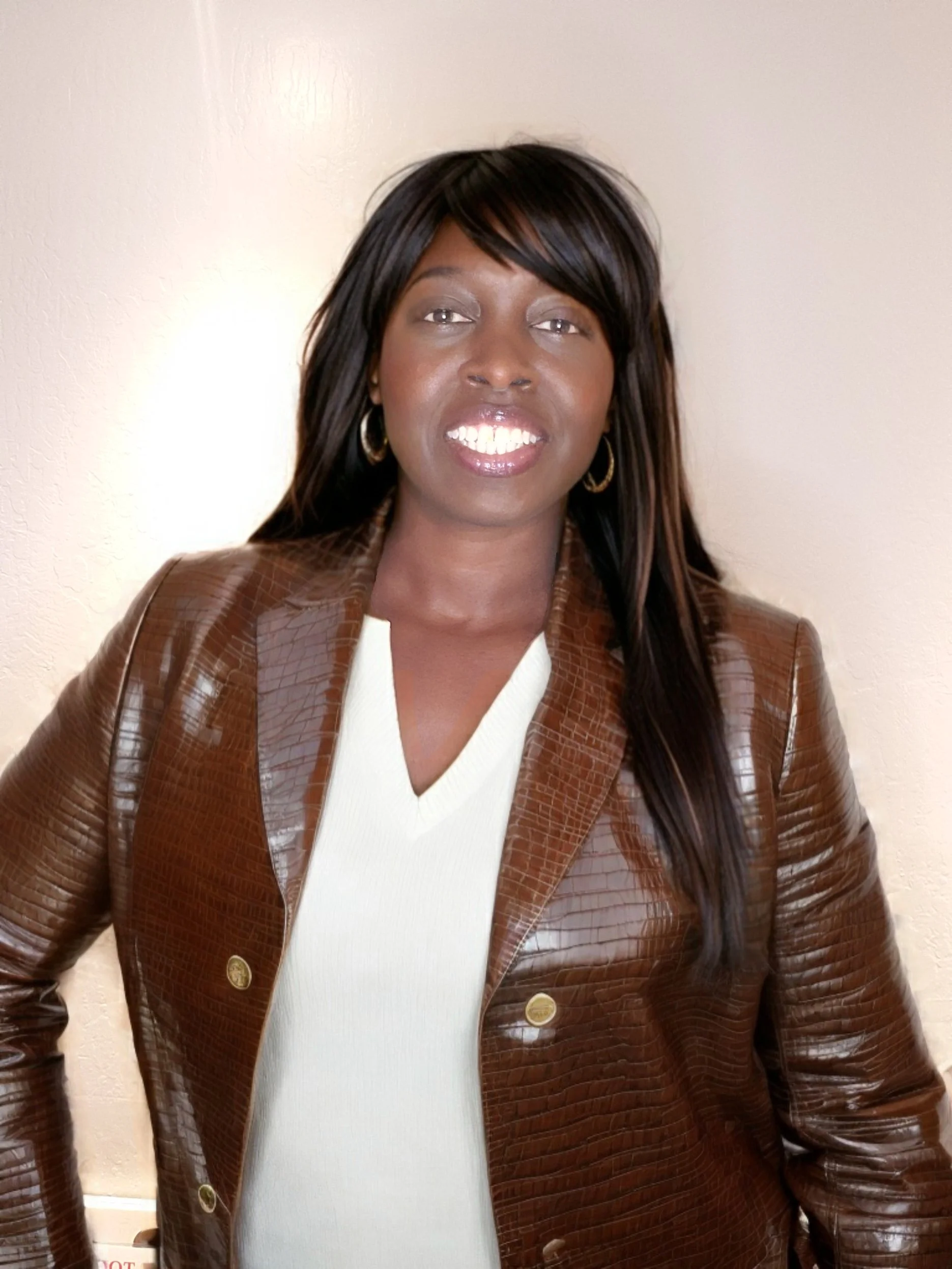
Dr. Vera Singleton, ND, MBA Founder, Potentia MedSpa, Lafayette, CA Voted Best Doctor of the East Bay Functional medicine and medical aesthetics under one roof, guided by one philosophy: one body, one doctor, simple answers.
Let’s look at your elasticity and tell you the truth about it.
Book a consultation and we’ll start with a skin analysis. I’ll show you exactly what’s happening in your lower face, whether this treatment gets you what you want, and whether volume needs addressing alongside it. You’re allowed to start wherever you want. I’ll meet you there.