
The #HashtagLift: Full Face Plasma Resurfacing
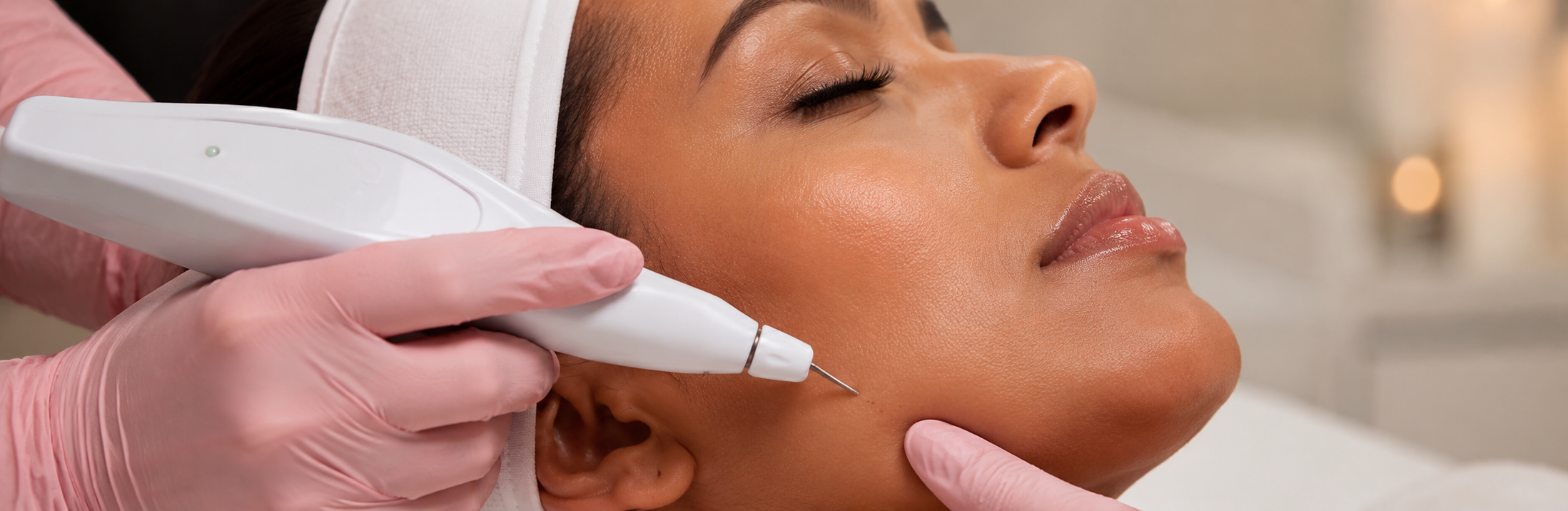
It’s your lower face. The jowls that weren’t there before. The jawline that’s gone soft and lost its edge. The skin around your mouth that buckles and creases now because it doesn’t spring back the way it used to. The folds from your nose to your mouth that stay put even when your face is at rest.
Your whole face reads differently than it did five years ago, and no single treatment has touched it.
Here’s what I want you to know. The #HashtagLift is my full face correction treatment, and the lower face is what it’s best at. One session of semi-ablative plasma that tightens, resurfaces, and rebuilds. Jowls lift. The jawline sharpens. The buckling around your mouth smooths as elasticity comes back. Nasolabial folds soften. And because it treats the whole face, your tone evens out and brightens and your texture changes too. Your skin feels different to the touch, which is the thing people don’t expect and always mention. Once or twice a year. Your neck can be addressed at the same appointment, and how we do that depends on how much work it needs.
What actually changes
| What you’re living with now | What clients commonly describe afterward |
|---|---|
| Jowls that weren’t there five years ago | Lifted, so the line of your face is clean again |
| A jawline that’s gone soft and blurred | Definition back along the edge |
| Skin around your mouth that buckles and creases when it never used to | Smoother, because the elasticity is genuinely rebuilt rather than filled |
| Deep folds from your nose to the corners of your mouth | Softened and lifted, so your lower face reads less heavy |
| Lines that used to appear when you moved and now stay put | Genuinely smoother, because the skin itself is different |
| Dull, uneven, weathered tone | Brighter and more even, which is usually the first thing people notice |
| Rough, thick, or crepey texture | Smoother skin that feels different when you touch your own face |
| Sun damage and brown patches accumulated over decades | Removed and resurfaced |
| A face that’s lost its firmness and definition | Tightening and lift across the whole face rather than one area |
| Doing a treatment here and a treatment there without much to show | One session, whole face, and a result you can see |
| Being told the next step is surgery | Correction without a scalpel |
Individual results vary, and I’ll tell you honestly at your consultation whether this gets you where you want to go.
Why it’s called the #HashtagLift
Because of the pattern.
Plasma isn’t applied in a sweep across your face. It’s applied in a precise crosshatch, a grid of tiny controlled points laid down in rows and columns. That pattern is what the name comes from, and it’s also the entire reason the treatment works the way it does.
Two things happen at once inside that grid.
Immediate contraction. Each point causes the tissue around it to contract on contact, which is why you see tightening the day you have it done rather than only weeks later.
A collagen response along the lines between them. The skin between the points is left intact, and it does the healing. Your body reads the grid as controlled injury and rebuilds along it, laying down new collagen in an organized pattern rather than randomly.
That’s the difference between resurfacing that thins your skin and resurfacing that rebuilds it. You’re not removing a layer and hoping. You’re giving your skin a structure to rebuild along.
What it does to your skin, not just your lines
This is the part that surprises people, and it’s the reason this treatment is as popular as it is in my practice.
Most treatments target something specific. A line, a fold, a spot. You get that thing addressed and everything around it stays exactly as it was.
The #HashtagLift changes the skin.
Tone. Decades of sun exposure leave pigment sitting in the surface layers. Semi-ablative plasma removes that layer, so the discoloration comes off rather than being lightened around. What grows back is more even.
Brightness. Dullness is largely accumulated dead surface. Take it off and light reflects differently. This is usually the first thing anyone comments on, and it arrives before the tightening fully develops.
Texture. Thickened, rough, crepey skin smooths as the surface renews and the collagen underneath reorganizes.
Feel. This is the one nobody expects. Women tell me they keep touching their own face, because the skin feels denser and more resilient rather than thin and papery. That’s not a cosmetic impression. It’s what happens when collagen and elastin actually rebuild.
Firmness. Tightening across the whole face rather than pulled at one point, which is why it doesn’t read as done
Put those together and the result isn’t “my nasolabial folds look better.” It’s that your face looks like your face from several years ago, and nobody can identify what changed.
What it treats
From my own treatment room:
The lower face is where it does its best work:
Jowls and lower-face heaviness. This is one of its strongest effects
A softened, blurred jawline, where definition has been lost against the neck
Skin buckling and creasing around the mouth, where elasticity has gone and the skin no longer springs back
Nasolabial folds, the creases from your nose to the corners of your mouth
Marionette lines, from the corners of your mouth downward
And across the rest of the face:
Deeper lines and wrinkles, including the ones that no longer disappear when your face is at rest
Overall laxity across the face rather than in one area
Sun damage, brown patches, and uneven tone
Rough or thickened texture
Dullness
Acne scarring and textural irregularity
Skin that needs correcting rather than maintaining
About your neck
The face and neck are one unit after 40, and a corrected face above an uncorrected neck creates a mismatch more noticeable than either problem alone. So most people doing this want their neck addressed too.
There are two ways to do that, and which one you need depends on how much correction your neck actually requires.
A neck touch-up, added to your #HashtagLift. If your neck needs a little help rather than a lot, some early crepiness, a bit of tone, nothing structural, I treat it at the same appointment. Same session, same recovery, and a modest additional cost. This is the right option for a good number of people and it’s the one we’ll talk about first if your neck is a secondary concern.
The non-surgical neck lift, as its own treatment. If your neck is genuinely part of the problem, loose skin under the chin, real crepey texture, a jawline that’s lost its edge, that needs a full treatment rather than a touch-up. It’s a course of two sessions, it holds for two to three years in my experience, and it’s one of my most requested services. It’s also priced accordingly, because it’s doing considerably more work.
I’ll tell you which one you need at your consultation, and I’d rather recommend the touch-up when that’s genuinely enough than sell you a course you didn’t require.
Where this sits among your options
I have three levels of plasma treatment, and choosing between them is mostly a question of how much correction you need and how much healing time your life allows.
| Rockstar Facial | #HashtagLift | Targeted ablative treatments | |
|---|---|---|---|
| What it’s for | Maintenance and gradual improvement | Full face correction | One specific area or problem |
| Intensity | Non-ablative, gentler per session | Semi-ablative, strongest full-face option | Ablative, strongest per area |
| Coverage | Full face | Full face, with a neck touch-up available at the same appointment | The area treated |
| Healing time | None beyond a few hours of possible redness | About four days | Four to ten days depending on the area |
| How often | A series every four to six weeks | Once or twice a year | Usually one to three sessions |
| Best if | You want steady improvement without ever clearing your calendar | Your whole face needs work and you can manage a long weekend | You have one thing that bothers you more than everything else |
How I actually decide. If your skin needs correcting rather than maintaining, and more than one area is involved, this is the most efficient thing I can do for you. In my experience a single session accomplishes what would otherwise take several sessions of RF microneedling or fractional CO2 laser.
If you only have four days a year to spare, spend them here.
Plenty of women do this once, then hold it with Rockstar Facials through the rest of the year. That combination is the most common plan in my practice.
What to expect
Before. We start with a skin analysis, so I can see what’s actually happening structurally and show you the same thing. That determines whether this is the right treatment and what I add to it.
The appointment. About ninety minutes. Topical numbing is used. Most people describe it as around a four out of ten, which is more than my facial treatments and considerably less than people expect from something this effective.
Immediately after. Your skin will be red and tight. The tightening is visible the same day, because the contraction is immediate.
The healing. Expect about four days. Your skin goes through a visible renewal during that window, and you’ll look like you’ve had something done. Plan for it. Don’t book this the week before an event, and do book it when you can be somewhat unavailable. I say healing time rather than downtime because your skin is actively rebuilding during those days, and that rebuilding is what produces the result.
Over the following weeks and months. The collagen response continues well after the surface has healed, so your result at three months is better than your result at three weeks.
How often. Once or twice a year. This isn’t a treatment you’re locked into.
What I add. Depending on your analysis, PDRN, exosomes, skin boosters, or micro-infusion of your own platelet-rich fibrin, to support healing and drive the collagen response harder. Carboxy therapy masks where recovery support is the priority. The plasma opens the door. What goes in determines how much you get.
Safe for all skin types. Plasma doesn’t target pigment the way lasers do, so this works across every Fitzpatrick type, I through VI. I monitor each case individually and use pretreatment where there’s any history of post-inflammatory hyperpigmentation. If you’ve been turned away from resurfacing because of your skin tone, that isn’t the situation here.
Is this the right treatment for you?
It’s a strong fit if your lower face has started to give way. Jowls, a jawline that’s lost its edge, buckling around the mouth, nasolabial folds, marionette lines. Also if you have deeper lines that no longer relax, uneven or sun-damaged tone, poor texture, or general laxity across the face rather than one spot. And if you’ve been doing individual treatments without much to show for it and you’d rather do one thing properly.
Consider something gentler if you can’t be unavailable for four days, or your skin needs maintenance rather than correction. The Rockstar Facial does steady work with no healing time at all.
Consider a surgeon if you have significant excess skin and real structural descent. Plasma tightens and rebuilds skin. It doesn’t remove a large volume of it, and I’ll tell you plainly if that’s what I see rather than taking your money.
And if your face changed on the same timeline as everything else in your forties, it’s worth knowing that estrogen decline affects skin thickness and collagen directly. That doesn’t mean you have to address your hormones to have this treatment. You absolutely don’t. But if you’re curious why this happened when it did, I can answer that too.
Why women in the East Bay come here for this
The lower face is what it does best. Jowls, jawline, and the buckling around your mouth, which is what most women over 45 are actually describing when they say their face changed.
One session, whole face. Not a treatment for a line. A treatment for a face.
Your skin changes, not just your wrinkles. Tone, brightness, texture, and how your skin actually feels.
Four days, once or twice a year. In my experience it does what several sessions of RF microneedling or CO2 laser would.
Safe on every skin tone, Fitzpatrick I through VI, because plasma doesn’t target pigment.
Eyes and neck can be treated in the same appointment, so the whole unit moves together.
The skin analysis drives it, and I rescan so you can see whether it worked rather than taking my word for it.
I’ll tell you if a surgeon would serve you better. I’d rather be right than booked.
An award winning doctor with fifteen years of practice in the East Bay. I’ve been voted Best Doctor of the East Bay, and I have page after page of five star reviews that show how hard I work for my patients.
I’m in Lafayette, CA, easy to reach from Walnut Creek, Orinda, Moraga, Danville, Alamo, Pleasant Hill, Berkeley, Oakland, and the broader East Bay.
Frequently asked questions
-
It’s a full face semi-ablative plasma treatment that tightens, resurfaces, and rebuilds skin in a single session. The name comes from the crosshatch pattern the plasma is applied in, which causes immediate tissue contraction and then drives an organized collagen response in the skin between the points. It takes about ninety minutes and the healing time is about four days.
-
Yes, and the lower face is what this treatment does best. Filler pushes a fold up from underneath, which works while the product lasts and changes nothing about your skin. This tightens and rebuilds the skin itself, so jowls lift, the jawline sharpens, and the folds and buckling around your mouth soften structurally. It builds over weeks rather than appearing the same day, and nothing is injected.
-
In my experience one session accomplishes what would otherwise take several sessions of RF microneedling or fractional CO2 laser. The bigger difference is that plasma doesn’t target pigment the way laser does, so it can be used safely across every Fitzpatrick type, including skin tones that lasers frequently can’t treat.
-
About four days, and you’ll look like you’ve had something done during that window. Your skin goes through a visible renewal. Plan for it and don’t schedule it before an event. I call it healing time rather than downtime because your skin is actively rebuilding, and that process is what produces the result.
-
Once or twice a year for most people. It isn’t a maintenance treadmill, because you’re building collagen that wasn’t there rather than filling or freezing something temporarily. Many women do this once for correction and then hold the result with Rockstar Facials, which have no healing time at all.
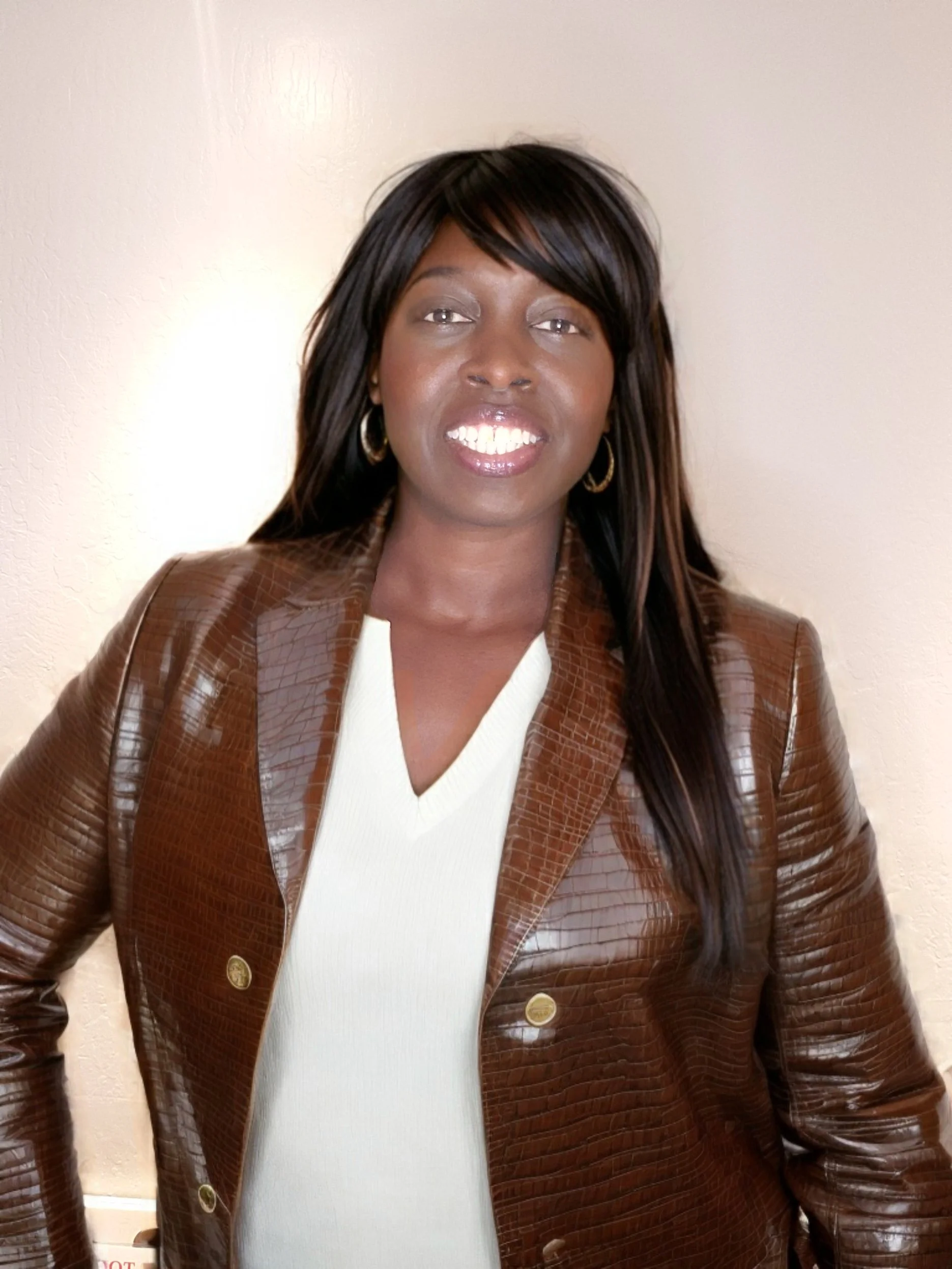
Dr. Vera Singleton, ND, MBA Founder, Potentia MedSpa, Lafayette, CA Voted Best Doctor of the East Bay Functional medicine and medical aesthetics under one roof, guided by one philosophy: one body, one doctor, simple answers.
Let’s scan your skin and see whether this is the right one.
Book a consultation and we’ll start with a full skin analysis. I’ll show you what’s actually happening structurally, tell you whether this treatment gets you what you want, and tell you honestly if something else would serve you better. You’re allowed to start wherever you want. I’ll meet you there.