
Non-Surgical Eye Rejuvenation
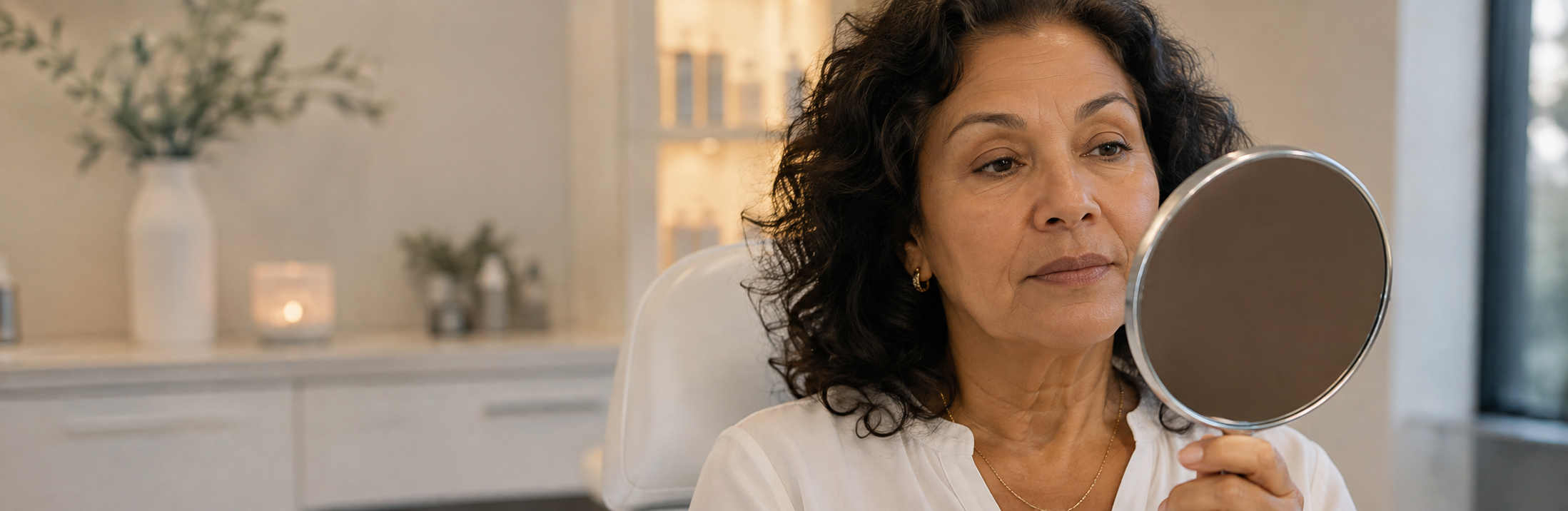
You look tired in photographs when you’re not tired. People ask if you’re getting enough sleep and you are.
Maybe it’s the upper lids, heavier and more hooded than they used to be, sitting closer to your lashes. Maybe it’s underneath, the puffiness or the little ridges that appeared and never left. Maybe it’s the lines at the outer corners that stay put now.
You’ve probably priced a blepharoplasty. You may have closed the tab.
Here’s what I want you to know. All three of those areas respond to plasma energy, without a scalpel and without a needle. Hooded lids tighten and lift. Under-eye puffiness and excess skin contract. The lines at the corners soften. No incisions, no scarring, no anesthesia, and no risk to the eye itself. The upper lid work takes two sessions and holds for years, at a fraction of what surgery costs. This is the area I get asked about most and the one where the difference between what people expect and what’s actually possible is widest.
What actually changes
| What you’re living with now | What clients commonly describe afterward |
|---|---|
| Heavy, hooded upper lids that sit close to your lashes | Lifted, with the lid space back and your eyes more open |
| Looking tired and flat when you feel fine | Your face reading the way you actually feel |
| Eyeshadow that disappears into the fold | Somewhere to put it again |
| Puffiness and ridges under the eyes that never settle | Contracted and tightened, with the excess skin reduced |
| Crepey, papery skin under the eye | Thicker, smoother skin with substance to it |
| Lines at the outer corners that stay when you stop smiling | Softened at the skin level |
| Shadowing and darkness that concealer makes worse | Brighter, with better skin quality catching light differently |
| Having priced a blepharoplasty and put it aside | A real alternative, without surgery |
Individual results vary, and I’ll tell you honestly at your consultation whether this gets you where you want to go.
Why the eye area goes first
The skin around your eye is the thinnest on your body. It has fewer oil glands, less structural support, and almost no fat padding underneath it.
It’s also the hardest working. You blink around fifteen thousand times a day. You squint, you smile, you read screens. Every one of those movements folds skin that has less elastin holding it than anywhere else on your face.
So it stretches, and it stops coming back. Earlier than the rest of you, and more visibly.
Add the estrogen decline of your forties and fifties, which reduces skin thickness and collagen directly, and this becomes the first area where people can see that something changed. Usually before you’ve decided anything is wrong.
Hooded upper eyelids
This is the one people bring me most, and it’s the one with the biggest gap between what surgery costs and what most women are willing to do.
What’s happening. The skin of the upper lid stretches and loses elasticity, so it descends over the lid crease. As it gets heavier it sits closer to your lashes, reduces the visible lid space, and in some cases starts to affect your peripheral vision. It makes a face look tired regardless of how rested you are, and it’s the reason a lot of women stop wearing eye makeup.
What surgery does. A blepharoplasty removes excess skin surgically. It’s effective, and it’s an operation: incisions, sutures, weeks of visible recovery, anesthesia, and a cost that puts it out of reach for many people.
What I do instead. Plasma energy applied to the lid skin causes immediate contraction, and then triggers a healing response over the following weeks that rebuilds collagen and elastin underneath. The lid tightens and lifts. No incision, no sutures, no scarring, and no risk of the asymmetry that comes from removing tissue unevenly.
Two sessions, and in my experience the result holds for years rather than months.
This is also one of the very few areas where plasma can go where most lasers can’t. Eyelid skin is delicate enough that most energy devices won’t approach it. Plasma is precise enough to treat it.
Under the eyes: puffiness, festoons, and malar mounds
The area people are most afraid to have treated, and the one where I most want to explain what’s actually safe.
What’s happening. Under-eye puffiness and the ridges below it have several possible causes. Excess skin as elasticity fails. Fluid accumulating where lymphatic drainage has slowed. Years of poor sleep. And in some cases festoons or malar mounds, the persistent folds or bags that sit lower on the cheekbone and don’t resolve with rest, hydration, or anything else you’ve tried.
Why this area frightens people. The skin is thinner here than anywhere, and it sits directly over the eye. The reasonable fear is that treating it means risking the eyeball, the nerves, or the tear ducts.
Here’s why plasma is different. It works only on the outermost layer of skin. There’s no needle, nothing injected, no heat driving down into deeper tissue, and no product placed anywhere near a vessel or a duct. The energy acts at the surface, the tissue contracts, and the healing response rebuilds underneath. Nothing goes near the eye itself, the nerves, or the lubrication and drainage structures.
What changes. The excess skin contracts and tightens. The crepey texture thickens and smooths. Puffiness and the appearance of festoons and malar mounds reduce as the skin envelope tightens over them.
I’ll be straight with you about one thing: where the primary cause is fat protrusion rather than skin, tightening improves the appearance but doesn’t remove the fat. I’ll tell you which one you have at your consultation.
Crow’s feet, and the reason I don’t just relax the muscle
This section matters more than most people realize, and it’s the argument I’d most want you to read.
The default treatment for crow’s feet is a neurotoxin, relaxing the orbicularis oculi, the muscle circling your eye. It works on the movement and it’s effective for that.
Here’s the problem with doing that repeatedly through your forties and fifties. That muscle is also the muscle that closes your eye. Every blink you take is that muscle working, and blinking is what distributes tear film across the surface of your eye and keeps it lubricated.
Dry eye becomes considerably more common with age, and it becomes more common again with estrogen decline, which affects the tear-producing glands directly. So a large number of women in exactly this age group are already heading toward dry eye without doing anything about it.
Weakening the muscle that drives your blink, repeatedly, over years, in a woman whose tear film is already declining, is worth thinking carefully about. That doesn’t mean nobody should do it. It means it’s a real consideration that rarely gets raised in the room.
Plasma bypasses the question entirely. It doesn’t touch the muscle. It works on the skin: the excess, crepey, low-elasticity skin that has accumulated around the orbicularis and is what you’re actually seeing when you look at a crow’s foot at rest. The muscle keeps working, your blink is unaffected, and the lines soften because the skin changed.
For a woman in her forties or fifties who’s noticed her eyes getting drier, that distinction is worth having.
The pairing that works best
The eye area doesn’t only loosen. It hollows.
The fat pads that sat under your eye and out at the temple lose volume, so the socket becomes more visible, the shadowing deepens, and the skin that’s left has less underneath it to sit against. Tightening the skin addresses the excess. It doesn’t replace what’s gone.
Liquid PRF goes into the areas that have thinned, using your own blood, improving tissue quality and the shadowing that concealer makes worse rather than better.
EZ Gel restores actual volume where the temple or the under-eye has hollowed. It’s your own blood processed into a gel, so nothing synthetic goes near your eyes, nothing migrates, and there’s nothing to dissolve. That matters enormously here, because the under-eye is where synthetic filler causes the most trouble, with puffiness and a bluish cast both well recognized.
Tighten what’s loosened, restore what’s hollowed. Doing both is the difference between a good eye result and a complete one.
What to expect
Before. A skin analysis, so we can measure elasticity around the eye and I can show you which of the three areas is actually driving how you look.
The appointment. Around two hours depending on how many areas we treat. Topical numbing is used.
Comfort. The eyelid work is the most involved thing I do, around a six out of ten, and I’d rather tell you that plainly than have you expecting a facial. It’s two sessions, not an ongoing commitment, and almost everyone tells me afterward it was worth it.
The healing. About seven to ten days for the eyelid work. You will look like you’ve had something done during that window, on a part of your face you can’t cover. Plan for it properly. Don’t book this before an event, and do book it when you can be genuinely unavailable. I call it healing time rather than downtime because your skin is actively rebuilding, and that rebuilding is what produces the result.
Sessions. Two for the eyelids. Two to three for the under-eye and crow’s feet areas.
How long it lasts. In my experience the eyelid result holds for years. You’re building collagen and elastin that wasn’t there, so it doesn’t dissolve the way a filler does.
What I add. PRF, exosomes, PDRN, or skin boosters, chosen from your analysis, to support healing and drive the rebuilding harder.
Safe for all skin types, Fitzpatrick I through VI, because plasma doesn’t target pigment. Each case monitored individually, with pretreatment where there’s a history of pigmentation.
Is this right for you?
A strong fit if you have hooded upper lids, excess or crepey skin under the eye, puffiness that doesn’t resolve, festoons or malar mounds, or crow’s feet visible at rest. Also if you’ve had a surgical consultation and want to know whether there’s another way.
Especially if you’re noticing dry eyes, and you’ve been having or considering a neurotoxin at the outer corners.
Consider a surgeon if you have a large volume of excess upper lid skin, significant fat protrusion under the eye, or if hooding is meaningfully affecting your vision. Plasma tightens skin. It doesn’t remove fat or a large volume of tissue, and I’ll tell you plainly if that’s what I see rather than taking your money.
Consider something gentler if you can’t be visibly unavailable for a week to ten days. Non-ablative options do steady work with no recovery, though they’ll do less on hooding.
And if this arrived alongside everything else in your forties, estrogen decline affects skin thickness, collagen, and tear production all at once, which is why the eyes so often change first. You don’t have to address your hormones to have this treatment, but I can explain the connection if you want it.
Non-surgical eyelid lift near me: why women in the East Bay come here
Surgery-like results on the upper lid without a scalpel. Two sessions, no incisions, no scarring, and in my experience years of result.
A fraction of what a blepharoplasty costs, without anesthesia or weeks of recovery.
Safe under the eye. Nothing injected, nothing near the eye itself, the nerves, or the tear ducts.
Crow’s feet without weakening your blink, which matters more than people are told, particularly if your eyes are already getting drier.
Plasma goes where lasers can’t. Eyelid skin is delicate enough that most energy devices won’t approach it.
Safe on every skin tone, Fitzpatrick I through VI.
I’ll tell you if you need a surgeon. I’d rather be right than booked.
An award winning doctor with fifteen years of practice in the East Bay. I’ve been voted Best Doctor of the East Bay, and I have page after page of five star reviews that show how hard I work for my patients.
I’m in Lafayette, CA, easy to reach from Walnut Creek, Orinda, Moraga, Danville, Alamo, Pleasant Hill, Berkeley, Oakland, and the broader East Bay.
Frequently asked questions
-
Yes, in appropriate candidates. Plasma energy contracts the lid skin immediately and then stimulates collagen and elastin over the following weeks, so the lid tightens and lifts. There are no incisions, no sutures, no scarring, and no anesthesia. It takes two sessions and in my experience holds for years. Where surgery still wins is a large volume of excess skin, and I’ll tell you honestly which you have.
-
Yes, and this is the question I’m asked most. Plasma works only on the outermost layer of skin. Nothing is injected, nothing is placed near a vessel, and no heat drives into deeper tissue, so the eye itself, the nerves, and the tear ducts are not involved. That’s a meaningfully different safety profile from injecting anything into this area.
-
They respond, though how much depends on what’s causing them. Where excess skin and poor lymphatic drainage are driving it, contracting and tightening the skin envelope makes a real difference. Where the primary cause is fat protrusion, tightening improves the appearance without removing the fat, and I’ll tell you which one you have rather than overselling it.
-
You can, and it works on the movement. What’s worth knowing is that the muscle involved is also the muscle that closes your eye, and blinking is what keeps your eye lubricated. Dry eye becomes more common with age and more common again with estrogen decline, so repeatedly weakening that muscle through your forties and fifties deserves thought. Plasma doesn’t touch the muscle. It treats the excess skin that’s actually creating the line at rest.
-
About seven to ten days for the eyelid work, and you will look like you’ve had something done on a part of your face you can’t cover. Plan for it and don’t schedule it before an event. Comfort during the treatment is around a six out of ten with numbing, which is the most involved thing I do, and it’s two sessions rather than an ongoing commitment.
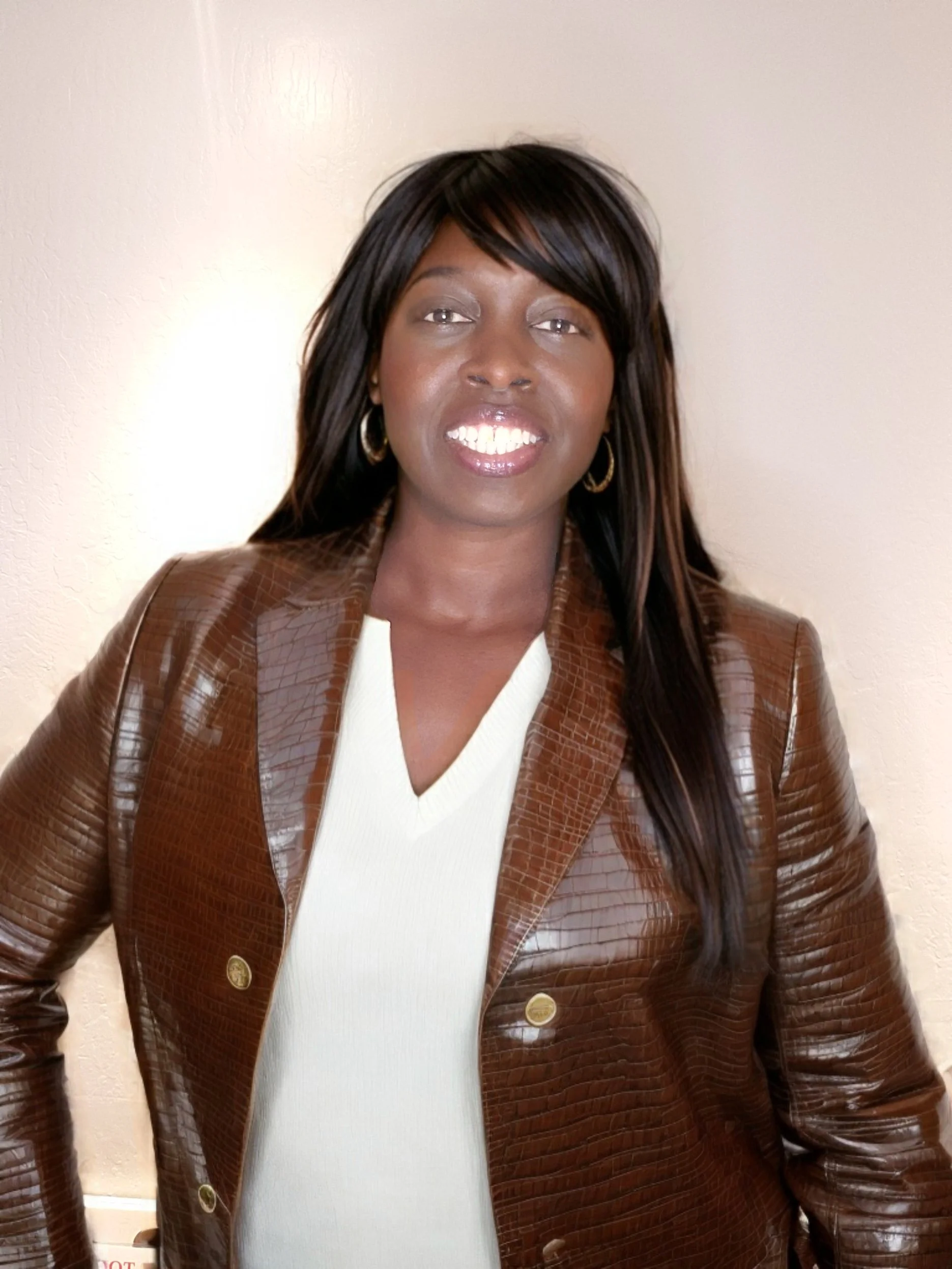
Dr. Vera Singleton, ND, MBA Founder, Potentia MedSpa, Lafayette, CA Voted Best Doctor of the East Bay Functional medicine and medical aesthetics under one roof, guided by one philosophy: one body, one doctor, simple answers.
Let’s look at your eyes and tell you the truth about them.
Book a consultation and we’ll start with a skin analysis. I’ll show you which of the three areas is actually driving how you look, tell you whether this treatment gets you what you want, and tell you honestly if a surgeon would serve you better. You’re allowed to start wherever you want. I’ll meet you there.