
PRF Facial Treatment: Natural Volume Without Filler
You’ve watched what filler did to people you know. The cheeks that got wider instead of higher. The under-eyes that went puffy. The faces that look worked on rather than rested.
And you still want your face back. The dark circles that make you look tired, the temples that have gone hollow, the jawline that softened, the flatness that showed up somewhere in your forties.
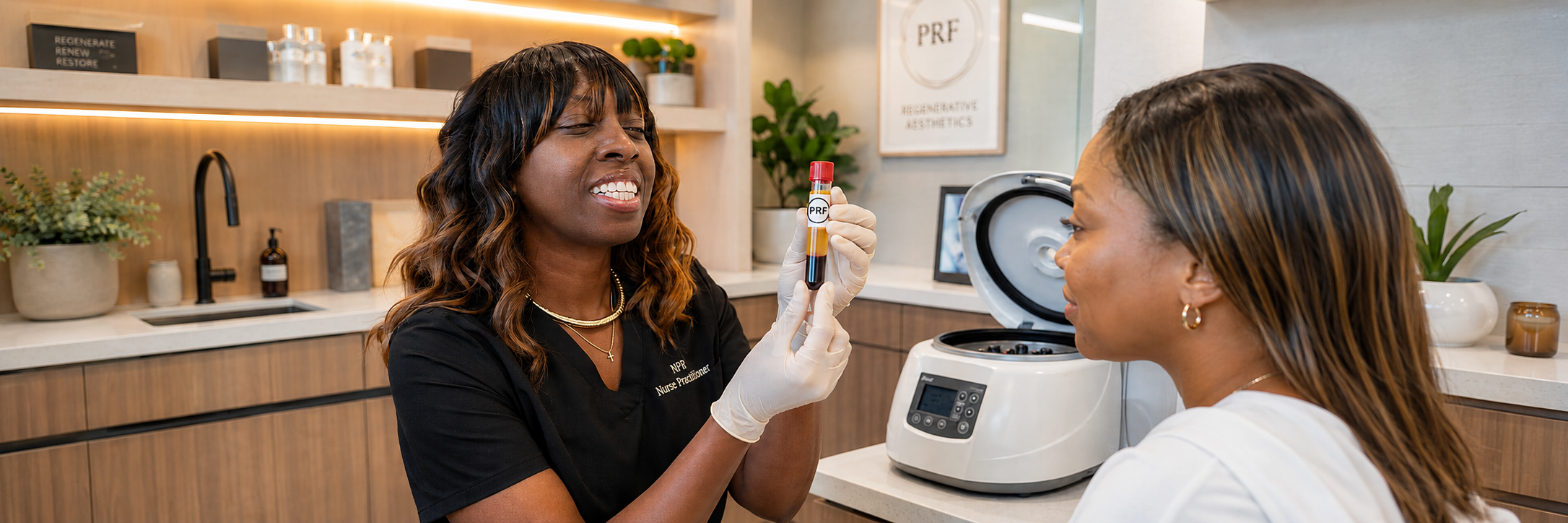
Here’s what I want you to know. There’s a way to restore volume using your own blood instead of a manufactured product. I draw a small amount, concentrate the platelets, growth factors, and stem cells it already contains, and place that back into your face. Your body does the building from there. Nothing gets dissolved, nothing migrates, and nobody looks at you and sees work. You look like yourself. That’s the entire point.
What actually changes
| What you’re living with now | What clients commonly describe afterward |
|---|---|
| Dark circles and shadowing that concealer makes worse | Brighter, more even under-eyes, and the tiredness lifting off your face |
| The sunken area under your eyes that catches shadow | Filled in softly, without the puffiness synthetic filler can cause there |
| Temples gone hollow, so your face reads gaunt | Softness restored at the sides, which changes the whole shape of your face |
| Flat cheeks and a face that’s lost its structure | Support returning, gradually enough that nobody can point to what changed |
| A jawline blurring into your neck | Definition, and better skin quality along the edge |
| Crepey texture on the neck and around the eyes | Thicker, better quality skin that holds up |
| Wanting volume but afraid of looking overdone | Restoration that builds slowly, so you decide how far to take it |
| Filler you regret, or fear of getting it | Nothing synthetic in your face, nothing to dissolve, nothing to migrate |
Individual results vary, and results build over months rather than appearing the day of your appointment. That’s the tradeoff, and I’ll be straight with you about it.
What PRF actually is, in plain terms
Your blood contains platelets. Platelets carry concentrated growth factors, which are the signaling molecules your body uses to repair tissue. They’re what shows up when you cut yourself and what directs the rebuilding.
PRF, platelet-rich fibrin, is your own blood concentrated so those growth factors are dense enough to work with, and held inside a natural fibrin scaffold.
The process is straightforward. I draw a small amount of blood, spin it gently, and separate the layer containing the platelets, growth factors, white blood cells, and stem cells. No additives, no anticoagulants, nothing manufactured. Then it goes back into you.
What happens next is the part that matters. Those growth factors signal your tissue to build collagen, build new blood supply, and repair itself. You aren’t receiving a substance that occupies space. You’re receiving instructions, and your own body carries them out.
That’s why the results take time, and it’s also why they’re real. What’s there at four months is tissue you grew.
I use it two ways: as a gel, for restoring volume, and as a liquid, for regeneration and skin quality.
EZ Gel: the filler alternative
This is the treatment I’m most enthusiastic about, and it’s probably what brought you here.
What it is. The same PRF from your own blood, gently heated and then cooled. That process changes its physical structure into a smooth gel with a consistency similar to dermal filler. Nothing is added. It’s still entirely your blood, just in a form I can place where volume has gone.
Where I use it:
Temples, when they’ve hollowed and your face has started to read gaunt at the sides
Under the eyes, for dark circles and the sunken area that catches shadow
Cheeks, where flatness has replaced structure
The lower face and jawline, where definition has softened
The neck
If the lower face is your main concern, read more about lower face rejuvenation, and if it’s the eye area, read more about eye rejuvenation. PRF is also used with microneedling for texture and scarring, which is a different treatment: read more about PRF microneedling.
How long it lasts. Twelve to twenty-four months. I encourage a yearly touch-up, which keeps you topped up and continues building, since each session adds to what you’ve already grown rather than starting over.
How many sessions. Usually two to three to establish the result, then maintenance.
Afterward. Expect 24 to 48 hours of swelling, and possible bruising. You’ll know you had something done for a day or two, and then you won’t.
Liquid PRF: what it does where
The liquid form is for regeneration rather than volume. It goes where the face has thinned and lost quality.
Under the eyes. The area I treat most. This is also where synthetic filler causes the most trouble, since the skin is thin, the area holds water, and puffiness and a bluish cast are common complications. PRF works differently. It improves the tissue itself, so the shadowing softens and the skin thickens.
Into the fat pads. Your facial fat sits in defined compartments that deflate and descend with age. PRF placed into those compartments supports the tissue rather than filling the space in front of it.
Along the retaining ligaments. These are the structures anchoring your soft tissue to the bone underneath, and they slacken over time, which is a large part of why the lower face descends. Treating them supports the architecture rather than the surface.
Into wrinkles and creases, where the goal is rebuilding the skin’s own thickness rather than propping the line up from beneath.
Across the face for quality, including the neck and around the eyes, where crepey texture responds to the regenerative signal.
Typically two to four sessions, about 24 to 48 hours of swelling afterward, and results that develop over the following months.
PRF versus PRP: why I use PRF
Both come from your blood. PRP came first, and PRF is what came after.
| PRP (platelet-rich plasma) | PRF (platelet-rich fibrin) | |
|---|---|---|
| How it’s processed | Spun fast, usually with an anticoagulant added | Spun slowly, no additives at all |
| What’s in it | Platelets and plasma | Platelets, plus white blood cells, stem cells, and fibrin |
| Growth factor release | Released quickly, over roughly a day | Released gradually over about a week, held in the fibrin scaffold |
| The scaffold | None | Fibrin matrix that holds the growth factors in place where you put them |
| Additives | Typically an anticoagulant | None. Entirely your own blood |
The simple version: PRP delivers the message all at once and it’s gone. PRF holds it in place and releases it slowly, so your tissue keeps receiving the signal for days rather than hours.
That gradual release, plus the stem cells that faster spinning leaves behind, is why I use PRF. Same idea, done better, and there’s no reason to use the older version when this one exists.
EZ Gel versus dermal filler and Sculptra
Versus dermal filler
| EZ Gel (PRF) | Hyaluronic acid filler | |
|---|---|---|
| What it is | Your own blood, processed into a gel | Manufactured hyaluronic acid |
| How it works | Provides volume and signals your tissue to build its own | Occupies space beneath the skin |
| Speed of result | Gradual, developing over weeks to months | Immediate, visible the same day |
| How long it lasts | 12 to 24 months, with yearly touch-ups encouraged | Varies by product, typically 6 to 18 months |
| Risk of overfilling | Very low. It builds slowly, so there’s no sudden change to regret | Real, and the most common complaint about filler |
| Migration | Not a concern | A recognized issue, particularly around the eyes and lips |
| Reversal | Nothing to reverse, because nothing foreign was added | Requires dissolving with an enzyme |
| Allergic or immune reaction | Effectively none. It’s your own tissue | Uncommon, but documented |
Being honest about the tradeoff. Filler is immediate. You walk out changed. EZ Gel is not, and if what you want is a result today for an event next week, filler does that and this doesn’t.
What EZ Gel gives you instead is a change nobody can date. There’s no before-and-after moment where friends notice something happened. You gradually look better, which is precisely why women who care about looking natural choose it.
Versus Sculptra and biostimulators
This is the more interesting comparison, because Sculptra also works by stimulating your own collagen rather than filling directly.
The difference is what’s doing the stimulating. Sculptra uses poly-L-lactic acid, a synthetic material your body responds to as it breaks down over months. EZ Gel uses your own growth factors, which are the signals your body already uses for exactly this purpose.
Both build your own collagen. One introduces a synthetic stimulus to trigger it, the other uses your native one. Sculptra has more published data and a longer track record. EZ Gel introduces nothing foreign and carries no risk of the delayed nodules that biostimulators occasionally cause.
For patients who specifically want nothing synthetic, that’s a straightforward decision.
PRF versus PDRN and exosomes
This comparison comes up constantly, and the answer is simpler than the marketing makes it sound.
PDRN is a polynucleotide derived from purified salmon DNA. It’s genuinely good at what it does: barrier repair, hydration, calming inflammation, and supporting recovery after treatment. I use it constantly.
Exosomes are signaling vesicles, sourced externally, from human cell lines or from plants. They carry messages to your cells and can be very useful for skin quality and healing.
PRF is yours. That difference matters in three ways:
It’s a complete package, not a single ingredient. PDRN is one compound. Exosomes are one category of messenger. PRF contains the full set of growth factors, plus white blood cells and stem cells, in the proportions your body actually produces them.
Nothing was introduced. No donor material, no plant material, no outside processing. It’s your tissue, returned to you concentrated. For anyone cautious about what goes into their body, that isn’t a small thing.
It builds structure. PDRN and exosomes are excellent for skin quality, which is a real and valuable goal. PRF, particularly as a gel, restores actual volume. Different jobs.
How I actually use them: together, most of the time. PRF for structure and regeneration, PDRN and exosomes layered in for skin quality and recovery. This isn’t a competition where one wins. Your skin analysis determines the combination.
Why this doesn’t give you that overfilled look
The overfilled look usually isn’t one bad appointment. It’s accumulation. A syringe here, a touch-up there, each reasonable on its own, until a face has drifted somewhere its owner never chose. And because filler is immediate, there’s no natural point where anyone stops and asks whether it’s enough.
Regenerative treatment doesn’t work that way. Results build over months, so you’re evaluating continuously rather than reacting to a sudden change. You can stop whenever you like, and nothing is accumulating that has to be dissolved later.
Structurally, you’re growing tissue rather than adding a substance that sits in a compartment and behaves differently than the tissue around it. It moves when you move. It ages with you.
PRF beyond your face
The same biology works anywhere your body needs to regenerate, and two applications matter enough to name.
PRF for hair restoration
Thinning hair responds to the same growth factors. I place PRF directly into the scalp where density has been lost, delivering those signals to the follicle itself to support blood supply and stimulate follicles that have stalled in the shedding phase.
It works best as a series, and it works considerably better when we’ve also figured out why your hair started shedding, which is usually thyroid, iron, hormones, or nutrient status. Treating the scalp without answering that question is treating half the problem.
PRF for intimate wellness
The same regenerative approach applies to intimate tissue. PRF placed into targeted vaginal and clitoral tissue supports tissue quality, blood flow, and sensation, using your own biology rather than hormones or anything synthetic.
This matters particularly for women who can’t take hormones, including those with a history of breast cancer, because it’s a genuine option rather than a consolation prize. There’s a version for men as well.
What to expect
We start with a skin analysis, which tells me where the volume loss actually is and whether it’s a structural problem, a skin quality problem, or both. Those need different treatments.
The blood draw is small and takes a couple of minutes.
Processing happens in the room, while you’re there. Nothing leaves and nothing is added.
The treatment. About an hour for liquid PRF, a bit longer for EZ Gel. Numbing is used and most people find it very manageable.
Afterward. Expect 24 to 48 hours of swelling, and possible bruising.
The timeline. This is where expectations matter most. You’ll see some immediate change from EZ Gel, but the real result develops over the following weeks and months as your tissue responds. The effect is cumulative across sessions.
A note on candidacy. This isn’t right for everyone. If you’re on blood thinners, or you have a clotting disorder, a platelet disorder, polycythemia vera, or another blood dyscrasia, we’ll go through that carefully before booking. Occasionally the honest answer is that a different treatment suits you better.
PRF near me: why women in the East Bay come here
Nothing synthetic goes into your face. Your own blood, concentrated, returned to you. No donor material, no manufactured product.
PRF rather than PRP, because the gradual release and the stem cell content make it the better version of the same idea.
Structure and skin quality together. EZ Gel for volume, liquid PRF for regeneration, layered with PDRN and exosomes where they help.
You won’t look overdone, because it isn’t possible to build too far too fast with this.
I’ll tell you when filler would serve you better, including when you need an immediate result for a specific date.
The same biology, wherever you need it, including hair and intimate tissue.
An award winning doctor with fifteen years of practice in the East Bay. I’ve been voted Best Doctor of the East Bay, and I have page after page of five star reviews that show how hard I work for my patients.
I’m in Lafayette, CA, easy to reach from Walnut Creek, Orinda, Moraga, Danville, Alamo, Pleasant Hill, and the broader East Bay.
Frequently asked questions
-
Both are made from your own blood. PRP is spun quickly with an anticoagulant added, and it releases its growth factors over about a day. PRF is spun slowly with no additives, which preserves stem cells and white blood cells and creates a fibrin scaffold that holds the growth factors in place, releasing them gradually over about a week. PRF is the newer version and it’s what I use.
-
For most of what people want filler for, yes. It restores volume in the temples, under the eyes, cheeks, jawline, and neck, using your own blood rather than a manufactured product, and it lasts 12 to 24 months. The honest difference is speed. Filler works immediately, EZ Gel builds over weeks and months. If you need a result for an event next week, that’s a real limitation. If you want to look better without anyone knowing why, it’s an advantage.
-
Under-eyes are what I treat most with this. It’s also where synthetic filler causes the most trouble, since the skin is thin and puffiness and a bluish cast are recognized complications. PRF works differently, improving the tissue itself so the shadowing softens and the skin thickens rather than being propped up from underneath. Expect gradual change over a few sessions.
-
Twelve to twenty-four months. I encourage a yearly touch-up, partly to keep you topped up and partly because each session builds on what you’ve already grown rather than starting over. That’s different from filler, where you’re replacing something that dissolved.
-
That’s very hard to do with this. Results build over months rather than appearing at once, so there’s no sudden change to regret and no accumulation quietly happening. You’re also growing your own tissue rather than adding a substance, so it moves the way your face moves. Looking like yourself is the reason most of my patients choose this over filler.
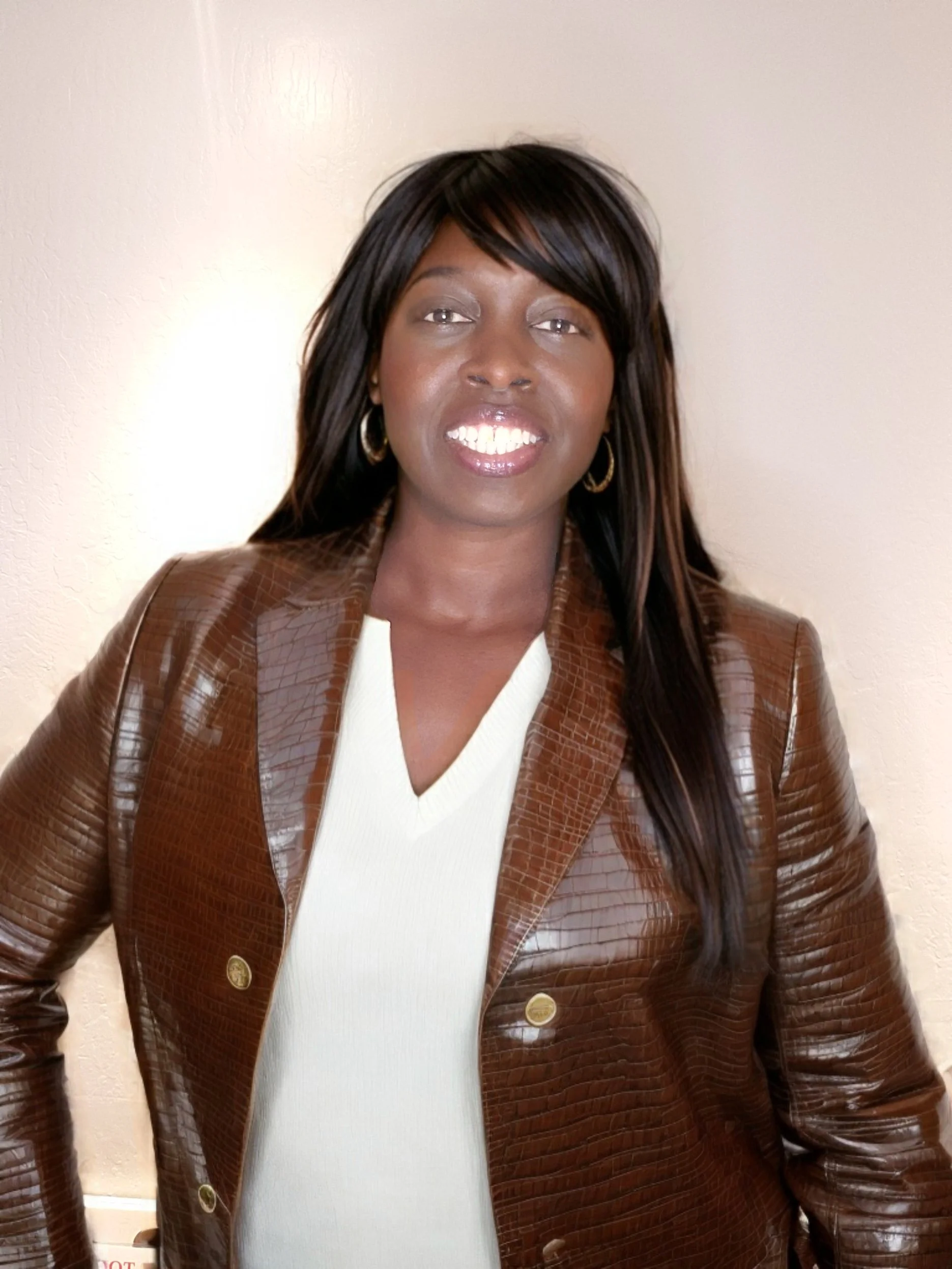
Dr. Vera Singleton, ND, MBA Founder, Potentia MedSpa, Lafayette, CA Voted Best Doctor of the East Bay Functional medicine and medical aesthetics under one roof, guided by one philosophy: one body, one doctor, simple answers.
Let’s look at where the volume actually went.
Book a consultation and we’ll start with a skin analysis, so we know whether you’re dealing with volume loss, skin quality, or both. Then I’ll tell you honestly which treatment gets you what you want, and whether this is it. You’re allowed to start wherever you want. I’ll meet you there.
Book Your FREE 20 Min Phone Consultation
Potentia MedSpa | 1043 Stuart St #210, Lafayette, CA 94549 | 510-230-2282