
Chemical Peels: No Downtime, Built for Your Skin
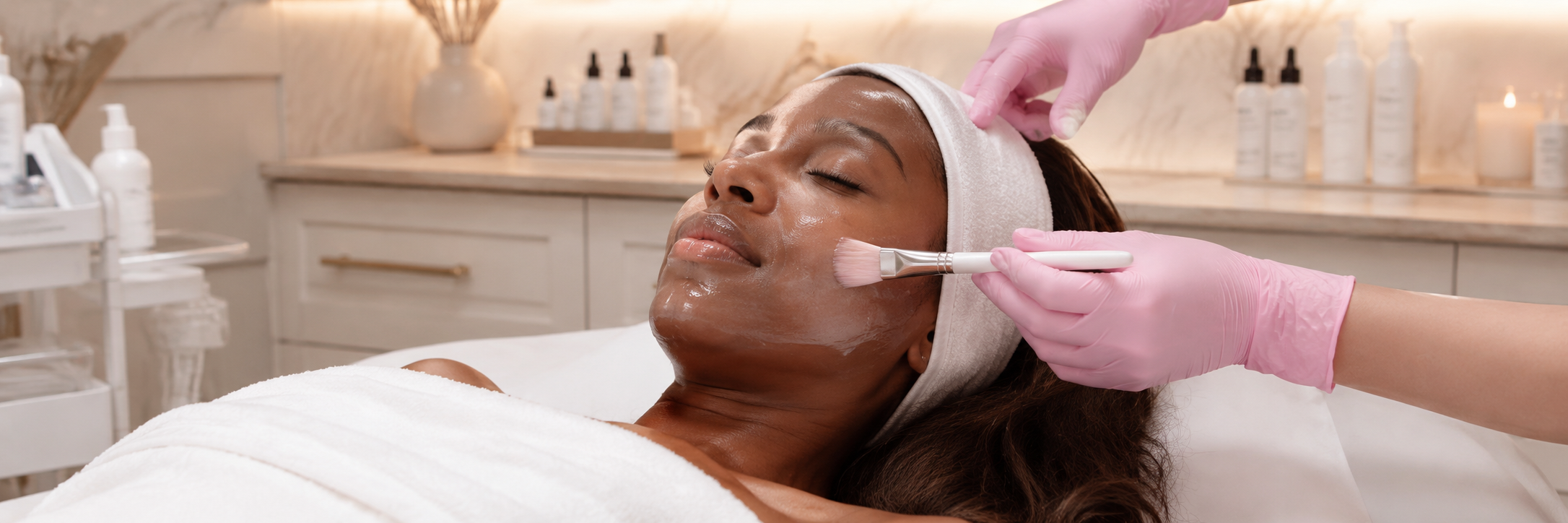
You’re picturing the peel from twenty years ago. Ten days indoors. Sheets of skin coming off your face. Hiding from everyone until it was over, and hoping it was worth it.
That’s not what this is anymore.
Here’s what I want you to know. Chemical peels have changed completely. The ones I use require no healing time, so you can have one and go back to your day. They’re chosen for your specific skin, using both your Bauman skin type and your Fitzpatrick type, which means the peel you get is not the peel the person before you got. I carry formulations built specifically for deeper skin tones, peels rich in stem cell factors, and peels with elastin-building peptides. Most of mine are multi-step, layered with red light therapy and hydrating masks, so your skin comes out looking and feeling rich rather than raw.
What actually changes
| What you’re living with now | What clients commonly describe afterward |
|---|---|
| Dull, tired skin that doesn’t reflect light | Brighter, with a natural radiance that reads as healthy rather than shiny |
| Brown patches, sun damage, and uneven tone | Lifted and evened, especially across a series |
| Rough, congested, thickened texture | Smooth skin that feels different to the touch |
| Enlarged, visible pores | Refined and less noticeable |
| Active breakouts and congestion | Calmer skin with fewer new lesions |
| Dark marks left behind after breakouts | Faded, and faster to clear next time |
| Fine lines and skin that’s lost its bounce | Softened, with better elasticity where peptides are used |
| Being told your skin tone rules peels out | Treated properly, with formulations built for your skin |
| Dreading ten days of hiding | Back to your day the same afternoon |
Individual results vary, and peels work cumulatively. One is worth doing. A series is where the real change happens.
Why there’s no healing time anymore
The old peels worked by injury. Take off a significant layer, wait for the skin to shed, and hope what grows back is better. That’s where the ten days of visible peeling came from, and it’s why so many people still won’t consider one.
The formulations changed. Newer peels use intelligent acid blends that work with specific mechanisms rather than by brute strength, combined with peptides, growth factors, and barrier-supporting ingredients that repair while the acids are working. The result is that your skin turns over faster without being stripped and left to fend for itself.
And the delivery changed. Layering matters as much as the acid does. A peel applied on its own is a different thing from a peel followed by pH normalization, a hydrating mask, and light therapy. The supporting steps are what keep your skin comfortable while the active step does its work.
So you should expect some warmth during the treatment, possibly a little redness afterward that settles within hours, and occasionally some very light flaking a few days later that a moisturizer handles. Not sheets. Not hiding.
What you shouldn’t expect is less of a result. These aren’t weaker peels. They’re better-designed ones, and the reason they work without a week of recovery is that repair is built into the treatment rather than left entirely to you afterward.
Your peel isn’t the same as anyone else’s
This is where I differ most, and it’s worth explaining because “customized” gets said a lot and usually means very little.
I choose your peel using two different skin classification systems, because each one answers a question the other doesn’t.
Your Fitzpatrick type describes how your skin responds to UV and how it behaves with pigment. It’s what tells me your risk of post-inflammatory hyperpigmentation, and it’s the piece that determines whether a formulation is safe for you at all.
Your Bauman skin type describes how your skin actually behaves across four axes: oily or dry, sensitive or resistant, pigmented or non-pigmented, and wrinkle-prone or tight. That’s sixteen possible types, and it tells me what your skin needs rather than just what it can tolerate.
Together they answer both questions. What’s safe, and what will work. A resistant, pigmented, oily skin and a sensitive, dry, wrinkle-prone skin might share a Fitzpatrick type and need completely different treatments.
Then I add what the skin analysis shows: your actual sebum, hydration, porphyrin, tone, and texture measurements. So the choice is made from three sources rather than from a menu.
The peels I carry
Peels formulated for deeper skin tones
This matters more than almost anything else on this page.
Fitzpatrick IV, V, and VI skin has historically been excluded from resurfacing, or treated with a diluted version of what everyone else gets, because the risk of post-inflammatory hyperpigmentation is real and many formulations aren’t designed with it in mind.
I carry peels developed specifically for pigmented skin, which address discoloration without provoking more of it. Combined with proper pretreatment where there’s a history of pigment issues, and with monitoring at every visit, this means your skin tone determines which peel you get rather than whether you get one.
If you’ve been turned away, or handed something so gentle it did nothing, that isn’t the situation here.
Stem cell factor peels
Rich in growth factors, these support cellular repair and regeneration alongside the exfoliation. They’re what I reach for when the goal is brightening and pigment correction with real regenerative support behind it, rather than exfoliation alone.
Peels with elastin-building peptides
Exfoliation addresses the surface. Peptides work on what’s underneath. These formulations are for skin that’s lost its bounce, where fine lines and slackness are as much of a concern as tone, and they build elasticity while the acids handle texture and pigment.
Advanced anti-aging and regenerative peels
For deeper correction, I use peels combining intelligent acid complexes with longevity-supporting ingredients and regenerative molecules. These go further on texture, fine lines, pigment, and overall skin quality, and they’re safe across all skin types.
Condition-specific peels
Acne, rosacea-prone skin, pigment, dullness, congestion, and texture each respond to different chemistry. Your peel is chosen for the condition you actually have, and it changes as your skin changes.
It’s usually more than a peel
Most of my peels are multi-step, and the steps around the acid are what make the difference between a peel that works and one that leaves your skin unhappy.
Preparation and pH normalization. Skin is prepared properly and then brought back to balance rather than left stripped.
The active step, chosen from everything above.
Photobiomodulation, meaning red light therapy. Applied after the acid step, it supports cellular energy, calms inflammation, and helps the skin recover faster. This is a large part of why the healing time is what it is.
A hydrating mask. Barrier support goes back on before you leave rather than being left for you to manage at home.
Boosters where they’re indicated. PDRN, peptides, exosomes, or antioxidants, chosen from your analysis.
You walk out with skin that feels comfortable and hydrated, not tight and raw. That distinction is the whole point.
What to expect
Before. We start with a skin analysis and your skin typing, both Fitzpatrick and Bauman. That determines which peel and which supporting steps.
During. About fifty minutes for a full multi-step treatment. Expect warmth and some tingling. Most people rate it at zero to two out of ten.
Afterward. Possible mild redness that settles within a few hours. Occasionally some very light flaking after a few days, easily managed with moisturizer. You can wear makeup and go back to your day.
Cadence. Every four to six weeks, and no more than three months apart if you’re maintaining. For acne, monthly, because consistent turnover is part of how acne is controlled.
The series matters. A single peel gives you brighter, smoother skin. Pigment correction, texture change, and elasticity improvement build across several treatments, because you’re working with your skin’s own renewal cycle rather than forcing it.
Between treatments, the products you use matter as much as the treatment. Most people leave with a shorter routine than they arrived with.
Is a chemical peel right for you?
A strong fit if you have dullness, uneven tone, brown patches, sun damage, congestion, rough texture, enlarged pores, active acne, or post-acne marks. Also if you want visible improvement without arranging your life around recovery.
Especially worth knowing if you have deeper skin and have been told peels aren’t for you. They are. The formulation just has to be right.
We may start elsewhere if your barrier is compromised. If your skin is currently stripped, reactive, or over-exfoliated, adding acid makes it worse. We repair first, then treat. That step gets skipped constantly.
Something stronger may suit you better if you have significant laxity or deeper structural change. Peels work on the surface and the upper layers. For lifting and tightening, plasma treatments do more, and I’ll tell you which you actually need.
Chemical peel near me: why women in the East Bay come here
No healing time. Warmth, maybe a few hours of redness, and back to your day.
Chosen using both Fitzpatrick and Bauman typing, so the peel matches what your skin can tolerate and what it actually needs.
Formulations built for deeper skin tones, not a diluted version of everyone else’s treatment.
Multi-step by design, with red light therapy and hydrating masks built in, so your skin recovers as part of the appointment.
Stem cell factors and elastin-building peptides, so you’re building skin rather than only removing surface.
Objective measurement, so we can see whether your tone and texture actually moved.
I’ll tell you if something else is the better tool, including when your barrier needs repairing before we treat anything.
An award winning doctor with fifteen years of practice in the East Bay. I’ve been voted Best Doctor of the East Bay, and I have page after page of five star reviews that show how hard I work for my patients.
I’m in Lafayette, CA, easy to reach from Walnut Creek, Orinda, Moraga, Danville, Alamo, Pleasant Hill, Berkeley, Oakland, and the broader East Bay.
Frequently asked questions
-
No. That’s the old generation of peels and it’s the image most people still have. The formulations I use combine intelligent acid blends with peptides, growth factors, and barrier support, so your skin turns over without being stripped. Expect possible mild redness that settles within hours, and occasionally some very light flaking a few days later. You can wear makeup and go back to your day.
-
Yes, with the right formulation, and this is something I take seriously. Fitzpatrick IV, V, and VI skin carries genuine risk of post-inflammatory hyperpigmentation with the wrong peel, which is why so many people with deeper skin have been turned away. I carry peels developed specifically for pigmented skin, and I use pretreatment where there’s any history of pigment issues. Your skin tone determines which peel, not whether.
-
It classifies skin across four axes: oily or dry, sensitive or resistant, pigmented or non-pigmented, and wrinkle-prone or tight. That’s sixteen possible types. Fitzpatrick tells me what your skin can safely tolerate; Bauman tells me what it actually needs. Using both is why the peel you get isn’t the peel the person before you got.
-
One will leave your skin brighter and smoother. Real change in pigment, texture, and elasticity builds across a series, because peels work with your skin’s renewal cycle rather than forcing it. Most people do them every four to six weeks, or monthly if we’re treating acne. Your skin analysis tells us where to start and we rescan to see whether it’s working.
-
Yes, and it’s one of the reasons people book them. There’s no healing time, so a peel a few days before something matters is a reasonable plan. Tell me the date at your consultation and I’ll choose the formulation and timing accordingly.
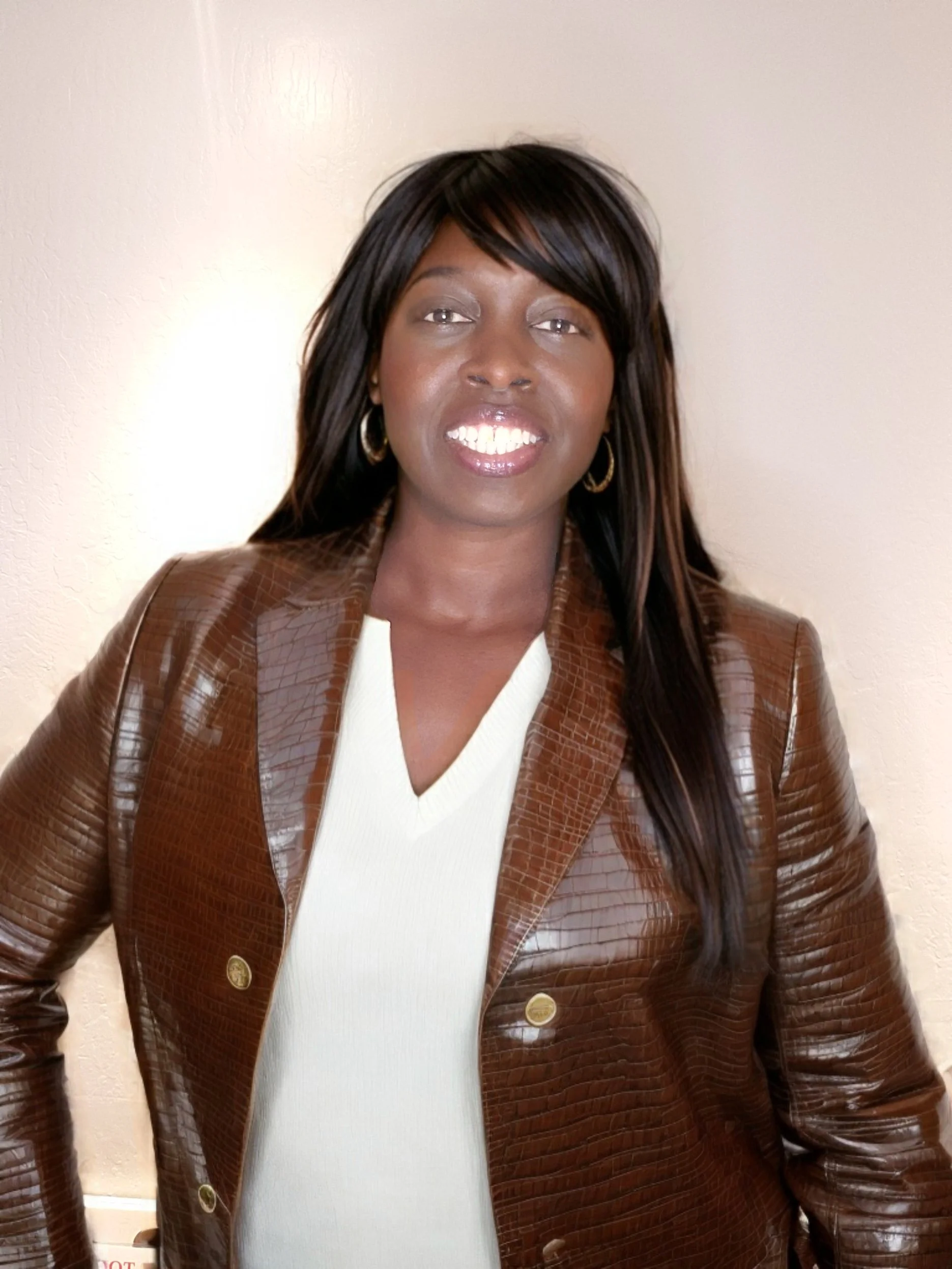
Dr. Vera Singleton, ND, MBA Founder, Potentia MedSpa, Lafayette, CA Voted Best Doctor of the East Bay Functional medicine and medical aesthetics under one roof, guided by one philosophy: one body, one doctor, simple answers.
Let’s find out which peel your skin actually needs.
Book a consultation and we’ll start with a skin analysis and proper skin typing. I’ll show you your own data, choose the formulation from it, and build the supporting steps around what your skin needs that day. You’re allowed to start wherever you want. I’ll meet you there.