
Non-Surgical Skin Tightening: The Plasma Facelift
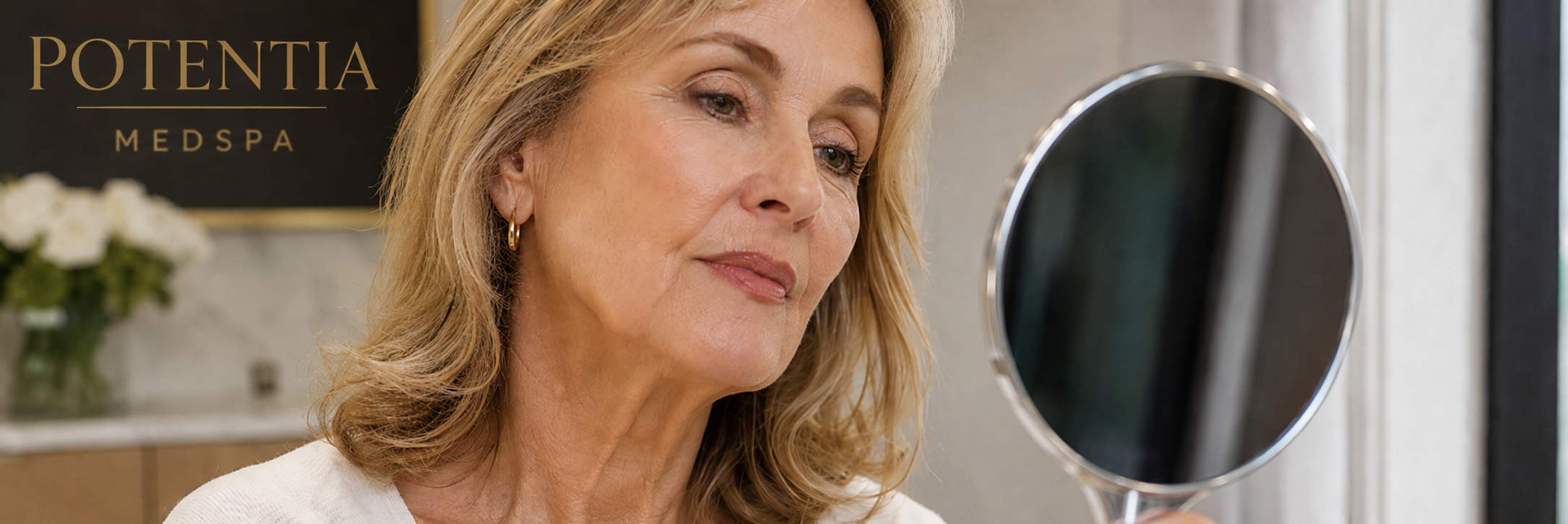
Your skin has gone crepey. Thin, papery, finely lined in a way it never used to be, on your neck, around your eyes, along your jaw. The color has gone uneven too, patchy and weathered in places.
You’ve spent years and real money on products, and none of them touched it. And you’ve decided injectables aren’t for you, so you’ve quietly assumed there’s nothing left to try.
Here’s what I want you to know. There is, and it isn’t a toxin, a filler, or a scalpel. I use plasma energy to tighten crepey skin and even out damaged color, by removing the aged, sun-damaged surface and rebuilding what grows back. You get the smooth, rested, softened look people associate with injectables, without anything injected and without anything frozen. It’s safe on every skin tone. And if you’ve never had a treatment in your life, this is the easiest possible place to start, because there’s a version of it with no healing time at all.
If you’ve never done anything, start here
Most of the women I treat with plasma have never had a cosmetic treatment. Not one. Some have been thinking about it for five years.
Usually it’s for one of these reasons, and I want to answer all of them plainly.
“I don’t want anything injected into my face.” Then don’t. Nothing is injected here. Plasma is energy applied to the surface of your skin. There’s no needle, no product, and nothing left behind in your body.
“I don’t want to look frozen or done.” You won’t, because nothing is paralyzed and nothing is added. Your own tissue tightens and your own collagen rebuilds. Your face still moves. Your features don’t change.
“I’m scared of the downtime.” Then we start with the version that has none. The Rockstar Facial takes 35 minutes, needs no numbing, and leaves you with a few hours of possible redness at most. You can have it on a Thursday and go to dinner.
“I don’t know what I need, and I don’t want to be sold something.” You’ll get a skin analysis first, and I’ll show you your own data. Sometimes the honest answer is a smaller treatment than you expected, or products first, or nothing yet.
“Isn’t it too late for me?” No. Skin responds at any age. What changes is the plan, not whether it’s worth doing.
And you’re allowed to start small. One treatment, no series, no commitment. See how you feel about it. Plenty of women do exactly that and then decide.
The smoothed look, without the toxin
Let me be direct about what a lot of women are actually asking me for.
They want the look. Smoother skin, softer lines, a face that reads rested and refreshed. What they don’t want is a neurotoxin, and they don’t want filler, and they’ve been told those are the options.
They aren’t the only options, and plasma gets you to a similar-looking place by an entirely different route.
Here’s the difference that matters. A neurotoxin works by stopping the muscle from moving, so the line pauses while the product lasts. Filler works by adding volume underneath, so the line is pushed up from below. Both change how your face looks while the product is working. Neither one changes your skin.
Plasma treats the skin itself. It contracts the tissue, removes the damaged surface layer, and stimulates your own collagen to rebuild underneath. So the improvement isn’t a pause or a fill, it’s structural. Your skin is genuinely different afterward.
That’s why I named my targeted treatment Natur-Tox. It’s for the specific areas people usually treat with a toxin, forehead lines, the elevens between your brows, crow’s feet, upper lip lines, done without one.
And the practical differences matter too. Nothing is injected. Nothing migrates. Nothing needs dissolving. There’s no accumulation quietly happening across years of appointments, and no schedule you’re locked into every three months. What you build stays built.
Crepey skin and uneven color: why your products can’t fix this
This is what I treat most, and it’s worth explaining, because a lot of women blame themselves for a problem no product could have solved.
Why skin goes crepey. Crepey skin is thin skin. The collagen and elastin scaffolding underneath has degraded, from decades of UV exposure and from the collagen decline that accelerates sharply around menopause. What’s left is a thinner, weaker structure, so the surface goes fine, papery, and loose.
Why uneven color happens. Pigment accumulates in the deeper layers of your skin over decades of sun exposure, most of it invisible for years before it surfaces. Then it arrives, as brown patches, blotchiness, and a weathered look that doesn’t match how you feel.
Now here’s the part nobody in the skincare industry will tell you.
A topical product has to cross your skin barrier, which is specifically designed to keep things out. Some ingredients get through and do real work at the surface: hydration, mild texture improvement, some pigment lightening. That’s genuinely worth doing, and I’ll recommend products to you.
But a cream cannot rebuild a degraded collagen scaffold, and it cannot remove pigment sitting in the lower layers of your skin. It isn’t a matter of finding a better product or spending more money. The problem is physically deeper than a topical can reach.
Which is exactly what plasma does differently. Ablative plasma removes that damaged surface layer, so the pigment and weathered texture come off rather than being covered or gradually lightened. And the healing response underneath rebuilds collagen where the scaffolding failed.
You aren’t treating the surface. You’re replacing it and rebuilding what’s beneath it. That’s why crepey skin and uneven tone respond here after years of products that didn’t move them.
What actually changes
| What you’re living with now | What clients commonly describe afterward |
|---|---|
| Crepey, papery, finely lined skin on the neck, eyes, or jaw | Thicker, smoother skin with real substance to it |
| Blotchy, weathered, uneven color | Brown patches removed and tone evened out |
| Skin that’s lost its snap and doesn’t bounce back | Firmness, and tissue that holds where it should |
| A jawline blurring into your neck | Definition returning along the edge |
| Lines around your mouth and between your brows | Softened structurally, without anything frozen or filled |
| Hooded, heavy eyelids that make you look tired | Lifted, without surgery |
| Wanting the smoothed look but not wanting injectables | The look, by an entirely different route |
| Being told your skin tone rules out resurfacing | Treated safely, because plasma doesn’t target pigment |
| Looking tired when you feel fine | Looking rested. Same face, better version |
Individual results vary.
What plasma energy is, and why it isn’t RF or laser
Most skin tightening in this market is radiofrequency or laser. Plasma is a different physical mechanism, and the difference determines what it can do and who it’s safe on.
Laser and IPL work by targeting a chromophore, usually melanin. The device finds pigment and heats it. Effective, and the reason those devices carry real risk of burns and post-inflammatory hyperpigmentation in deeper skin tones.
Radiofrequency delivers heat into the dermis to trigger collagen remodeling. It works, and it’s gradual, and it typically requires a series before you see much.
Plasma ionizes atmospheric gas to create a controlled arc that acts on the outermost layer of skin through sublimation, meaning those surface cells convert directly rather than being cooked with heat driving down into surrounding tissue. The tissue contracts immediately, and the micro-injury triggers collagen remodeling over the following one to two weeks. I perform all of it with Plexr, an FDA-cleared medical plasma device.
Three consequences, and they’re why I built my practice around this:
It doesn’t care about your skin tone. No melanin targeting means no pigment-related risk, so Fitzpatrick I through VI are all treated here the same way. I monitor each case individually and use pretreatment where there’s any history of post-inflammatory hyperpigmentation. If you’ve been turned away or offered a diluted version elsewhere, that isn’t the situation here.
It removes damaged skin rather than working around it. Sun-damaged skin, brown patches, and weathered texture aren’t just tightened, they’re removed, and what regenerates is newer skin. RF and injectables leave that damaged tissue exactly where it is.
It goes where lasers can’t. Eyelids, immediately under the eye, the upper lip. Delicate areas most energy devices can’t safely approach, plasma is precise enough to treat.
And it works faster. Because the contraction is immediate and the ablative treatments are stronger per session, I frequently accomplish in one or two sessions what takes three or four elsewhere.
Non-ablative and ablative: two intensities, one technology
Everything I do with plasma sits in one of two categories, and the difference is healing time.
Non-ablative works on the surface without removing tissue. No healing time beyond a few hours of possible redness. Gentler per session, designed to be repeated in a series so the effect compounds. This is where I start most first-timers.
Ablative removes damaged tissue at the surface, which produces stronger tightening and real resurfacing. That comes with genuine healing time, from a few days to about ten depending on the area. Fewer sessions, bigger result per session.
Neither is better. They do different jobs, and most of my patients use both: ablative to correct, non-ablative to maintain what we built.
The popular plasma treatments
Your skin analysis determines which of these you need and in what order. Here’s the whole menu.

Natur-Tox, the targeted treatment for lines
Targeted ablative plasma for the specific areas people usually treat with a neurotoxin, done without one. Where a toxin pauses the muscle, this treats the skin, so the improvement is structural.
Upper face: forehead lines, the elevens between your brows, crow’s feet, temples
Mid face: under-eye bags and puffiness, cheeks, the folds beside your nose, upper lip lines and smoker’s lines
Lower face: the lines from your nose to your mouth, marionette lines, jawline and chin
Nose contouring: refining shape and reducing fleshiness where skin contraction can change the appearance

Rockstar Facial
Non-ablative plasma for the full face. Tightens, brightens, refines pores, evens tone, and stimulates collagen in about 35 minutes with no numbing. My most requested treatment and where I start most people, especially if you’ve never had anything done or microneedling hasn’t gone well for you.
Its strongest effect is lifting and tightening. Done in a series every four to six weeks, it compounds. There’s no healing time beyond a few hours of possible redness.

Eyelid tightening
Hooded, heavy, crepey upper eyelids, treated without a scalpel. Plasma contracts the eyelid skin and then stimulates collagen underneath, so the lid tightens and lifts. No incisions, no sutures, no general anesthetic.
This is one of the few areas where plasma goes where most lasers can’t, because eyelid tissue is delicate and plasma is precise. Healing time is about seven to ten days.

Neck Lift
Loose skin under the chin, crepey texture, and a jawline that’s lost its edge against the neck. Two treatments, and in my experience the result holds for two to three years. Your face and neck are one unit after 40, and treating one without the other creates a mismatch more noticeable than either problem alone. Healing time is about seven to ten days.

Body tightening and everything else
The same technology works on loose skin at the arms, inner thighs, above the knee, and the abdomen, particularly after weight loss. It also removes benign growths, moles, skin tags, and keratoses, treats scars and stretch marks, and lifts small tattoos. Read more about mole and lesion removal.
#HashtagLift
Semi-ablative plasma across the full face in one session. Considerably stronger than the Rockstar Facial, and typically done once or twice a year. If your neck needs a little help, a neck touch-up can be added at the same appointment. If it needs real correction, that’s the neck lift below, and many women do both.
For real laxity, lower-face sagging, jawline softening, deeper lines, and sun-damaged skin that needs correcting rather than maintaining, this is often the most efficient thing I can do for you. Healing time is about four days, meaningfully less than the targeted ablative treatments.
What this can honestly do, and what it can’t
I’d rather set expectations properly than have you disappointed.
What it does well. Tightening crepey skin. Removing sun damage and evening out color. Softening lines structurally. Delicate areas nothing else can safely treat. Improving the actual quality of your skin, not just its position.
What it doesn’t do. It doesn’t make you twenty-five. It doesn’t correct significant excess skin or real structural descent, which is what surgery is for and what I’ll tell you if I see it. It doesn’t replace lost volume, since that’s a different problem needing a different tool. And it isn’t instant, because the tightening you see on day one is a fraction of what develops over the following weeks.
What you should actually expect. You’ll look like yourself, rested. Fresher, perkier, and somewhat younger, without the specific look that tells everyone you’ve had something done. People will think you slept well or came back from somewhere.
That’s the honest promise, and in my experience it’s exactly what most women want when they finally sit down and say it out loud.
Non-surgical skin tightening near me: why women in the East Bay come here
Nothing injected, nothing frozen, nothing left behind. Energy applied to your skin, and your own tissue does the rest.
The smoothed, rested look without a neurotoxin, by a completely different mechanism.
Crepey skin and uneven color are what I treat most, and they’re what products physically cannot reach.
Neither laser nor radiofrequency, which means different possibilities, including areas those devices can’t treat.
Safe on every skin tone, Fitzpatrick I through VI, because plasma doesn’t target pigment. Each case monitored individually.
An easy place to start if you’ve never done anything, with a version that has no healing time at all.
Faster. One or two sessions where most devices need three or four.
I’ll tell you when surgery is the right answer, because I’d rather be right than booked.
An award winning doctor with fifteen years of practice in the East Bay. I’ve been voted Best Doctor of the East Bay, and I have page after page of five star reviews that show how hard I work for my patients.
I’m in Lafayette, CA, easy to reach from Walnut Creek, Orinda, Moraga, Danville, Alamo, Pleasant Hill, Berkeley, Oakland, and the broader East Bay.
Frequently asked questions
-
Creams can’t fix crepey skin, and that isn’t your fault. Crepey skin means the collagen and elastin scaffolding underneath has degraded, and a topical can’t reach that depth or rebuild it. Plasma works differently: it removes the damaged surface layer and triggers your own collagen to rebuild underneath. It’s the treatment I use most for exactly this problem.
-
Yes. A neurotoxin pauses muscle movement and filler adds volume underneath, and both are temporary because neither changes your skin. Plasma treats the skin itself, contracting tissue and stimulating collagen, so the improvement is structural rather than a pause. Nothing is injected, nothing migrates, and nothing needs dissolving later.
-
It’s the easiest starting point I have. The Rockstar Facial takes 35 minutes, needs no numbing, involves no needles, and has no healing time beyond a few hours of possible redness. You can do one and stop there. No series and no commitment, and we’ll start with a skin analysis so you can see your own skin before deciding anything.
-
Yes, and it’s one of the main reasons I use it. Devices that target melanin carry real risk of burns and post-inflammatory hyperpigmentation in Fitzpatrick IV, V, and VI skin, which is why so many women are turned away or under-treated. Plasma doesn’t target pigment at all, so your skin tone isn’t a limitation here, and I monitor each case individually with pretreatment where there’s a history of pigmentation issues.
-
That’s the opposite of what this does. Nothing is added and nothing is frozen, so nothing about your features changes. Your own tissue tightens and your own collagen rebuilds. What people notice is that you look rested, not that you look treated. I can’t make you twenty-five, and I’d be suspicious of anyone who says they can.
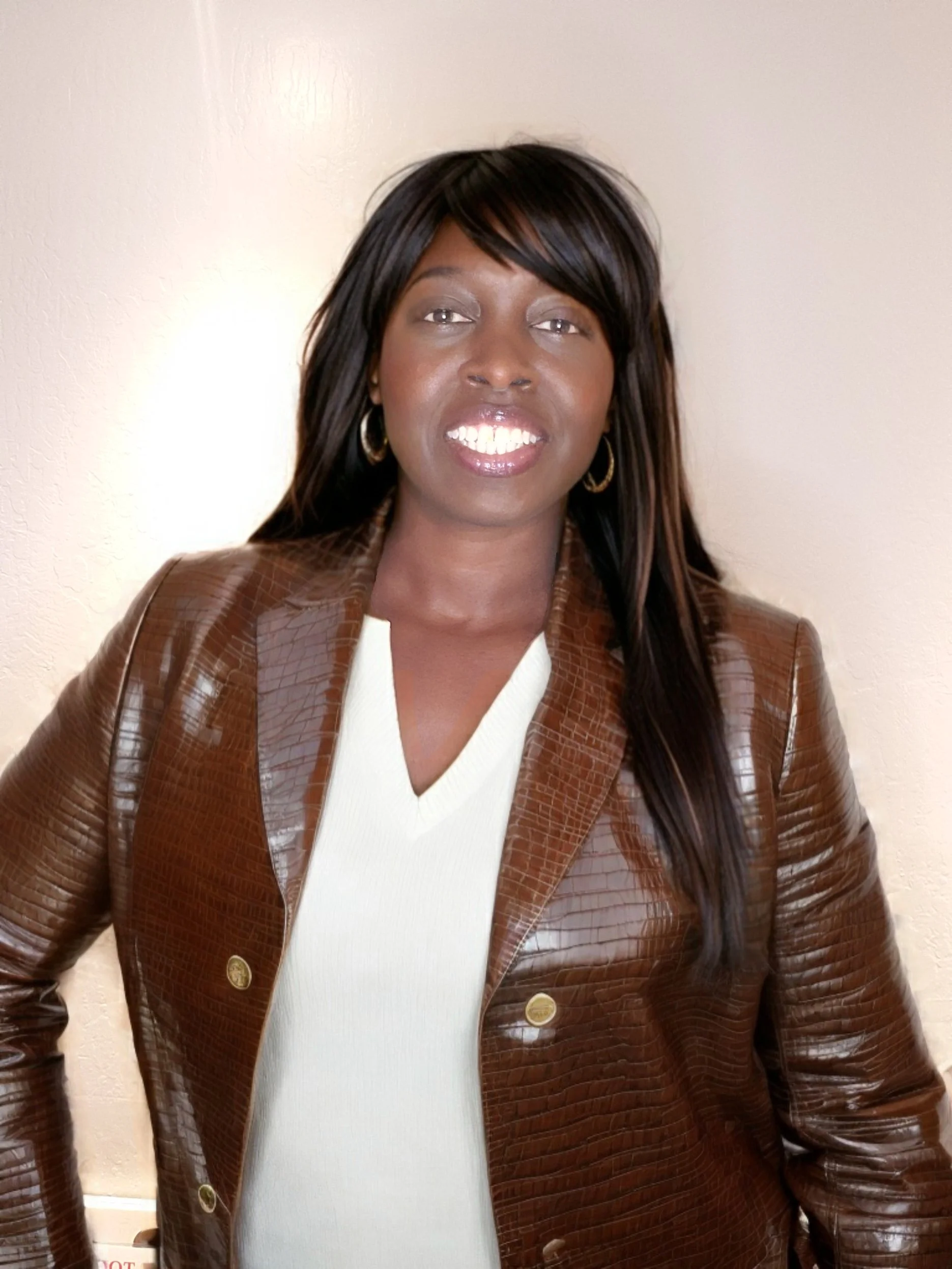
Dr. Vera Singleton, ND, MBA Founder, Potentia MedSpa, Lafayette, CA Voted Best Doctor of the East Bay Functional medicine and medical aesthetics under one roof, guided by one philosophy: one body, one doctor, simple answers.
Let’s scan your skin and pick the right tool.
Book a consultation and we’ll start with a full skin analysis. I’ll show you what’s actually happening structurally, tell you which of these treatments fits, and tell you honestly if something else would serve you better. If you’ve never done anything before, this is a very easy place to begin. You’re allowed to start wherever you want. I’ll meet you there.