
PRF Hair Restoration

There’s a shelf of it in your bathroom. The serum everyone recommended. The supplement from the ad. The shampoo that costs more than it should, the scalp oil, the derma roller you used twice.
You’ve spent real money and the ponytail is still thinner than it was.
Here’s what I want you to know. You can’t outrun a follicle under stress with a bottle. When a follicle is inflamed, undersupplied, or getting the wrong hormonal signal, it stops cycling and moves into the shedding phase, and nothing applied to the surface changes that. Hair needs support from the inside and the outside at the same time. PRF is the outside half, and it isn’t a product. It’s your own concentrated growth factors, stem cells, and signaling molecules, drawn from your blood and placed directly into the scalp where the follicle actually lives. Even at sixty, that’s stronger than anything you can buy.
What actually changes
| What you’re living with now | What clients commonly describe afterward |
|---|---|
| Hair in the drain every single shower | Shedding settling down, which is the first thing to move |
| A ponytail a fraction of what it used to be | Density returning over months, gradually and then visibly |
| A part that keeps getting wider | Filling in along the part |
| Thinning at the temples and along the hairline | Regrowth where the follicle is still viable |
| A scalp that’s visible through your hair in photographs | Coverage improving, and photographing differently |
| Hair that grows slowly and breaks before it gets long | Faster growth and stronger strands |
| Spending on products with nothing to show for it | A shorter routine and money going somewhere that works |
| Not knowing whether anything can be done | A clear answer, including an honest one if regrowth isn’t realistic |
Individual results vary considerably, and hair is slow. Anyone promising you fast is not being straight with you.
Why the products didn’t work
Not because you chose badly. Because of where the problem is.
A follicle is a demanding structure. It’s one of the most metabolically active things in your body, and it’s among the first things shut down when your system decides resources are short. It responds to hormonal change, nutrient shortfall, inflammation, and stress faster than almost any other tissue.
When it’s under stress, it moves into the shedding phase and stays there. The follicle is usually still alive. It has stopped cycling back into growth, and every cycle that passes without regrowth is density you don’t recover that season.
A topical works on the surface of the scalp. It doesn’t change hormonal signalling, it doesn’t correct a ferritin of 14, it doesn’t resolve inflammation, and it doesn’t reach the follicle with anything that restarts the cycle.
So the two things that actually work are: removing whatever is holding the follicle in the shedding phase, which is internal, and delivering a regenerative signal directly to the follicle, which is what PRF does.
Neither one alone gets you as far as both together. That’s the whole approach.
What PRF is, and why it isn’t PRP
Most people searching for this are searching PRP, because that’s the version that’s been around longest and it’s what most practices still use.
Both come from your own blood. PRF is what came after.
| PRP, platelet-rich plasma | PRF, platelet-rich fibrin | |
|---|---|---|
| How it’s processed | Spun fast, usually with an anticoagulant added | Spun slowly, with nothing added |
| What survives the spin | Platelets and plasma | Platelets, plus white blood cells, stem cells, and fibrin |
| Growth factor release | Released quickly, over roughly a day | Released gradually over about a week |
| The scaffold | None | A fibrin matrix that holds the growth factors at the follicle |
| Additives | Typically an anticoagulant | None. Entirely your own blood |
Why the scaffold matters more for hair than almost anywhere else. A hair cycle is measured in months. A growth factor release measured in hours is over almost before the follicle has responded. PRF holds the signal at the follicle and keeps delivering it for days, which is a better match for how slowly hair actually works.
And there’s no donor material, no plant material, and nothing manufactured. It’s your own tissue, concentrated and returned to your scalp.
The alopecias I treat with this
Different types of hair loss, one common requirement: the follicle needs support to cycle again.
Androgenic alopecia
The most common by a wide margin. Pattern thinning at the crown and along the part, driven by hormonal signalling and DHT sensitivity, arriving or accelerating in your forties as estrogen declines. Responds well, and it responds considerably better when the hormonal driver is addressed alongside rather than ignored.
Traction alopecia
Years of tension from tight styles, braids, weaves, extensions, and locs, showing up along the hairline and at the temples. This is badly under-discussed in aesthetic medicine and it’s one of the types where timing genuinely matters. Caught while the follicle is viable, it responds. Left long enough, the follicle scars and no treatment brings it back.
If you’ve been styling with tension for years and your hairline is receding at the temples, come in sooner rather than later. I’d far rather see you early and tell you it’s manageable.
Telogen effluvium
Sudden heavy shedding that traces back two to three months to an illness, a surgery, a major stressor, a crash diet, or a medication change. The delay is why the cause is so often missed. This usually recovers, and PRF alongside correcting the underlying trigger shortens the recovery considerably.
CCCA and scarring alopecias
Central centrifugal cicatricial alopecia is a scarring alopecia, most common in Black women, and it’s frequently diagnosed late because the early stages are subtle and it’s often mistaken for traction alopecia or ordinary thinning.
I want to be precise here, because this is where honesty matters most. Scarring alopecia destroys the follicle. Where the follicle is already gone, no treatment regrows hair, and any practice telling you otherwise is selling you something.
What PRF can do is support the follicles that are still viable at the active border, reduce the inflammatory activity driving the progression, and improve the scalp environment. Early is everything. The value here is in preserving what you still have.
And this is co-managed. CCCA needs a proper diagnosis, which may mean a scalp biopsy, and it often needs anti-inflammatory management alongside. I work with your dermatologist rather than instead of them. You get the internal work, the scalp environment, and the regenerative treatment here, and the diagnostic and prescription side stays with them.
The internal half, and why it isn’t optional
I won’t do this treatment in isolation, and it’s worth explaining why rather than just saying so.
PRF gives your follicle a strong signal. If the follicle is still short on iron, still receiving the wrong thyroid signal, still sitting in an inflamed scalp, or still under a hormonal shift nobody has looked at, the signal arrives and the follicle can’t act on it.
So we test first. Full thyroid, ferritin and iron studies, hormones including androgens, vitamin D, B vitamins, zinc, inflammatory markers, and nutrient status. Then we correct what’s actually driving your shedding.
That’s the Healthy Hair program, and it runs alongside the treatments rather than after them.
Skip it and you’ll get some result. Do both and you’ll get considerably more, and it will hold.
What to expect
Before. Scalp assessment, testing, and standardized photographs so we can measure this rather than argue about it in six months.
The blood draw. Small, at the start of the appointment, processed in the room while you’re there.
The treatment. About 50 minutes. The concentrated PRF is placed into the areas of thinning.
Comfort. Around a three out of ten. The scalp is sensitive and I won’t pretend otherwise, and it’s brief.
Afterward. Twenty-four to forty-eight hours of scalp tenderness and possible mild swelling. No real healing time beyond that.
The series. Five sessions in the first year, spaced roughly monthly, then two maintenance treatments per year after that.
The timeline, honestly. Shedding settles first, often within the first couple of months, and that’s the earliest sign it’s working. Visible density takes three to six months, because that’s how fast hair grows. Nobody can shorten that and you should be suspicious of anyone who says they can.
What I add. Exosomes, PDRN, hair peptides, and nutrient boosters, chosen from your assessment, plus a home care plan that matters more here than in most treatments because hair responds to consistency.
A note on candidacy. If you’re on blood thinners, or you have a clotting disorder, a platelet disorder, polycythemia vera, or another blood dyscrasia, we’ll go through that carefully before booking.
PRP hair restoration near me: why women in the East Bay come here
PRF rather than PRP, which holds the growth factor signal at the follicle for days rather than hours. For something as slow as a hair cycle, that difference matters.
Nothing synthetic. Your own blood, spun with no additives.
The internal half is included, not optional. Thyroid, ferritin, hormones, and inflammation tested and corrected, because a follicle can’t act on a signal it doesn’t have the resources for.
Every alopecia type assessed properly, including traction alopecia and CCCA, which are chronically under-addressed in aesthetic medicine.
I’ll tell you when regrowth isn’t realistic, including when a follicle has scarred, rather than selling you five sessions that were never going to work.
Co-managed where it should be, with your dermatologist, rather than either of us working around the other.
Measured with standardized photography, so progress is evidence rather than opinion.
An award winning doctor with fifteen years of practice in the East Bay. I’ve been voted Best Doctor of the East Bay, and I have page after page of five star reviews that show how hard I work for my patients.
I’m in Lafayette, CA, easy to reach from Walnut Creek, Orinda, Moraga, Danville, Alamo, Pleasant Hill, Berkeley, Oakland, and the broader East Bay.
Frequently asked questions
-
Both use your own blood. PRP is spun fast with an anticoagulant added and releases growth factors over about a day. PRF is spun slowly with nothing added, which preserves stem cells and white blood cells and creates a fibrin scaffold that holds the growth factors at the follicle, releasing them over about a week. Because a hair cycle takes months, a signal that lasts days rather than hours is a much better match for how hair actually works.
-
Five in the first year, spaced roughly monthly, then two maintenance treatments per year afterward. Hair responds slowly and cumulatively, so the series matters more here than in most treatments. Shedding usually settles first, then density follows over three to six months.
-
It helps, and it works considerably better when the hormonal driver is treated at the same time. Androgen activity, thyroid function, and the estrogen decline of perimenopause all affect the hair cycle directly. PRF gives the follicle a strong signal, but a follicle still receiving the wrong hormonal instruction can only do so much with it. That’s why I test first.
-
Traction alopecia responds when the follicle is still viable, which is why timing matters so much. CCCA is a scarring alopecia, and where a follicle has already been destroyed nothing regrows it. What PRF can do is support the follicles still viable at the active border and reduce the inflammation driving progression. Early treatment is what makes the difference, and I co-manage CCCA with your dermatologist.
-
Around a three out of ten. The scalp is a sensitive area and I won’t tell you otherwise, but it’s brief, and you’ll have some tenderness for a day or two afterward. Most patients find it considerably more manageable than they expected.
Dr. Vera Singleton, ND, MBA Founder, Potentia MedSpa, Lafayette, CA Voted Best Doctor of the East Bay Functional medicine and medical aesthetics under one roof, guided by one philosophy: one body, one doctor, simple answers.
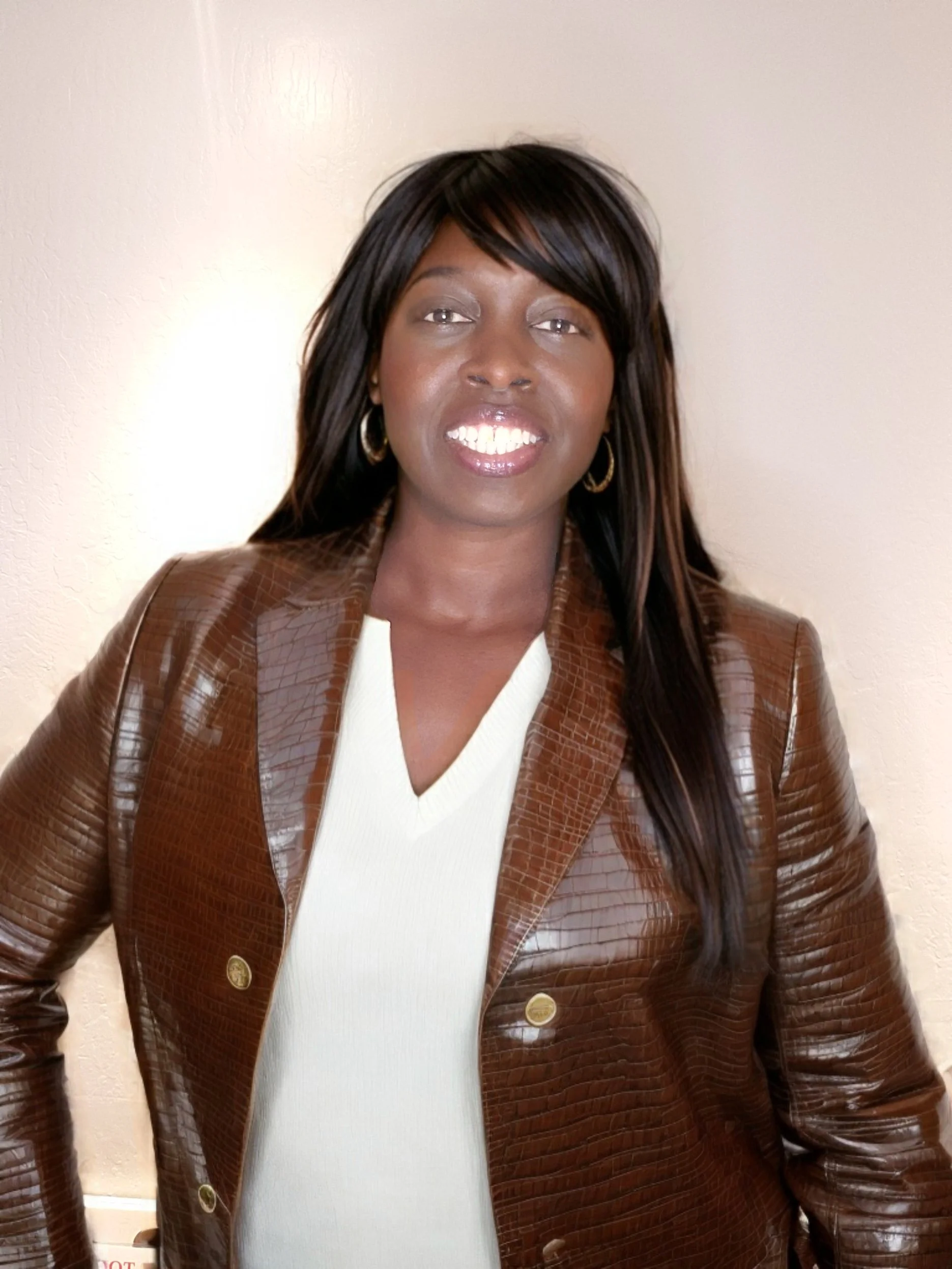
Let’s find out what’s holding your follicles in the shedding phase.
Book a consultation. We’ll assess your scalp, run the testing that explains why this started, and build a plan that supports the follicle from the inside and the outside at the same time. If regrowth isn’t realistic for you, I’ll tell you that too. You’re allowed to start wherever you want. I’ll meet you there.