
Facial Rejuvenation: Where to Start
You’ve started pulling your eyelid up in the mirror to see what it used to look like. Your neck bothers you in photographs. Something about your face reads tired now, even on days you aren’t.
And you have no idea where you’d even begin.
If you’ve never had anything done, this page is written for you. Not because you should do something. Because the options are genuinely confusing, most of what’s written about them is written to sell one thing, and you deserve to understand the landscape before anyone recommends anything.
Here’s the whole picture in one paragraph. Facial rejuvenation splits three ways. Surgery cuts and repositions tissue, which is the only thing that removes a large volume of loose skin. Injectables either pause a muscle or add volume beneath a fold, and they wear off. Energy-based treatments rebuild the skin itself, so it becomes thicker, tighter, and better toned than it was. I do the third one. I don’t do surgery and I don’t offer injectables, which means I’ve nothing to sell you in either of those conversations and I’ll tell you honestly when one of them is what you actually need.
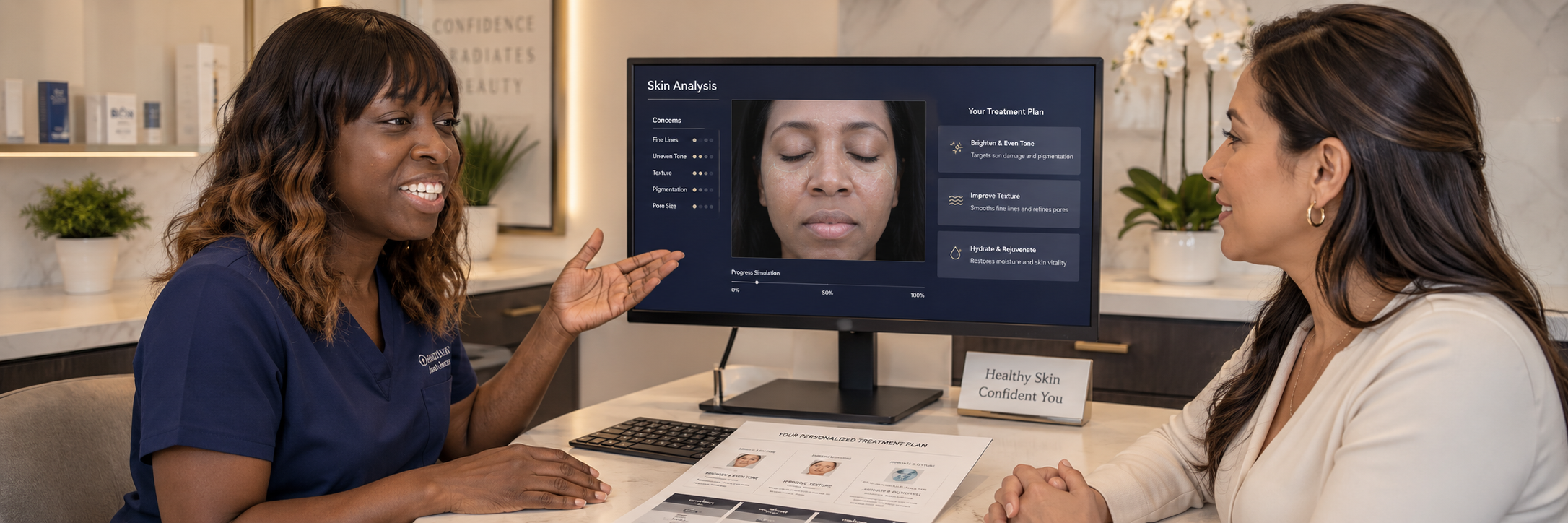
You don’t have to decide anything today. Most people start with a skin analysis, and tells you what’s actually happening in your skin.
If you’ve never done this before, read this part
I get asked the same four questions by almost everyone who’s new to this, so let me answer them before you have to ask.
“Will I look like I’ve had something done?”
Not with what I do, and this is the fear that keeps most people out of the room. Energy-based treatment rebuilds your own collagen and elastin over weeks and months. There’s no moment where your face changes. People notice you look well and can’t say why, which is exactly the point. The results that look obviously done usually come from volume added too quickly or muscle paused too heavily, and I do neither.
“Am I too young, or too late?”
Neither, almost certainly. Under 40 the work is usually maintenance and prevention, and it’s genuinely easier to keep skin than to rebuild it. Over 60 there’s still a great deal to be done, and skin responds at every age. The only honest “too late” is when the amount of loose skin has passed what any non-surgical treatment can address, and I’ll tell you if that’s where you are.
“How do I know what I need?”
You don’t, and you shouldn’t be expected to. That’s the job of a skin analysis. It measures what’s actually happening, pores, elasticity, hydration, sebum, sun damage, pigment, and texture, and the plan comes from your data rather than from a menu or from whatever I happen to be good at selling. Read more about the skin analysis.
“What if I just want one thing and not a whole plan?”
Then you get one thing. Plenty of people come in for a facial once or twice a year and never do anything else, and that’s a completely reasonable way to use this practice. You’re allowed to start wherever you want and stop whenever you like.
What facial rejuvenation actually means
The term gets used loosely, so let me be precise about the three things it usually refers to, because they do different jobs and most women aren’t told that clearly.
| Surgical | Energy-based non-surgical | Injectables | |
|---|---|---|---|
| What it does | Cuts, lifts, and repositions tissue. Removes excess skin | Contracts tissue and stimulates your own collagen and elastin to rebuild | Relaxes muscle movement or adds volume beneath the skin |
| What it changes about your skin | Repositions skin. Doesn’t improve its quality | Changes the skin itself: texture, thickness, elasticity, pigment, resilience | Nothing. The skin is unchanged, it just sits differently |
| Recovery | Weeks, sometimes months, with restrictions | Healing time, from none at all to under two weeks depending on the treatment | Little to none, occasional bruising |
| How results hold | Long lasting, often many years | Builds over months as collagen remodels. Maintenance usually once or twice a year | Temporary by design. Repeated every few months |
| Best for | Significant excess skin and structural descent | Skin quality, laxity, texture, pigment, and moderate structural change | Dynamic lines and volume loss |
How I define it, and what isn’t on my menu
Plenty of practices use “facial rejuvenation” to mean neurotoxin and filler, and nothing else. I define it differently, and I want you to know that before you book, because it changes what you get.
I don’t offer Botox or dermal filler. Not out of opposition. They do exactly what they’re designed to do and they do it well. But look at that third column again. A relaxed muscle and added volume change how your face reads while the product is working. Neither one changes the skin itself, which means the underlying problem is untouched and the clock starts over in three months.
My approach is root cause. I work on the tissue, not the appearance of the tissue. When your skin is thicker, better nourished, better organized, and producing collagen again, it looks better because it is better. That result holds differently, and it compounds instead of resetting.
That’s the distinction, and it’s the whole reason to choose one practice over another.
Skin over 40 is a different animal
This is what I specialize in, and it’s the part most facial rejuvenation providers skip past.
Skin doesn’t just get older. After 40 it changes structurally, and three things happen at once.
The extracellular matrix changes. This is the scaffolding underneath your skin’s surface, the collagen, elastin, and hydrating molecules that determine whether skin looks firm and resilient or thin and slack. It degrades, and it stops rebuilding at the rate it used to.
Hormonal signaling shifts. Estrogen and androgens are part of how your skin regulates itself: collagen production, oil, thickness, hydration, repair. As those signals decline through perimenopause and menopause, your skin loses its instructions. It isn’t damaged so much as it’s no longer being told what to do.
Accumulated UV damage surfaces. Decades of sun exposure fragment collagen and disorganize elastin, and that damage shows up on a delay. What you’re seeing at 47 was banked at 22.
Here’s why that matters practically. The architecture behind a wrinkle at 50 is different from the architecture behind a wrinkle at 35. At 35 it’s mostly muscle movement in resilient skin. At 50 it’s movement in thinner skin with a degraded matrix and less hormonal support. Same-looking line, entirely different underlying problem.
So my goal is this: I want your skin communicating with itself differently, so it can behave like healthier skin even without the estrogen and androgen signaling it used to have. That means rebuilding the matrix, restoring the raw materials, and getting the cells that produce collagen and elastin back to work.
That’s a slower story than a syringe. It’s also the only version where your skin is genuinely better a year from now.
The non-surgical treatments I use
Every one of these is selected from your skin analysis, not from a menu. Most are done in a planned series spaced four to six weeks apart, and no more than three months apart, depending on the treatment and how your skin is responding.
Non-ablative plasma energy. Resurfaces, tightens, refines pores, evens tone, and stimulates collagen with essentially no healing time. You may have some redness for a few hours. This is my most common starting point, and it’s a good option if microneedling has gone badly for you before.
Microneedling with regenerative support. Controlled micro-channels that trigger collagen and elastin production, paired with what gets delivered into them: peptides, PDRN, exosomes, or your own platelet-rich fibrin. The needling creates the opportunity. What goes in determines the result.
Mesotherapy micro-infusion. Micro-infusions of active skin boosters delivered into the superficial layers with a mesotherapy pen. No healing time at all, which makes it my go-to for building skin quality between more intensive treatments, and before an event.
Chemical peels, none of which require healing time. These aren’t the peels you’re picturing. I use stem cell factor based peels, peptide-based formulations designed to lift pigment, and fully customizable peels built around your skin type and your specific concern, whether that’s pigment, texture, or active breakouts. Read more about chemical peels, and read more about microneedling if texture or scarring is your concern.
See all plasma treatments for the full range, indexed by how much recovery each one needs. Read more about the Rockstar Facial if you’d rather start with something that has none at all. And read more about PRF and EZ Gel for the regenerative options, which use your own blood rather than a manufactured product.
Skin boosters. This is where a lot of the difference gets made. I use high-grade PDRN, a polynucleotide derived from salmon DNA with real research behind it, which supports cellular repair and collagen production and calms post-treatment inflammation. Alongside it, peptide and amino acid complexes supplying the specific building blocks collagen synthesis requires, plus copper peptides, antioxidants, and growth factor support depending on what your skin needs.
Safe for all skin types, including Fitzpatrick IV through VI
This matters and it doesn’t get said often enough.
Most light-based resurfacing works by targeting a chromophore, which usually means melanin. That’s why so many lasers and IPL devices carry real risk of burns and post-inflammatory hyperpigmentation in deeper skin tones, and why women with Fitzpatrick IV, V, and VI skin are so often turned away, under-treated, or handed a watered-down version of the treatment they came in for.
Plasma energy doesn’t work that way. It doesn’t target pigment at all, so it can be used across every Fitzpatrick type, I through VI. The same is true of microneedling, micro-infusion, and the peel formulations I use, several of which were developed specifically for deeper skin tones with pigmentation concerns. I monitor each case individually and use pretreatment where there’s any history of post-inflammatory hyperpigmentation.
Notice that I said redness a moment ago rather than pink. Deeper skin doesn’t flush pink, it reddens or darkens, and most aesthetic marketing is written as though every patient is fair. That’s a small thing, and it tells you who a practice is actually built for.
If you’ve been told your skin type limits your options, it doesn’t limit them here.
Where I get surgery-like results without surgery
Two areas come up in almost every consultation I do, and both are areas people rarely bring up first. They mention them at the end, quietly, usually right after saying they’d never consider surgery.
They’re also the two areas where surgery is most intimidating, most expensive, and most disruptive. So this is where the technology earns its place.
Eyelids, without a blepharoplasty
Hooded, heavy, crepey upper eyelids change your whole face. They make you look tired regardless of how you feel, and they’re the reason a lot of women stop wearing eye makeup.
Surgical blepharoplasty is effective, and it’s also surgery: incisions, sutures, meaningful recovery, and a cost that puts it out of reach for many people.
I use plasma energy instead. It works only on the surface layer of skin, causing immediate contraction and then triggering a collagen remodeling response over the following weeks. The eyelid tightens and lifts. No incisions, no stitches, no scarring, and no general anesthesia.
Healing time is about 7 to 10 days. I say healing time rather than downtime deliberately, because your skin is actively doing something during that window. It isn’t dead time, it’s the repair process that produces the result.
This is also one of the few areas where plasma can go where most lasers can’t. The eyelid is delicate tissue, and plasma is precise enough to treat it. Read more about non-surgical eye rejuvenation.
The neck, without a neck lift
The neck is what people notice in photographs and what nobody wants to discuss. Crepey texture, horizontal banding, loose skin under the jaw, a jawline that’s lost its definition against the neck.
It’s also the area where creams do the least. There’s very little you can put on a neck that changes it.
Plasma tightening firms loose skin, softens crepey texture, and restores definition to the jaw and neck transition, again by contracting tissue and stimulating collagen and elastin. Healing time runs about 7 to 10 days. Most people need two treatments. Read more about the non-surgical neck lift.
For an area that otherwise means surgery or nothing, that’s a meaningful option.
Why I work alongside plastic surgeons rather than against them
I want to be clear about something, because a lot of practices in my category build their marketing on being anti-surgery.
I’m not against surgery. Surgery does things I can’t do. If you have significant excess skin and real structural descent, a good surgeon will give you a better outcome than I will, and I’ll tell you that in your consultation.
I speak on panels around the Bay Area and on podcasts, often alongside plastic surgeons, and the conversation I keep having with them is the same one: skin quality determines outcomes. A surgeon repositions tissue. If that tissue is thin, sun-damaged, poorly nourished, and low in collagen, the result reflects it, and it doesn’t hold as well. Skin that’s been rebuilt first heals better and looks better afterward.
So there’s no conflict here. Some patients come to me because surgery isn’t financially realistic, and they get a result they didn’t think was available to them. Others come to me before or after surgery, to make sure the skin itself is in the best shape it can be.
Both are good outcomes. I’d rather tell you the truth about which category you’re in than sell you the only thing I happen to offer.
What makes the plan work
Two things separate what I do from a list of treatments, and neither one is a device.
The skin analysis is the plan
Everything starts here. The analysis shows me sub-surface UV damage, pigment mapped by type, inflammation patterns, texture and hydration data, and the structural changes underneath laxity and thinning. Most of it isn’t visible to the naked eye.
That’s what I build your treatment sequence from: which treatment, in what order, at what interval, with which boosters. Then I rescan, and we look at whether it’s working.
Without that, you’re buying one-off treatments and hoping. Treatments chosen at random don’t compound, and compounding is the entire point.
Your skin needs raw materials
Here’s what almost nobody in my industry will tell you, and it’s the reason my results differ.
If your skin doesn’t have adequate nutrition, it can’t hold a treatment. Collagen synthesis requires specific amino acids, vitamin C, zinc, and adequate protein. If any of those are short, I can stimulate your fibroblasts all day and they won’t have what they need to build with. You’ll get a fraction of the result and it won’t last.
So I look at your nutrient status, your inflammatory load, and your diet as part of your facial rejuvenation plan, not as a separate wellness conversation. Where there are gaps, we correct them, with targeted nutrients and dietary changes based on your actual results.
This is the piece no aesthetic-only practice is set up to do, and it’s why the same treatment performed on nourished skin and on depleted skin produces two different outcomes.
Facial rejuvenation near me: why women in the East Bay come here
Most of the women I see have been somewhere else first. Injectables that improved the picture but not the skin. A laser they were told to avoid because of their skin tone. Or a consultation that recommended surgery as the only real option.
What’s different here:
You can start with one thing, or with nothing but a scan. There’s no plan you have to buy into and no pressure to build one.
Skin quality is the actual product. Not a frozen forehead or a fuller cheek. Skin that behaves better, holds treatments better, and looks like your skin.
Safe for all skin types, including Fitzpatrick IV through VI. No chromophore targeting means nobody gets excluded or under-treated because of their skin tone.
Non-surgical eyelid tightening and non-surgical neck lift. The two areas people most want addressed and most dread having cut, with healing time measured in days rather than months.
I’ll tell you honestly which category you’re in. Sometimes that means telling you a surgeon will serve you better. I’d rather be right than booked.
The skin analysis drives the plan, and I rescan to prove it’s working.
Nutrition is part of the protocol, because depleted skin can’t build collagen no matter what I do to it.
An award winning doctor with fifteen years of practice in the East Bay. I’ve been voted Best Doctor of the East Bay, and I have page after page of five star reviews that show how hard I work for my patients.
I’m in Lafayette, CA, easy to reach from Walnut Creek, Orinda, Moraga, Danville, Alamo, Pleasant Hill, Berkeley, Oakland, and the broader East Bay.
A realistic first year
If you’ve never done anything, here’s what starting actually looks like.
Visit one. A skin analysis and a conversation. You see your own data and leave with a plan and a routine, which is usually shorter than the one you have. Some people do nothing else for six months and that’s fine.
Months one to three. If you’re starting treatment, usually something with no recovery, done a few times. This is where tone, texture, and brightness move, and it’s the stage that builds confidence in the process.
Months three to six. A rescan. If the numbers moved, we continue. If they didn’t, we change the plan rather than repeating it. This is also where most people decide whether they want to go further.
Months six to twelve. If correction rather than maintenance is the goal, this is when the treatments with real healing time make sense, scheduled around your life. Autumn and winter are better for this because you’re out of the sun.
After that. Most people settle into maintenance two to four times a year, with something more substantial every year or two.
Frequently asked questions
-
With a skin analysis,, it takes a few minutes to capture, and the interpretation is the part worth showing up for. You’ll see what’s actually happening in your skin rather than guessing, and you’ll leave with a plan and usually a shorter product routine than you arrived with.
-
Surgery cuts, lifts, and repositions tissue, and removes excess skin. Non-surgical energy-based treatment contracts tissue and stimulates your own collagen and elastin to rebuild the skin itself. Surgery gives you more dramatic structural change with a much longer recovery. Non-surgical treatment changes the actual quality of your skin, which surgery doesn’t do. For significant excess skin, surgery is the better answer, and I’ll tell you if that’s you.
-
No, neither is on my menu. That isn’t opposition, it’s a different method. Neurotoxin relaxes muscle movement and filler adds volume, and both are temporary by design because neither changes the skin. I rebuild the skin itself: thickness, elasticity, texture, and pigment. It takes longer and it holds differently, and it means your skin is genuinely better rather than temporarily rearranged.
-
Yes, with plasma energy, in appropriate candidates. It contracts the surface layer of skin immediately and then stimulates collagen remodeling over the following weeks, so the eyelid tightens and lifts without incisions or stitches. Healing time is about 7 to 10 days. It isn’t a substitute for surgery in every case, but for hooded and crepey eyelids it produces a result most women don’t realize is available.
-
Yes. Most laser and light resurfacing targets melanin, which is why Fitzpatrick IV, V, and VI skin faces higher risk of burns and hyperpigmentation with those devices. The technology I use doesn’t target pigment at all, so it works across every Fitzpatrick type, and several of the peel formulations I use were developed specifically for deeper skin with pigmentation concerns.
-
Most non-surgical treatments are done in a planned series four to six weeks apart, and no more than three months apart, depending on which treatment and how your skin responds. The more intensive plasma procedures are done once or twice a year. Your skin analysis determines the sequence, and we rescan along the way to check that it’s working.
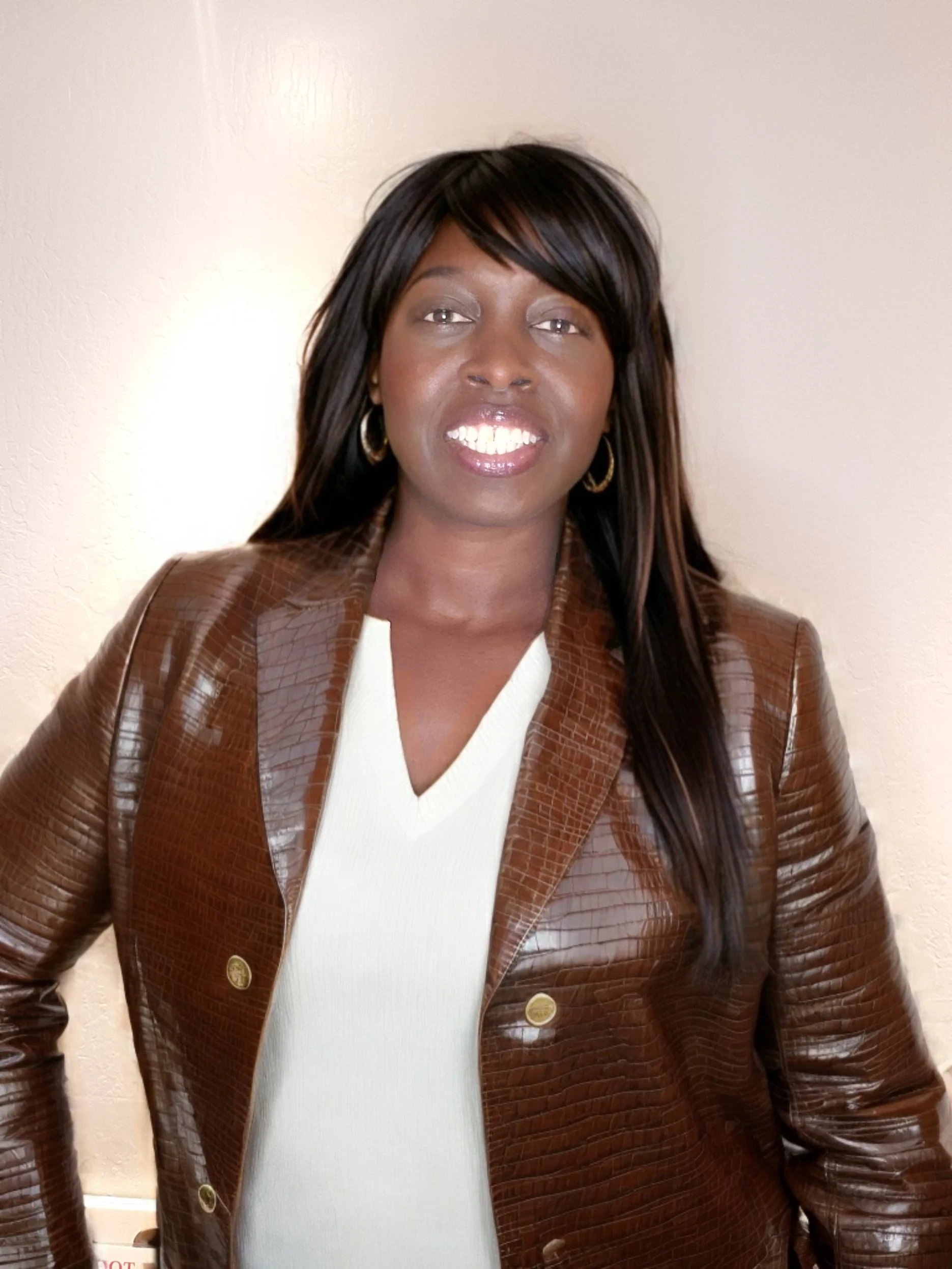
Dr. Vera Singleton, ND, MBA Founder, Potentia MedSpa, Lafayette, CA Voted Best Doctor of the East Bay Functional medicine and medical aesthetics under one roof, guided by one philosophy: one body, one doctor, simple answers.
Let’s look at your skin before we decide anything.
Book a consultation and we’ll start with a full skin analysis. I’ll tell you what’s actually happening structurally, what I can do about it, and where surgery would serve you better. Then we build the plan from there. You’re allowed to start wherever you want. I’ll meet you there.